

Healthy Diet for Birds: Your Complete Guide
A friend once called me in a panic because her new parrot would only eat sunflower seeds and throw everything else on the cage floor like tiny feathered confetti. She thought she was failing. Really, she was just meeting the same wall almost every bird parent hits at the start.
Feeding parrots sounds simple until you hear ten different answers from ten different people. Pellets or seeds. More fruit or less fruit. Fresh chop every day. No, only certain vegetables. It can feel like you need a nutrition degree just to fill a food bowl.
The good news is that you don’t need to guess your way through it. You just need a clear, bird-safe plan that makes sense for your species, your routine, and your feathered friend’s habits.
Introduction From Confused to Confident in Your Parrot's Diet
When I brought home my first larger parrot, I stood in the kitchen with three bowls, a bag of pellets, some chopped veggies, and a lot of self-doubt. My bird looked at the healthy food, looked back at me, and went straight for the seed mix like it had personally offended him.
That moment is familiar to a lot of bird parents. We want to do right by our parrots, but advice about the right diet for birds can be all over the place. One person says seeds are fine. Another says pellets only. Then someone else tells you your African Grey needs one thing, your Amazon needs another, and your cockatoo will turn into a drama cloud if dinner is wrong.
They’re not completely wrong. Different parrots do have different needs. But the bigger truth is simpler than it sounds. A healthy parrot diet isn’t about chasing food trends. It’s about giving your bird a balanced base, safe variety, and a way to eat that matches how parrots are built to live.
A good diet is one of the clearest ways we show care. It supports feathers, energy, behavior, and the everyday spark that makes living with parrots so special.
If you’ve been feeling unsure, you’re in good company. Many experienced bird owners started out with a picky eater, a seed addict, or a bird who treated vegetables like suspicious decorations.
You can learn this. You can make smart changes without making mealtime stressful. And you can build a routine that keeps your bird healthy, busy, and excited to eat.
Why Your Parrot’s Diet Is More Than Just Birdseed
One of the sneakiest things about birdseed is that it looks like a complete parrot food. It fills the bowl. It keeps a bird busy. It even matches what many new owners were told at the pet store.
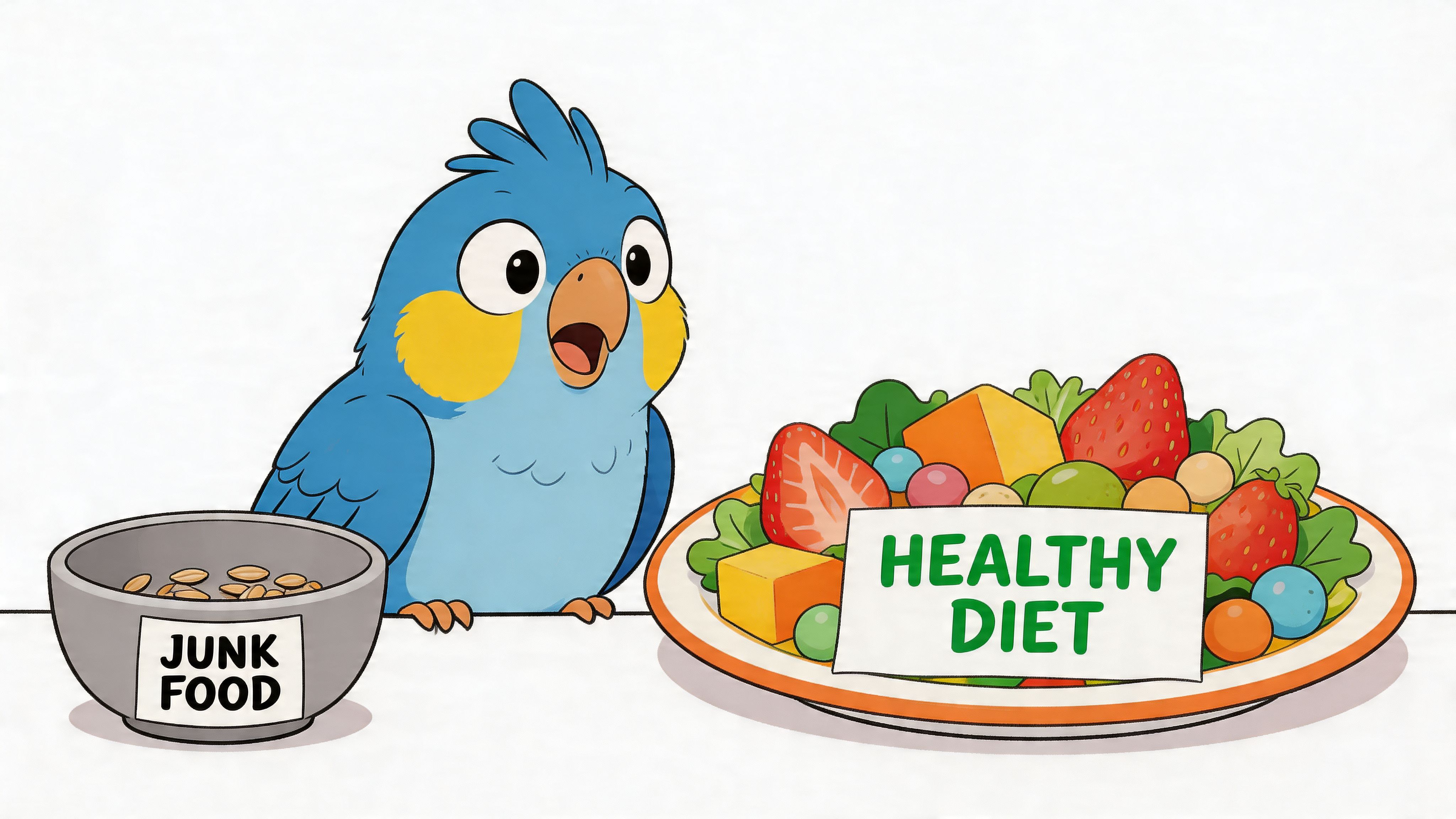
But a full bowl is not the same as a complete diet.
Seeds do provide calories, fat, and some protein. The problem is balance. A parrot needs steady access to enough amino acids, vitamins, and minerals over time, and seed-heavy diets often fall short there. That gap is easy to miss because parrots can look enthusiastic at mealtime while still eating around what their body needs.
A Lafeber summary of a 2002 Veterinary Record study on the nutritional content of pet bird diets reported that many pet birds eating common seed-based or mixed home diets did not meet minimum nutrient needs, and birds eating 50% to 75% formulated food were more likely to meet minimum protein levels. That finding matters because it reflects a pattern many avian vets see in real homes. A bowl can look varied and still be nutritionally thin.
For new bird owners, the confusion usually comes from three places:
- Eating with enthusiasm can hide imbalance. Cracking seeds is work, and parrots enjoy that work. The activity can make the meal look better than it is.
- A “mixed diet” can still miss basics. A little seed, a little fruit, a bite of toast, and a few vegetables may sound varied, but random variety is not the same as planned nutrition.
- Parrots pick favorites. If the bowl includes fatty, tasty items, many birds sort through everything else to get them first.
That last point is a big one. Parrots do not eat from a bowl the way we read a recipe. They eat more like toddlers picking marshmallows out of cereal.
This is why pellets matter for many companion parrots. Pellets provide repeatable nutrition in each bite, which helps cover the basics even if your bird is selective. Fresh foods still belong on the menu because they add texture, moisture, flavor, and foraging interest. Seeds and nuts still have a place too, especially for training, enrichment, and some species-specific plans for larger parrots like macaws. They just should not be doing the whole job by themselves.
A practical way to picture it is this: pellets provide the steady foundation, fresh foods add color and variety, and seeds move into the reward category instead of staying as the main course.
Mineral support matters too, especially for birds that have spent a long time on poor diets. Alongside better meals, many owners offer cuttlebones and mineral blocks for parrots as part of a broader nutrition setup.
If your bird is hooked on seed, you have not ruined anything. You just have a starting point. And for large parrots in particular, the goal is not to force a generic pellet rule onto every species. The goal is to build a diet that fits the bird in front of you, then use patient transitions and foraging to help that bird accept healthier food without turning every meal into a fight.
The Building Blocks of a Healthy Parrot Diet
A healthy parrot diet works more like a well-built toy than a mixed grab bag. Every part has a purpose, and if one piece is missing, the whole thing works less well.
Protein supports feathers, muscles, and repair
Protein helps your parrot maintain muscle, replace worn feathers, and repair body tissues. The Merck Veterinary Manual’s avian nutrition guidance explains that parrots need balanced amino acids and enough dietary protein for normal maintenance, growth, and feather production.
That matters during molt, but not only during molt. A bird uses protein all year long, the same way a house keeps using building materials for small fixes even after construction is finished.
This is one reason pellets are useful as a base food. They give more consistent nutrition from bite to bite, while a bird eating only favorite seeds can miss important nutrients without you noticing right away.
Fat belongs in the diet, just in the right lane
Fat gives energy and supports normal body function. The trouble starts when fatty foods take over the menu.
Seed-heavy diets often push birds toward too much fat and too little balance. That is why a few nuts used for training or foraging can fit nicely, especially for larger parrots, while a bowl built mostly from sunflower seeds can create problems over time. It is a little like adding peanut butter to a child’s lunch. A spoonful can fit. A lunch made entirely of peanut butter does not.
Large parrots deserve special care here. A macaw may handle more rich foods than a budgie, but that does not mean every large parrot should eat a high-fat bowl. Species, activity level, and health history all matter.
Calcium and phosphorus need each other
Calcium gets the spotlight, but phosphorus is part of the same team. The Lafeber Vet nutrition reference on pet birds notes that an imbalanced calcium-to-phosphorus ratio can contribute to weak bones and other health problems.
A simple way to understand it is this. Calcium is the brick. Phosphorus helps determine how those bricks are used. Too much of one without the right balance of the other can leave the body struggling to do normal maintenance.
African Greys often come up in this discussion because they are more likely to run into calcium-related trouble. A balanced diet is the first step. Some owners also keep cuttlebone and mineral blocks for parrots available as one part of the setup, especially if their avian vet recommends extra support.
Practical rule: Do not try to patch a weak diet with one supplement. Fix the daily menu first.
Vitamins come from variety, not randomness
Vitamins help the eyes, skin, immune system, and many quiet body processes you never see. Fresh vegetables are one of the best ways to bring those nutrients into the bowl.
Color is a helpful clue. Orange vegetables such as sweet potato and carrot often supply beta-carotene. Dark leafy greens add a different set of nutrients. Crunchy vegetables like bell pepper or broccoli also make meals more interesting, which matters a lot for birds that get bored easily.
Fruit is fine in smaller amounts. Many parrots love it, but they usually love it for the same reason kids love dessert. Sweet foods are easy to over-choose.
What the basic plate should contain
For most companion parrots, a strong diet has four parts working together:
- A reliable base food, usually a quality pellet
- Fresh vegetables for vitamins, texture, and moisture
- Whole foods used with purpose, such as cooked grains, legumes, seeds, or nuts depending on the species
- Mineral support when appropriate, based on the bird’s diet and your avian vet’s guidance
That last point is where many owners get stuck. They hear a simple rule like "80 percent pellets, 20 percent fresh" and stop there. It is a decent starting point, but it is not the whole picture. A Grey, macaw, and cockatiel do not always need the same plate, and a seed-addicted rescue usually needs a gentler transition plan than a healthy young bird raised on pellets.
The goal is a plate that covers nutrition and fits the bird in front of you. That is how you move from generic advice to a diet your parrot can live with.
Crafting the Perfect Plate for Different Parrot Species
One of the biggest mistakes in parrot care is treating all species like they should eat the same way. They don’t. A budgie, a cockatoo, and a macaw may all enjoy crunching food, but their habits, preferences, and common trouble spots can be very different.
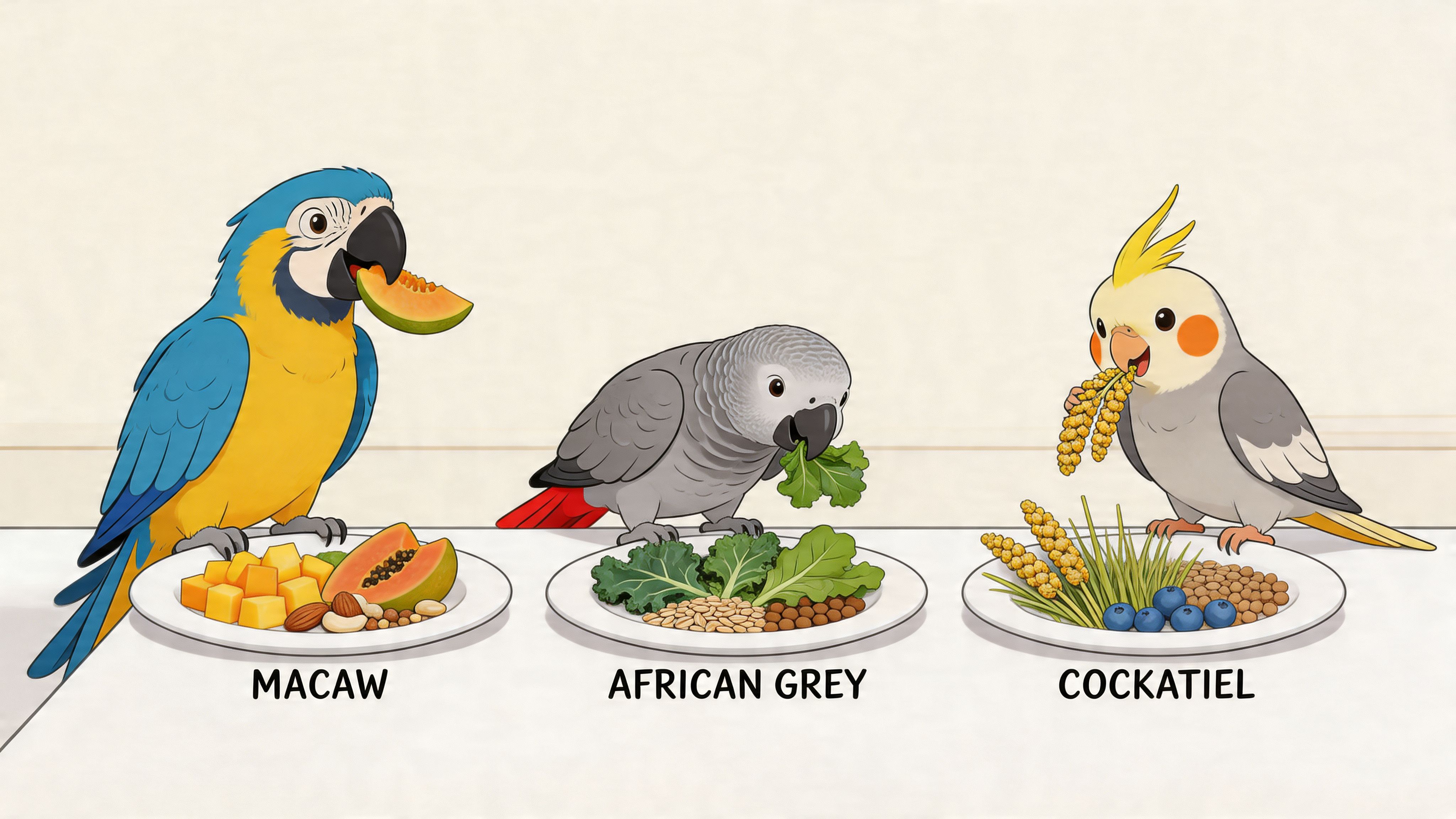
A species-aware plan also matters because UC Davis Health Topics notes that avian vets report 75% of malnutrition cases in rescues stem from improper species-specific feeding. The same guidance shares Dr. Scott Echols’ recommendation for large conures and similar species: 50% to 70% pellets, 25% to 30% whole grains like spelt or oat groats, and the rest fresh vegetables.
That’s a good reminder that “pellets plus produce” is only the beginning. The details matter.
Macaws
Macaws are big, active, and often very food-motivated. They also tend to enjoy working for food, which makes them great candidates for foraging-based meals.
For many macaws, a good plate starts with pellets, then adds vegetables and some species-appropriate whole foods. Owners often do well with chopped greens, peppers, broccoli, and cooked grains. Nuts can fit in, especially as rewards or enrichment items, but they shouldn’t crowd out the rest of the menu.
What to focus on with macaws:
- Variety and texture because many macaws like a meal that feels interesting.
- Controlled rich foods so treats don’t become the main diet.
- Food presentation that encourages chewing, climbing, and searching.
A macaw that only waits for nuts can end up ignoring the foods that balance the diet.
African Greys
African Greys keep many owners on their toes. They’re bright, observant, and often opinionated about food texture. They’re also one of the species people most often ask about when discussing calcium support and weight management.
A Grey’s plate usually does best when pellets stay central and vegetables are offered in a way the bird can inspect, shred, and sample. Greys may reject big wet chunks but accept finely chopped mixes, clipped greens, or slightly warmed vegetables.
Helpful priorities for Greys include:
- Consistent pellet intake rather than occasional nibbling.
- Vegetables offered in repeat exposure, even if they’re ignored at first.
- Careful handling of fatty extras so they don’t become daily staples.
Greys can be wonderfully stubborn. Sometimes the win is not instant eating. Sometimes the win is touching the new food without glaring at it.
Amazons
Amazons are famous for enthusiasm, and that can include enthusiasm for richer foods. This species often benefits from a cleaner, more structured menu that keeps fat in check.
Pellets and vegetables tend to serve Amazons well, with treats handled thoughtfully. If an Amazon gets to self-select from seeds and nuts, many will happily build a menu around the richest bites.
Amazons often teach us the difference between “what my bird likes most” and “what keeps my bird in the best shape.”
If you live with an Amazon, watch for patterns. Does your bird eat pellets first, or push them aside to hunt for richer pieces? That answer tells you a lot.
Conures
Conures come in different sizes, and larger conures often do better with a little more thought around grains and food texture. Dr. Scott Echols’ guidance for large conures and similar birds gives owners a useful model: pellets as the base, whole grains as a meaningful part of the plate, and vegetables rounding things out.
Good options often include cooked or uncooked bird-safe grains, small chopped vegetables, and pellet sizes your conure can handle easily. Conures also tend to respond well to meals that feel playful. Kabobs, skewers, cups, and paper-wrapped morsels can all help.
Three things that help with conures:
- Right-size food pieces so they don’t get frustrated and quit.
- Routine because many conures settle into healthy habits when meals are predictable.
- Foraging opportunities to burn energy and reduce picky snacking.
Cockatoos
Cockatoos can be sensitive in a different way. Many are emotional eaters, social eaters, or expert beggars. They may act starving five minutes after a meal if it gets your attention.
That’s why structure matters. A cockatoo often does best with a dependable pellet-based diet, lots of vegetable variety, and careful use of fatty foods. Rich items can become a problem quickly if they’re used too freely as comfort food or attention rewards.
For cockatoos, I’d pay close attention to:
- Lower-fat overall balance
- Busy feeding setups so mealtime lasts longer
- Fresh foods with texture like chopped greens, peppers, and cooked vegetables
Cockatoos often need the feeding routine to work for both body and behavior. If food is the only excitement in the day, overeating gets easier.
A Sample Daily and Weekly Parrot Meal Plan
A good meal plan should feel doable on a normal Tuesday, not just in your ideal fantasy kitchen. The easiest rhythm for many bird parents is to keep the base consistent and rotate the fresh foods for variety.
For many companion parrots, a pellet-forward menu with fresh produce works well. A 2012 Amazon parrot study from Texas A&M found that a diet of 75% formulated pellets and 25% produce met nearly all nutrient recommendations. In that same study, birds given a choice over-selected seeds and nuts, which led to excess fat, deficiencies in some nutrients, and weight gain of over 6% during the study period.
That’s why structure helps. Left to pick only favorites, many parrots build themselves a dessert menu.
A simple daily rhythm
A practical day often looks like this:
- Morning meal with the main portion of pellets and fresh foods
- Afternoon snack hidden in a foraging setup
- Evening meal with a smaller top-up and another fresh option
The morning meal works well as the biggest offering because many parrots are active and ready to eat after waking. Fresh “chop” also tends to fit nicely here, when you can remove leftovers later.
If prepping fresh food every day sounds like a lot, batch-making chop can save your sanity. Many owners finely dice bird-safe vegetables, portion them, and thaw small amounts as needed. A hanging feeder or treat holder can also make vegetables more interesting. Some people use items like The Veggie Basket to clip or hold fresh pieces so birds can nibble, shred, and explore.
Sample Weekly Parrot Feeding Schedule
| Day | Morning Meal (80% of daily food) | Afternoon Snack (Foraging) | Evening Meal (20% of daily food) |
|---|---|---|---|
| Monday | Pellets with chopped broccoli, bell pepper, and leafy greens | A small portion of pellets hidden in paper cups or a simple puzzle | Pellets with a little cooked grain and a few carrot pieces |
| Tuesday | Pellets with carrots, zucchini, and greens | Small pellet mix tucked into a cardboard foraging toy | Pellets with a few chopped vegetables from morning prep |
| Wednesday | Pellets with broccoli, cauliflower, and peppers | A few pellets and a limited seed treat hidden in a foot toy | Pellets with a spoonful of veggie chop |
| Thursday | Pellets with leafy greens and cooked sweet potato | Pellets scattered in a foraging tray or wrapped in paper | Pellets with a small serving of cooked oats or other bird-safe grain |
| Friday | Pellets with green beans, carrots, and peppers | Pellet pieces hidden around a play area for supervised search time | Pellets with leftover chop and a tiny fruit treat |
| Saturday | Pellets with mixed vegetable chop | A foraging toy filled with pellets and a few favorite bits | Pellets with cooked grain and greens |
| Sunday | Pellets with broccoli, carrots, and leafy greens | A simple shredding setup with pellets tucked inside | Pellets with a small fresh vegetable side |
How to keep the plan realistic
Not every bird likes every vegetable. That’s normal. The trick is steady exposure without turning dinner into a battle.
Keep these habits in mind:
- Repeat foods before giving up. A bird may ignore a vegetable several times before trying it.
- Change texture if needed. Some parrots prefer fine chop. Others like larger pieces to hold.
- Use fruit lightly. Fruit can be a fun extra, but if it becomes the star, vegetables often lose the contest.
- Treat seeds as tools. They’re useful for training and conversion, not as the nutritional backbone.
A weekly plan doesn’t need to be fancy. It just needs to be balanced, consistent, and easy enough that you’ll stick to it.
The Ultimate Guide to Safe and Toxic Foods
Bird parents don’t just need to know what’s healthy. We also need to know what’s dangerous. Some foods that seem harmless in a human kitchen can be a serious problem for parrots.
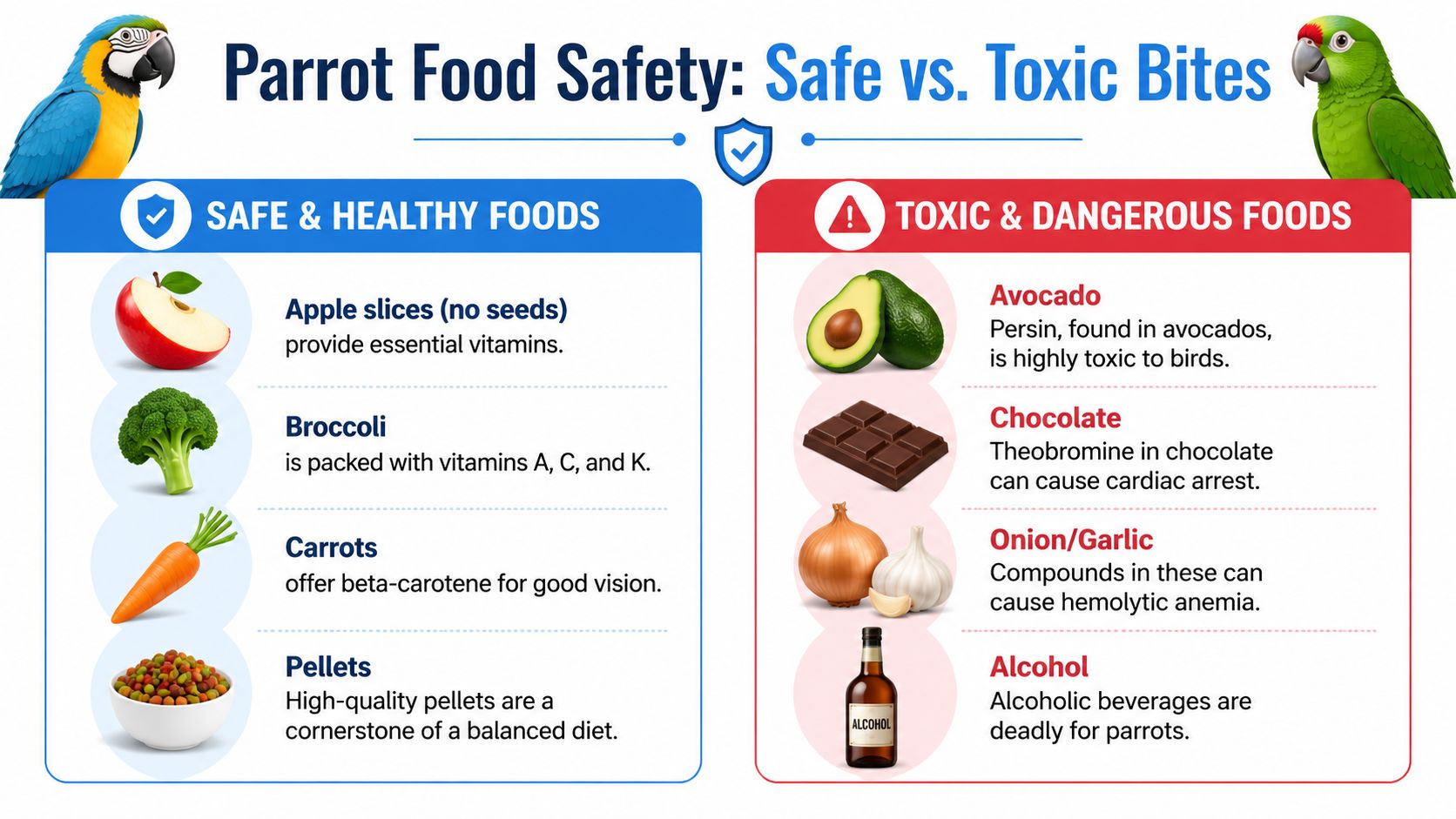
Good foods many parrots can enjoy
Safe foods still need to fit into a balanced overall diet, but these are common staples many companion parrots do well with:
- Vegetables like broccoli, carrots, bell peppers, leafy greens, green beans, and zucchini
- Bird-safe grains such as cooked oats, quinoa, and other plain whole grains
- Fruit in moderation like apple slices with no seeds, berries, melon, and small bits of other safe fruits
- Pellets as the main foundation food for many companion parrots
If you’re ever unsure about a food, pause first. A quick check is better than an emergency call later.
Foods to never feed
Some items belong completely off the menu.
- Avocado because persin is highly toxic to birds
- Chocolate because theobromine can be dangerous
- Alcohol because even small amounts are dangerous for parrots
- Onion and garlic because certain compounds can harm birds
- Caffeinated drinks like coffee, tea, and energy drinks
- Salty snack foods because parrots are not built for heavily salted human treats
Keep “people food” and “bird-safe food” as two separate categories in your mind. That one habit prevents a lot of mistakes.
A few kitchen habits that help
Safe feeding isn’t only about the ingredient. It’s also about how you serve it.
Try these habits:
- Wash produce well before chopping
- Remove risky parts like apple seeds
- Skip heavy seasoning because birds don’t need added salt or rich sauces
- Remove fresh leftovers before they spoil
Confusion around food safety is common, especially in homes where parrots want to share every snack on the couch. They’re charming little beggars. We still have to be the grown-ups.
Turn Mealtime into Playtime with Foraging
Parrots aren’t built to stroll up to a bowl, eat for two minutes, and call it a day. In the wild, they spend a huge part of life searching, cracking, stripping, peeling, and exploring food.
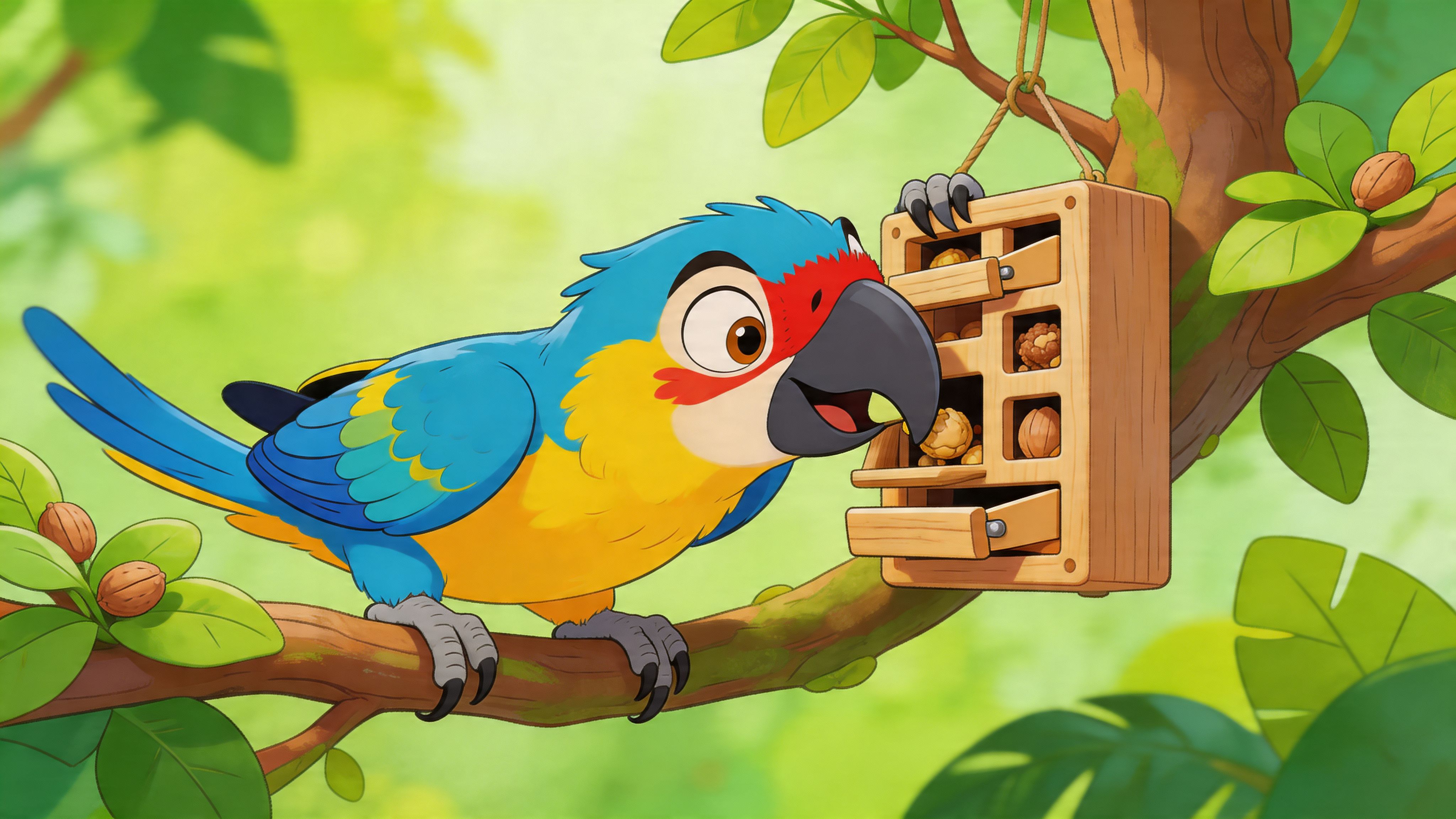
According to Dr. Scott Echols’ avian diet guidance shared by Harmony Animal Behavior, parrots spend 70% to 90% of their day foraging in the wild. The same guidance suggests a practical conversion method for seed-addicted birds: start with 25% pellets and 75% seeds for 1 to 2 weeks, then gradually increase the pellet ratio while hiding the food mix in enrichment items like foraging toys.
That matters because changing the menu is only half the job. Changing how the bird experiences food is often what makes the difference.
Why foraging helps picky eaters
Some parrots reject pellets in a bowl, then happily investigate the exact same pellet if it’s tucked into paper, wedged into cardboard, or hidden in a toy. Foraging turns food into a puzzle, and many parrots find puzzles more exciting than a plain dish.
It also slows eating down. Instead of gulping favorite bits and waiting for more, the bird has to work through the day in a more natural rhythm.
A simple starter setup can be enough:
- Paper wraps with a few pellets inside
- Cardboard cups or boxes with food tucked under safe shredding material
- Hanging holders that make vegetables something to explore, not just ignore
- Beginner foraging toys with visible rewards
One option bird parents use for this is a toy like the Foraging Cupcake, which can hold treats or pellets in a format that encourages searching and manipulation.
A humane pellet conversion roadmap
The big fear with diet change is starvation. That fear is valid. You never want a bird to “figure it out” with an empty stomach.
A gentler approach works better:
- Start with the familiar food mix. Keep most of the old diet present at first.
- Add pellets gradually. The 25% pellet and 75% seed mix for the first 1 to 2 weeks gives many birds a softer landing.
- Offer pellets in different ways. Bowl, foraging toy, crumbled over moist vegetables, or tucked into paper.
- Watch what your bird eats. Not what lands in the bowl. What gets consumed.
- Increase pellets step by step. Slow progress is still progress.
Conversion should feel boringly safe, not dramatic. You’re building trust, not winning an argument.
A short visual can help if you’re new to foraging routines:
Make the whole cage work for you
Foraging doesn’t have to mean one fancy toy. It can be a daily feeding style.
Try spreading food opportunities around your bird’s space:
- On a playstand for supervised snack hunting
- Inside shreddable toys for birds who love tearing things apart
- In multiple stations so your bird climbs and moves more
- With rotated toy setups to keep interest fresh
Nutrition and enrichment converge. A bird that has to search, chew, and solve little food puzzles often stays more engaged than a bird with a full bowl and nothing to do.
For rescue parrots and long-time seed lovers, that shift can be huge. The food becomes healthier, and mealtime starts meeting emotional and mental needs too.
Conclusion A Happy Gut for a Happy Bird
A healthy diet for birds doesn’t need to be mysterious. It needs a solid base, safe variety, and a routine your bird can live with.
For most companion parrots, that means quality pellets at the center, fresh vegetables bringing color and interest, and seeds or nuts used with purpose instead of poured in by habit. It also means remembering that parrots don’t just eat. They explore, shred, search, and play with their food.
That’s why the best feeding plans support both body and mind. A bowl may meet hunger. A thoughtful setup meets the bird.
If you’re changing your parrot’s diet right now, go gently. Small improvements add up. A bird who tastes one new pellet today, explores a foraging toy tomorrow, and starts eating more balanced meals next week is moving in the right direction.
Your feathered friend doesn’t need perfection. They need consistency, patience, and a bird parent who cares enough to keep learning.
If you’re ready to put these ideas into practice, Squawk Shop has helpful resources for bird parents building better feeding routines, including foraging-ready enrichment, mineral support items, and practical parrot care education that fits everyday life.