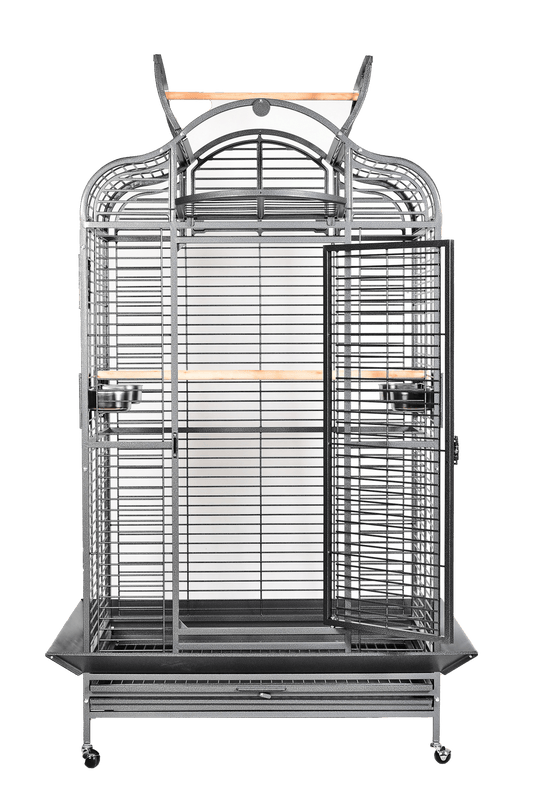
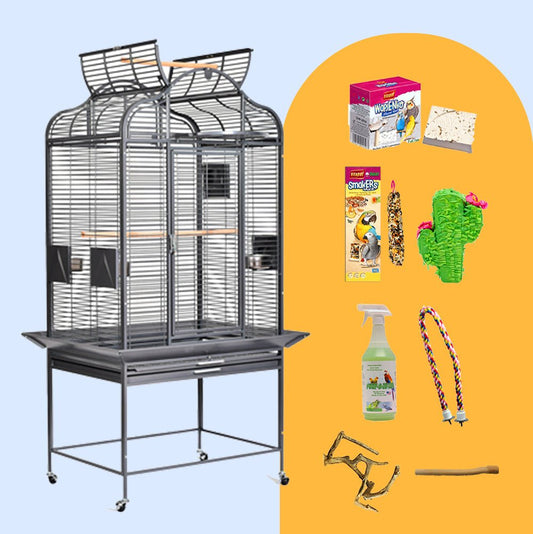
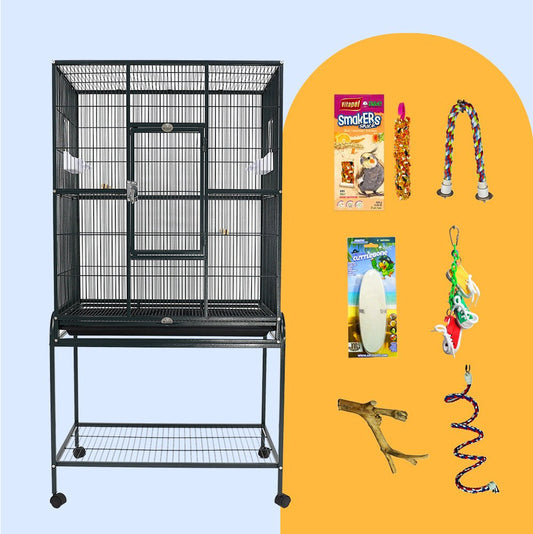
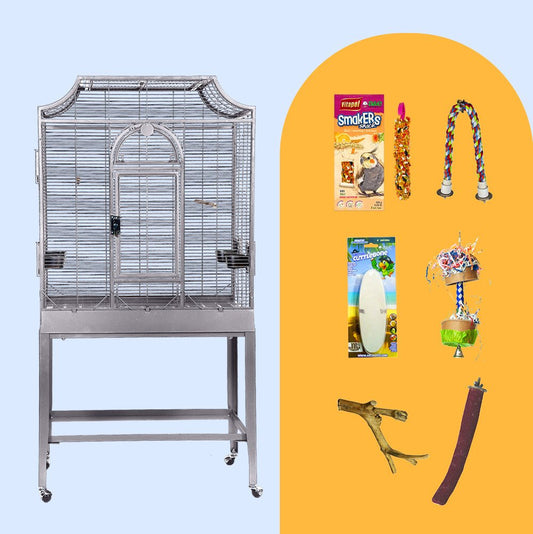
A parrot cage is not just where your bird stays. It is their home within your home, where they sleep, eat, play, and feel safe. That is why, at Squawk Shop, we take cage safety seriously. A well built, properly sized, bird safe cage is one of the best ways to support a happy parrot and give you peace of mind every day.

We partner with A&E Cage Company, a family owned and operated designer and manufacturer with over 30 years of experience in the bird world. Their cages feature non toxic powder coated finishes, with paint that has been analyzed by a certified avian veterinarian.

Plus, every cage order comes with $150 in free goodies to help you build out the setup right away, including perches, toys, treats, and cuttlebone for an avian calcium supplement boost.

Shop parrot cages below and build a setup your feathered friend will actually love living in.

Black outline of a delivery truck with speed lines on a white background

Free Shipping

For U.S orders $49+

Black smiley face on a white background

Easy 30-Day Returns

Simple, stress-free returns

Icon of a person wearing headphones with communication icons above on a white background

Customer Support

Real support from parrot people

Black silhouette of a credit card on a white background

Flexible Payments

Multiple ways to pay

How to choose the right parrot cage?

Your bird’s cage is more than a place to sleep — it’s their home base. It should feel safe, give them room to move, work with your daily routine, and stand up to the climbing, chewing, playing, and general chaos that comes with parrot life.

1. Bird safety comes first. Always.

The right cage starts with the right construction for your bird.

Check the bar spacing. Bars that are too far apart can create an escape or injury risk, while spacing that’s too narrow may not be comfortable for larger birds to climb.

Look for sturdy construction. Strong welds, secure doors, durable bars, and a stable frame matter — especially for larger parrots with powerful beaks.

Choose bird-safe finishes. Parrots use their beaks to climb, explore, and chew, so the cage’s coating and materials matter just as much as the cage itself.

2. Give them room to be a bird

When it comes to parrot cages, bigger is usually better.

Your bird should have enough space to fully stretch their wings, climb comfortably, move between perches, and play without constantly bumping into toys or bowls.

More space also lets you create different areas inside the cage for eating, playing, climbing, and resting — turning an empty cage into a proper home.

3. Match the cage to your bird — and your routine

There isn’t one perfect cage style for every parrot.

Flight-style cages offer plenty of horizontal space and are great for active birds that benefit from extra room to move around.

Traditional parrot cages make excellent everyday home bases, especially for birds that spend plenty of supervised time outside their cage.

Think about your bird’s size, activity level, climbing habits, and how much out-of-cage time they typically get.

4. Set it up like a home, not a box

Even the best cage needs the right setup.

Aim for 3–5 perches with different textures, shapes, and diameters to give your bird variety and encourage natural foot movement.

Position perches thoughtfully so your bird can move around easily — and avoid placing them directly over food and water bowls unless you enjoy cleaning surprise deposits. 😉

Add a variety of bird-safe toys for chewing, shredding, climbing, and foraging, and rotate toys regularly to keep things interesting.

Quick Parrot Cage Size Guide

Small Parrots

Budgies, parakeets, cockatiels, lovebirds, and many small conures typically need closer bar spacing with plenty of usable interior space.

Medium Parrots

African Greys, Amazons, Eclectus, and similarly sized parrots need stronger construction, appropriate bar spacing, and enough room for larger perches and enrichment.

Large & X-Large Parrots

Macaws, cockatoos, and other large parrots need heavy-duty construction, strong bars and doors, excellent stability, and as much usable space as possible.

Still deciding? Go bigger.

If you’re choosing between two appropriate cage sizes, we generally recommend going with the larger option when your space and budget allow.

More room means more opportunities to climb, play, stretch, forage, and simply be a parrot.

And if you’re not sure which cage is right for your bird, just ask us. Tell us your bird’s species and we’ll help you find a safe, comfortable fit.

Birds first, always. 🦜

Parrot Cages FAQ

What size cage does my parrot need?

Your bird’s cage is their home within your home, so space matters. Your parrot should be able to fully stretch wings, climb, and move between perches comfortably. If you are between two sizes, go up one size. More room also makes it easier to create separate zones for food, play, and rest.

What bar spacing is safe for my bird?

Bar spacing is a safety issue, not a preference. Too wide can be dangerous for smaller birds. Too narrow can limit climbing and comfort for larger parrots. Here’s a general guide from our parrot guide:

  • X-Small (finches, canaries, parrotlets): 3/8” to 1/2”
  • Small (parakeets, cockatiels, lovebirds, small conures, quakers): 1/2” to 5/8”
  • Medium (large conures, ringnecks): 3/4” to 1”
  • Large (African Greys, Amazons, Eclectus): 1” to 1.25”
  • X-Large (macaws, large cockatoos, large Amazons): 1.25” to 1.5”

If you tell us your bird species, we can help you land the safest fit.

Are your cages bird safe?

Yes, and we are picky about it. We partner with A&E Cage Company, a family owned and operated manufacturer with over 30 years of experience. Their cages use non toxic powder coated finishes, and the paint has been analyzed by a certified avian veterinarian. Many models also include a welded bar design and industrial strength screw-in casters for easy moving. Stainless steel options are available for select models in 304 grade stainless steel.

What comes with a Squawk Shop cage order?

Every cage order comes with about $150 in free goodies to help you build a proper setup right away, including perches, toys, treats, and cuttlebone for avian calcium support.

How should I set up perches inside the cage?

Perches are not decoration, they are foot health. In our parrot guide, we recommend 3 to 5 perches minimum with different textures and diameters.

Simple setup that works:

  • 1 main sleeping perch (natural wood, placed high)
  • 1 to 2 climbing perches
  • 1 comfort perch (rope or platform)
  • 1 functional perch near food bowls

Natural wood perches are the best everyday option because they offer changing diameters and help prevent pressure spots. Rope perches are great for comfort, just watch for fraying.

How do I clean my parrot cage, and what should I use?

A quick routine keeps the cage healthier and way less gross:

  • Daily: spot clean obvious droppings, wipe perches if needed, refresh papers
  • Weekly: wash trays and grates, wipe bars, clean food and water areas

For stuck-on mess, this is where Poop-D-Zolver shines. Spray the soiled area, let it break down the mess for a few minutes, then wipe clean. For trays and grates, rinse after wiping and let everything fully dry before your bird goes back in.

Pro tip: do cleaning when your bird is out of the cage so there is no irritation from fumes or splatter.

Do you price match?

Add Yes. If you find the exact same cage cheaper anywhere else, we will price match. Email us at contact@squawkshop.com with the link and we will take care of it.your content here

Pick up where you left off

Recently Viewed