

Wrought Iron Bird Cages: Modern, Safe Options
You’re probably doing what most bird parents do before a cage purchase. You’ve got tabs open, photos zoomed in, product descriptions half-read, and one big question sitting in the middle of it all.
Is this cage safe for my parrot?
That question matters. A cage isn’t just a place to sleep. It’s your bird’s home base for eating, climbing, resting, playing, and feeling secure. For a conure, African Grey, Amazon, cockatoo, or macaw, the right cage can make everyday life easier and safer. The wrong one can create stress, frustration, and avoidable risks.
“Wrought iron bird cages” are one of the most searched cage types, and also one of the most misunderstood. The name sounds old-fashioned and sturdy, which is part of why people like it. But the phrase can also cause confusion. Some listings mean a modern parrot cage with a bird-safe finish. Others use the term loosely for decorative cages, vintage styles, or products that were never meant for a chewing, climbing parrot in the first place.
That’s where many new owners get stuck.
If you’ve been trying to sort out rust concerns, coating safety, bar spacing, or whether wrought iron is better than stainless steel, you’re in the right place. I’ve spent enough time around parrots to know they test everything with their beaks, feet, and clever little engineering brains. They don’t care what sounds fancy. They care whether their cage is secure, comfortable, and interesting to live in.
If you’re still browsing, it helps to compare a few parrot cage options for different species and home setups while you read.
Welcome Home A Parrot's Castle and Your Biggest Decision
The cage decision often starts with excitement. Maybe you’re bringing home your first cockatiel or upgrading an older setup for an African Grey who needs more room to climb and forage. Then the excitement mixes with pressure, because this is one purchase you really want to get right.
I remember how overwhelming cage shopping felt the first time I looked for a serious setup for a larger parrot. Every listing seemed to promise strength, quality, and “bird-safe” materials. Some cages looked beautiful in pictures but had thin bars, questionable finishes, or tiny doors that would make daily cleaning a chore. Others looked sturdy but gave almost no useful details.
That’s the tricky part. A cage can look impressive and still be a poor fit for a parrot.
A good cage should make daily life better for both of you. Your bird needs safety, room, and stimulation. You need a setup you can clean, inspect, and use without a wrestling match every morning.
For parrots, “home” means more than square footage. It means a place where they can perch comfortably, move without bumping tail feathers, reach food bowls easily, and stay busy with bird-safe toys and foraging activities. Medium-to-large parrots especially need a cage that can handle chewing, climbing, and repeated use without wearing down fast.
Why this choice feels so big
A parrot cage affects nearly everything:
- Daily comfort for sleeping, eating, and preening
- Safety from sharp edges, poor coatings, and risky bar spacing
- Behavior because bored parrots often invent their own “projects”
- Cleaning time for the human side of the flock
- Longevity if you want a cage that lasts through years of use
Some bird parents worry they need the fanciest cage on earth. You don’t. You need one that is well built, properly sized, and made with materials and finishes that are appropriate for parrots.
That’s where modern wrought iron style cages often enter the conversation. They’re popular for a reason. But before you buy one, it helps to understand what that name really means today.
What Does Wrought Iron Mean for Bird Cages Today
You find a cage labeled wrought iron, and the name sounds reassuring. Heavy. Durable. Maybe even safer. Then you open the product details and realize that label does not tell you the one thing you need to know as a parrot parent. What metal is underneath, and how is it finished?
That confusion is common, especially for people shopping for medium-to-large parrots. Sellers often use wrought iron to describe a look and a category, not a traditional metalworking method. For bird safety, that difference matters.
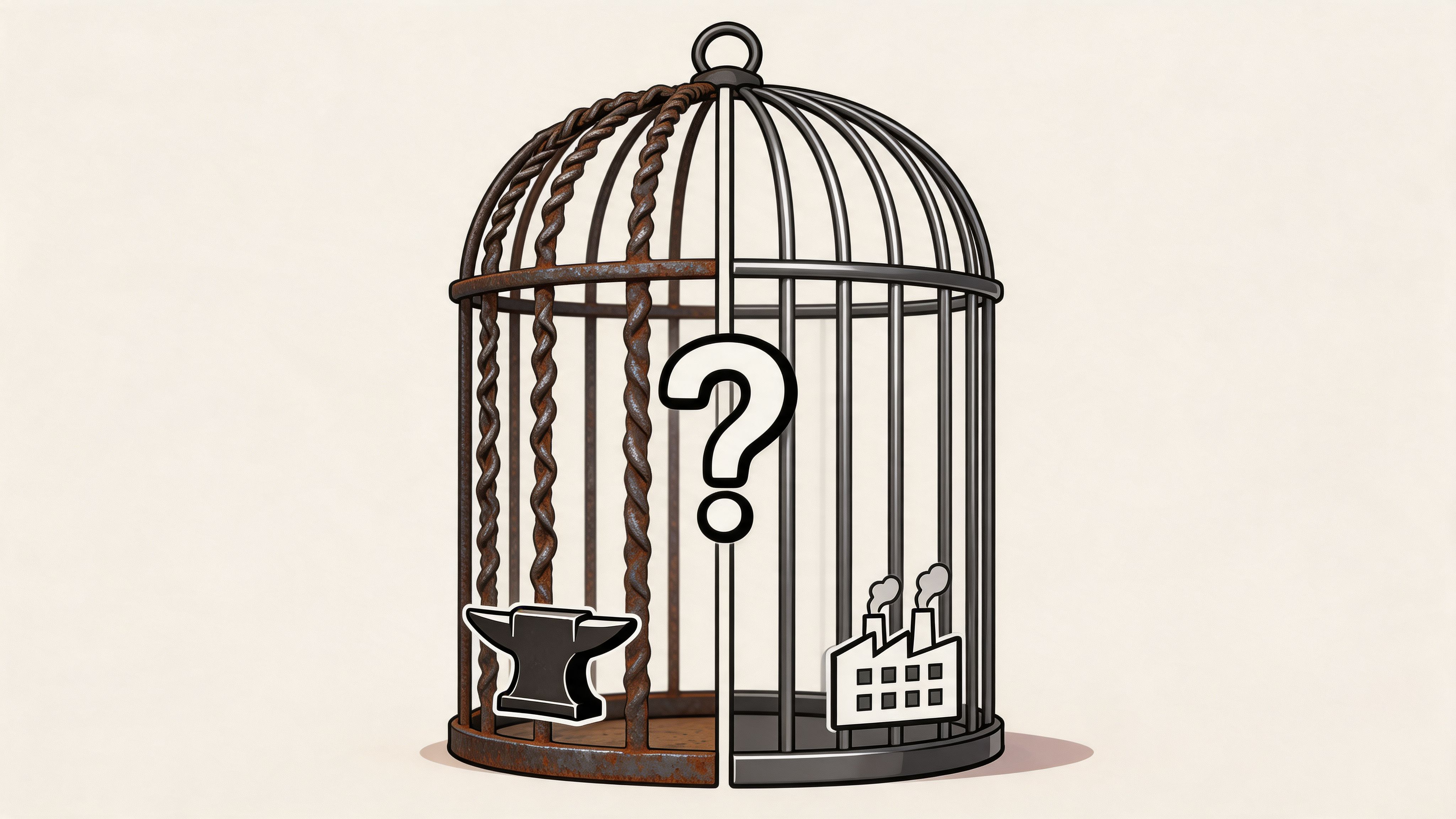
The old meaning and the modern one
Historically, wrought iron referred to a real material and an older way of making metal goods. Bird cages from that era often had a decorative, handcrafted look. Many people still picture those ornate Victorian cages when they hear the phrase.
Modern parrot cages are different. A seller may call a cage wrought iron even when the frame is made from modern steel. The name usually signals a sturdy, heavy-duty cage style with straight bars, square framing, and a substantial overall build.
A simple way to read the label is this. Wrought iron usually means wrought iron style.
That is why the term can mislead new buyers. It sounds like a material description, but in many listings it functions more like a design shorthand.
Why that matters for parrots
For a decorative cage in a living room corner, style may be the whole story. For a grey, Amazon, cockatoo, or macaw, style is the least important part.
Parrots use a cage the way a toddler uses a crib and a jungle gym at the same time. They climb it, chew it, bang toys against it, rub their beaks on it, and return to the same spots every day. So the safety questions are practical ones:
- What metal is the cage made from?
- What coating covers that metal?
- Will that finish hold up under chewing and cleaning?
- Is this cage built for parrots, or is it just dressed up to look impressive?
Those questions cut through a lot of marketing fast.
Decorative “wrought iron” is not the same as parrot-safe “wrought iron”
Many buyers are frequently tripped up; the internet is full of cages called wrought iron that are meant for decor, wedding props, plant stands, or very small birds. They may have curved tops, fancy flourishes, and antique styling. They may also have poor access doors, awkward interiors, unsafe gaps, chipped finishes, or metals that were never intended for a powerful beak.
A medium-to-large parrot needs something much more boring in the best possible way. Clean welds. Strong bars. Sensible door design. Reliable feeder access. A finish made for repeated contact and repeated cleaning.
Pretty does not equal safe. Antique does not equal better. “Vintage style” tells you almost nothing about whether a cage belongs in a real parrot home.
The safety-first way to interpret the label
Treat wrought iron bird cage as the start of your research, not the end of it.
If the listing clearly explains the underlying metal, the finish, and the cage dimensions, you are getting useful information. If it leans hard on old-fashioned wording and gives very few material details, I would slow down. That kind of listing often creates a strong first impression while hiding the details that matter most for toxicity, rust resistance, and long-term wear.
Here is the plain-English version:
| Term | What it usually means today |
|---|---|
| Wrought iron bird cage | A heavy-duty cage style inspired by older metal cages |
| Actual cage frame | Usually modern steel rather than traditional wrought iron |
| Safety | Determined by the materials, finish, construction quality, and parrot-appropriate design |
Once you see the term this way, cage shopping gets much less confusing. You stop judging the name and start checking the parts your bird will live on, climb on, and chew on every day.
The Secret Armor Bird Safe Coatings and Materials
A parrot doesn’t interact with a cage the way a decorative bird figurine would. Parrots chew. They scrape. They hang from bars. They test corners, seams, doors, and every coating they can reach.
That’s why the finish on a modern wrought iron style cage matters so much.
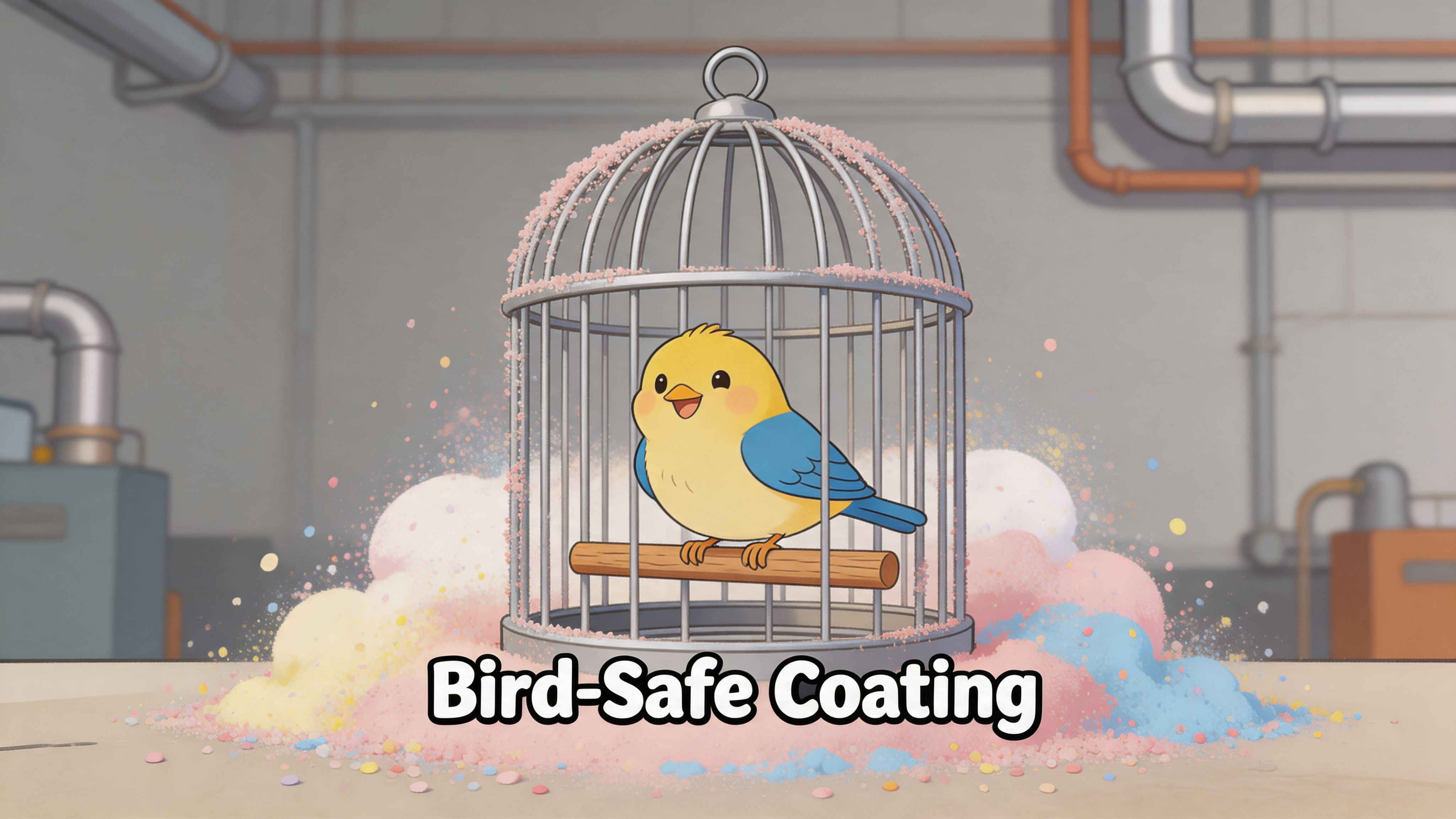
What powder coating actually does
A good cage doesn’t rely on bare metal. It uses a protective finish, usually powder coating, to form a hard outer layer over the frame and bars. In plain language, think of it as a protective shell that helps separate your bird from the underlying metal.
High-quality wrought iron style cages use multiple layers of powder coating, creating a barrier over 100 microns thick, according to this bird cage coating FAQ with chew and durability details. That same source notes the finish can withstand over 5,000 chew cycles, while single-layer options can fail after 500. It also states macaw beaks can reach up to 500 PSI, which helps explain why weak finishes don’t last long.
That sounds technical, but the bird-parent takeaway is simple. Stronger coating means better protection.
Why parrots put finishes to the test
Parrots don’t nibble politely. A determined cockatoo or macaw will keep working the same spot over and over. If the surface chips, cracks, or flakes, the metal underneath can become exposed. Once that happens, moisture and droppings can start causing trouble.
A sturdy powder-coated finish helps with two big jobs:
- It reduces direct wear on the metal
- It helps prevent rust and flaking that could become a safety issue
Poor finishes can turn a strong-looking cage into a maintenance headache.
If you can’t confirm the finish is bird-safe and durable, keep shopping. The frame might be solid, but the coating is what your parrot will meet first.
What to look for in real life
When you’re checking a cage description or inspecting one in person, pay attention to the finish the way you’d inspect cookware or a child’s toy. The surface should look even and smooth, not rough, dusty, thin, or patchy.
Good signs include:
- Clear mention of powder coating rather than vague “painted metal”
- Smooth coverage around bars, corners, feeder doors, and weld points
- No bubbling or rough flakes on edges
- No mystery wording about plating or decorative coating
The material under the coating still matters
Even when people call these wrought iron bird cages, the primary safety concern is the combination of metal plus finish. A solid modern steel frame with a proper bird-safe coating is a practical choice for many parrots. A weak finish over questionable metal is not.
Some shoppers get tripped up. They focus on size, stand, or color and forget that a coating failure can undo all those nice features. For medium-to-large parrots, especially the big chewers, surface quality isn’t a bonus. It’s part of the cage’s safety system.
A quick shopping reminder
If a cage listing spends a lot of time talking about style and almost no time talking about finish, that’s worth noticing. The safest cages usually make their construction details easy to find because those details matter.
A lovely shape is nice. A finish that stands up to beaks is better.
Built for Beaks Bar Spacing and Durability
A parrot tests a cage the way a toddler tests a baby gate. Every latch gets worked. Every bar becomes a climbing wall. Every weak point gets found.
That is why structure deserves its own close look. For medium-to-large parrots, a modern wrought iron style cage should feel less like furniture and more like safety equipment that also happens to sit in your home.
Bar spacing decides who the cage is actually for
Bar spacing is one of the easiest details to overlook, and one of the easiest ways to buy the wrong cage.
If the gaps are too wide, a curious bird may push its head, foot, or beak into a space that is not safe. If the gaps are too tight, climbing becomes awkward, and the cage may be a poor fit for the species. The goal is a size that supports natural climbing while preventing dangerous reaching and entrapment, as described on this heavy-duty cage specification page covering bar spacing and steel strength.
A good rule is simple. Match the spacing to the bird in front of you, not the cage’s decorative style, not the marketing photo, and not the idea that “bigger bird means any big cage will do.”
A practical way to judge fit
Different parrots use their cages differently.
- Conures and similar small-to-medium parrots usually need tighter spacing so they can climb comfortably without slipping into unsafe gaps.
- African Greys and Amazons need a balance of strength and spacing. They are athletic, smart, and very good at testing doors and feeder access points.
- Cockatoos and macaws need heavy bars, strong welds, and door systems that do not loosen after repeated beak work.
If you have ever watched a large parrot hang sideways from the roof of a cage while chewing a latch, you know why this matters. A cage can look roomy and still be wrong.
The safest spacing lets a parrot climb, perch, and explore without turning the bars into a trap.
Durability starts at the joints, not just the bars
Many shoppers focus on bar thickness because it is easy to see in a product photo. Thickness matters, but it is only one part of the story. Welds, door frames, feeder ports, roof joints, and the base connection usually tell you more about how a cage will hold up over time.
A sturdy cage feels stable when your bird lands hard on a perch, scrambles across the side panels, or yanks a toy against the bars. A weak cage often shows itself in small ways first. A door sits slightly crooked. A feeder door rattles. The tray shifts. The frame rocks when you roll the stand.
Those little signs matter because parrots repeat the same motions every day. Over months, small weaknesses become bent bars, escape routes, pinch points, and chipped coating around stressed joints.
What to check in real life
When you inspect a cage in person, or study the photos closely online, look for signs that the frame was built for actual parrot use.
Signs of a sturdier cage
- Smooth, even welds at corners and door frames
- Very little wobble when the frame is nudged
- Main doors that close squarely with a latch a clever bird cannot easily defeat
- Feeder doors that sit flush instead of shaking in their tracks
- A base and stand that feel planted rather than tippy or top-heavy
Warning signs
- Bars that flex easily under hand pressure
- Door gaps wide enough for beaks or toes to probe
- Rough joints or sharp points around welds
- Loose grates and trays that slide or jump out of place
- Decorative curves or scrollwork inside reach of a strong beak, especially on cages marketed more for style than parrot safety
That last point deserves emphasis. Many cages described as wrought iron are really decorative metal pieces with parrot-sized dimensions. For a medium-to-large parrot, decorative metalwork is not a bonus feature if it creates extra crevices, weak welds, or places where moisture can sit and rust can start.
Stability affects behavior too
Parrots do not just live in cages. They climb them like playground structures.
A stable cage supports that normal movement. A shaky one can make an already cautious bird more nervous, especially a rescue parrot that is still learning your home is safe. Other birds react the opposite way and start prying at every loose part because the cage gives them something to work on.
In both cases, durability shapes daily comfort. The cage should feel predictable under your bird’s feet.
My rule for medium-to-large parrots
Choose the strongest modern wrought iron style cage you can verify as bird-safe and maintain properly. For these birds, strength is not about looks. It is about bars that stay straight, doors that stay aligned, and a frame that keeps doing its job after years of climbing, chewing, and hard landings.
Wrought Iron vs Stainless Steel Cage Showdown
This is the matchup most parrot owners eventually face. Do you choose a powder-coated wrought iron style cage, or do you go straight to stainless steel?
Both can be good options. They just solve the problem in different ways.
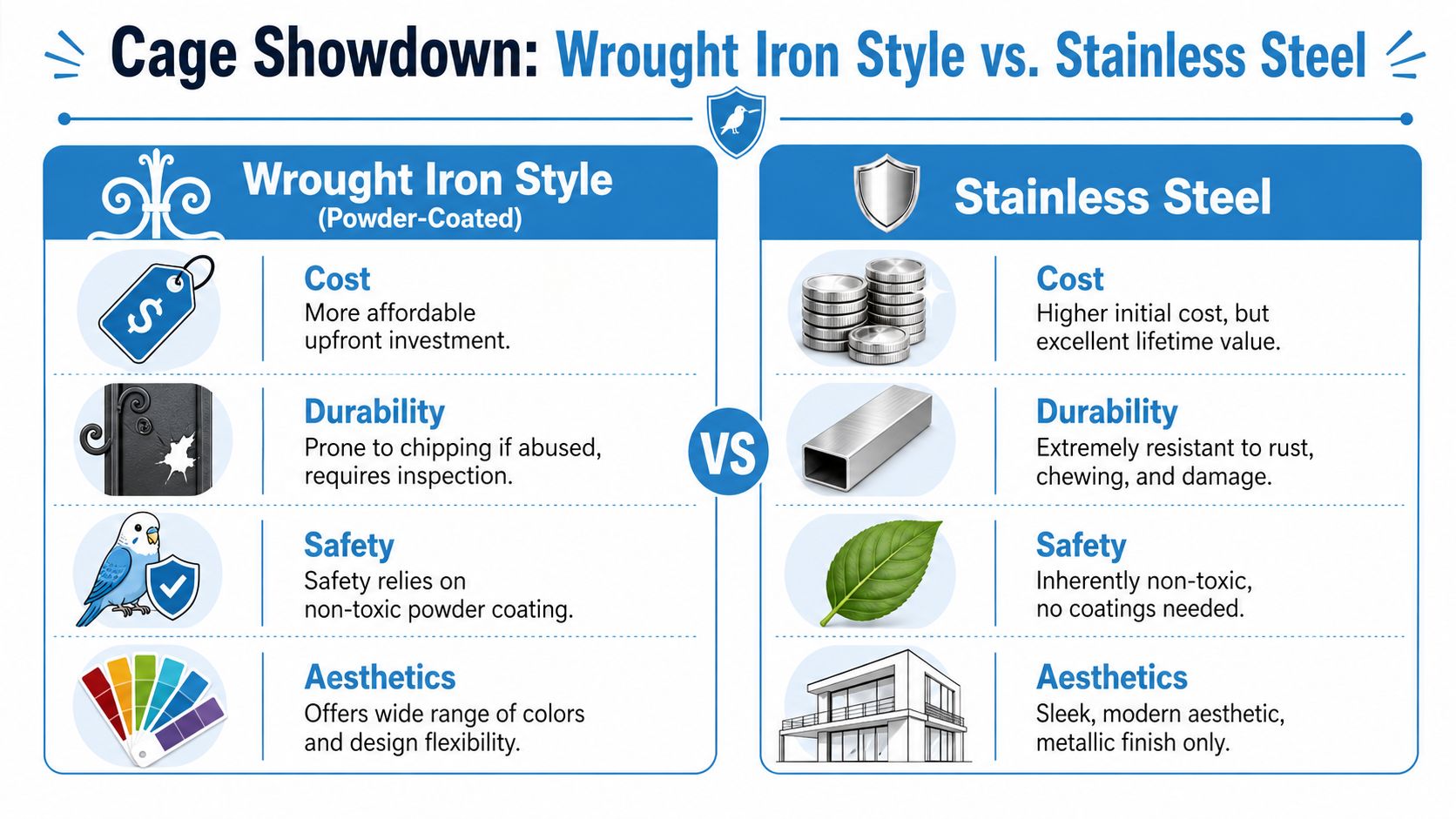
The biggest difference is safety approach
With a wrought iron style cage, safety depends heavily on the quality of the coating over the metal. With stainless steel, the material itself is the star. It doesn’t rely on a protective outer finish in the same way.
That distinction matters because avian veterinary studies indicate up to 30% of heavy metal poisoning cases in pet birds stem from galvanized or low-grade iron cages, as summarized on this bird cage product page discussing coating safety and stainless steel as an inert alternative. That doesn’t mean every powder-coated cage is unsafe. It means the coating and material quality must be taken seriously.
The short version
If you want a practical everyday answer:
- Powder-coated wrought iron style cages are often the best balance of strength, appearance, and accessibility for many homes.
- Stainless steel cages are excellent when you want maximum resistance to rust and fewer worries about coating wear.
- Basic light cages may work for smaller birds, but they’re often not the right long-term choice for medium-to-large parrots that chew and climb hard.
Here’s a simple side-by-side view.
| Feature | Powder-Coated 'Wrought Iron' Style | Stainless Steel |
|---|---|---|
| Material approach | Steel frame protected by bird-safe coating | Inert stainless steel surface |
| Upfront cost | Usually easier for many households to start with | Higher initial investment |
| Rust resistance | Good when finish stays intact | Excellent |
| Chew resistance | Strong, but coating needs inspection | Very strong without coating concerns |
| Color options | More variety | Metallic finish only |
| Maintenance focus | Watch for chips, scratches, and wear | Routine cleaning and general inspection |
A short visual can help if you’re weighing the trade-offs in a hurry.
Which one fits your flock
Wrought iron style may be the better fit if
- You want a strong parrot cage with more style and color choices
- You’re comfortable doing regular finish checks
- You need a sturdy setup for an Amazon, Grey, cockatoo, or macaw without jumping straight to stainless steel
Stainless steel may be the better fit if
- Your bird is an extreme chewer
- Your home is humid, or you want the simplest rust story possible
- You prefer paying more upfront for a long-term material solution
Choose the cage you can maintain well. A beautifully made cage still needs routine inspection, clean surfaces, and smart setup inside.
Don’t forget daily usability
The “best” cage on paper can still be annoying in real life if it’s hard to clean or awkward to use. I always tell bird parents to think about the boring stuff too. Can you reach the tray easily? Are the feeder doors secure? Is the top stable enough for supervised out-of-cage time if your bird likes to perch there?
That’s why this comparison isn’t about declaring a winner for every household. It’s about matching material to lifestyle, bird behavior, and maintenance habits.
For many parrots, a well-made powder-coated wrought iron style cage is a very sensible choice. For some homes, stainless steel is the peace-of-mind option. The right answer depends on your bird and how you live with them every day.
Keeping It Gleaming Cleaning and Rust Prevention
You bring home a beautiful cage, set up the perches just right, and a few weeks later you notice dried fruit on the bars, splashed bath water near the feeder doors, and one tiny rough spot you do not remember seeing before. That is how cage problems usually start. Not with a dramatic failure, but with small, easy-to-miss wear in places parrots touch every day.
For modern wrought iron style cages, cleaning is not only about appearance. It is how you protect the bird-safe coating, catch rust early, and make sure a medium or large parrot is not chewing on a damaged surface. If you are still comparing setups, this guide to the best bird cages for parrots helps put maintenance into the bigger safety picture.
Clean matters, but dry matters too
Many new parrot parents focus on droppings and food debris first. That makes sense. The second half of the job is moisture control.
A powder-coated cage works like a raincoat on metal. As long as that outer layer stays intact and dry, the metal underneath is protected. Let wet mash, fruit juice, bath spray, or soaked papers sit too long, and you create the exact conditions that wear finishes down faster, especially around tray lips, feeder doors, lower bars, and weld points.
That is why I always tell people to clean with two goals in mind. Remove grime. Remove moisture.
A routine that stays realistic
The best cleaning plan is the one you will keep doing. A short, steady routine usually protects a cage better than occasional marathon scrubbing.
Daily check
Take one minute and scan the cage like a safety inspector.
- Swap tray papers or liners
- Wipe fresh messes off bars and doors
- Remove wet food before it dries onto the coating
- Check bowls, perch ends, and corners for damp buildup
Weekly cleaning
This is the reset that keeps little problems little.
- Wash trays and grates
- Wipe the bars with a mild bird-safe cleaner or simple soap and water
- Dry every cleaned area well, especially seams and bottom panels
- Look closely at places your parrot climbs, chews, or hangs from
Monthly inspection
Once a month, slow down and use your eyes and hands.
- Check for chips, scratches, bubbling, or rough spots
- Inspect feeder doors, locks, and lower frame sections
- Roll the cage slightly if it has wheels and look underneath
- Notice any area where the finish looks duller than the rest
A coating problem often shows up first as texture, not color. If a spot feels raised, flaky, or gritty, pay attention.
Where rust usually starts
Rust rarely begins in the middle of a clean, untouched bar. It tends to show up where moisture lingers or where the finish has been stressed over time.
Watch these spots closely:
- Around food and water doors
- Tray edges and grate supports
- Bottom frame corners
- Welded joints
- Favorite chewing zones
Large parrots are very good at testing a cage with their beaks. An African Grey may scrape one area over and over. A cockatoo may work at a latch corner like it is a personal project. A macaw can turn a small coating weakness into a bigger one surprisingly fast.
What to do if you find a suspicious spot
Do not panic, but do not ignore it.
First, clean and dry the area so you can see it clearly. If it is only stuck-on debris, great. If the surface is chipped, bubbling, or showing rust, treat that as a safety issue, not a cosmetic one. Birds explore with their beaks and tongues. Any area with failing coating or active corrosion deserves a hard look.
For a small questionable area, limit your bird's access until you decide whether the cage can still be used safely. For widespread wear, repeated rust, or damage in heavy-contact areas, replacement is often the smarter choice.
Be gentle with the finish
Scrubbing harder does not make a cage safer. It can do the opposite.
Skip rough metal brushes, harsh abrasives, and aggressive tools that can scratch the protective coating. Soft cloths, non-scratch sponges, and patient cleaning are usually the better approach. You are trying to lift mess off the surface, not grind the surface away.
A clean cage supports health. A dry, intact, easy-to-inspect cage supports safety. For modern wrought iron style cages, both matter every single week.
The Ultimate Wrought Iron Cage Buyer's Checklist
When you’re finally ready to choose, it helps to stop thinking like a shopper and start thinking like a safety inspector with a very judgmental parrot on your shoulder.
A cage can look great online and still miss key details. This checklist keeps you focused on what matters most.
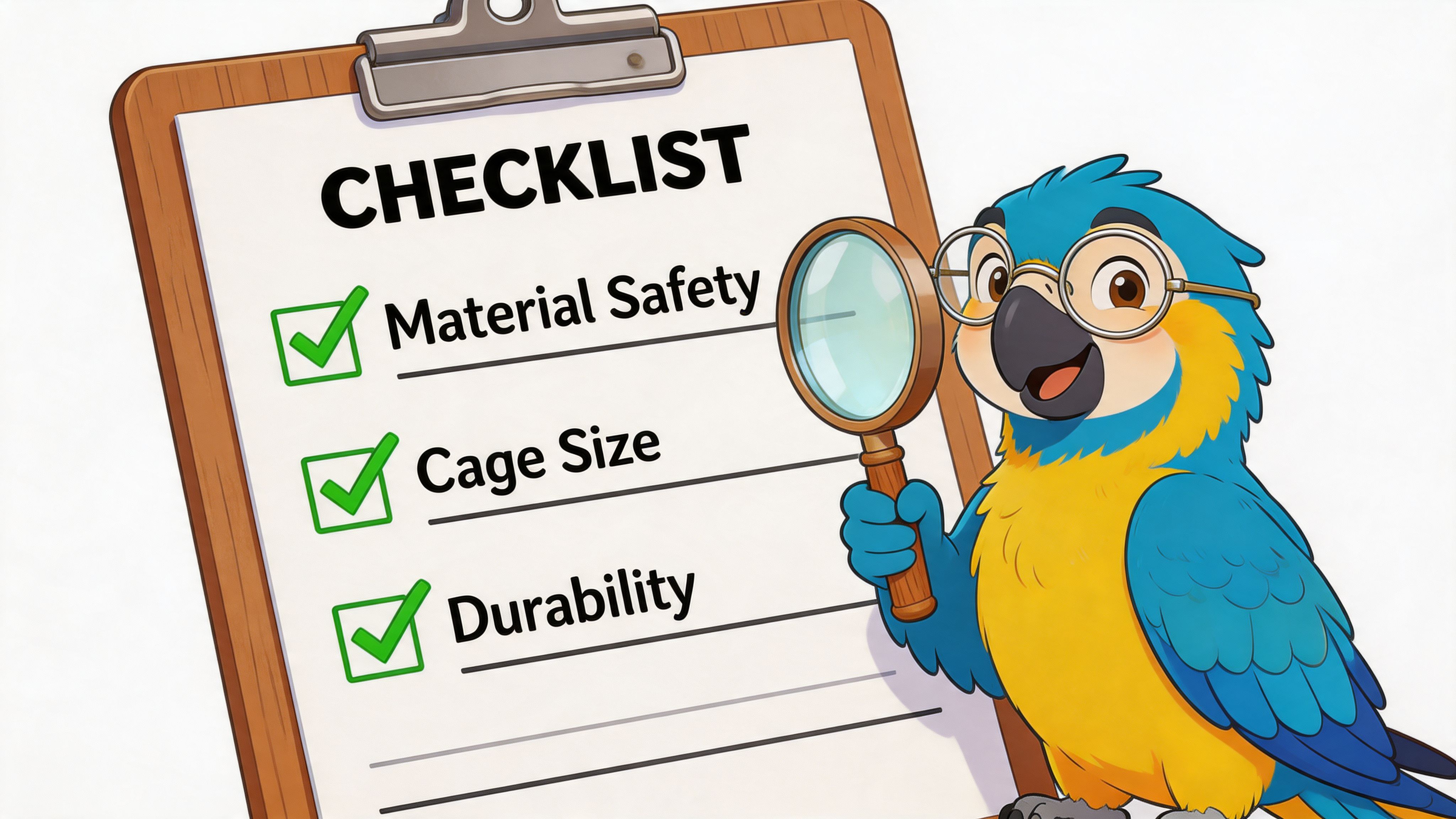
The non-negotiables
Start with the things that directly affect safety and everyday function.
- Correct bar spacing for your species. A conure, African Grey, Amazon, cockatoo, and macaw don’t all need the same setup.
- A bird-safe powder-coated finish with smooth, even coverage.
- Strong bars and frame stability so the cage doesn’t wobble or flex too easily.
- Secure locks and feeder doors because parrots are clever, persistent, and often delighted by cause-and-effect.
The hands-on inspection list
If you can inspect in person, use your eyes and your hands.
Surface check
Run your fingers carefully over the bars and around the doors.
Look for:
- Smooth coating
- No flakes
- No bubbling
- No rough edges or sharp points
Door check
Open and close every door you can.
Ask yourself:
- Does it swing cleanly?
- Does it latch securely?
- Could a smart parrot learn to pop it open?
Tray and grate check
Pull the tray out and slide it back in.
Notice whether it feels:
- Stable
- Easy to remove
- Simple to clean without scraping the frame
The quality-of-life details people forget
A safe cage should also be livable.
Check for these often-overlooked features:
- Stainless steel food bowls, which many bird parents prefer for easy cleaning
- Enough interior room for perches, toys, and movement
- A stand or base that feels balanced
- Caster wheels that roll smoothly and lock well if included
- Access points that make toy rotation and cleaning less awkward
A cage can be technically safe and still be frustrating to live with. If routine cleaning and setup feel difficult before the bird even moves in, that won’t improve later.
A smart final question
Before you buy, ask one last thing.
Can this cage support enrichment, not just containment?
That means room for:
- climbing paths
- multiple perch types
- foraging toys
- shredding toys
- easy bowl access
- safe movement without crowding the tail
If you want a second opinion while comparing layouts and sizes, this guide to the best bird cages for parrots and species-specific setups is a useful companion read.
A great cage should pass the checklist before you ever think about color, style, or whether it matches the furniture. Your parrot won’t care about the décor. They’ll care whether their home feels secure, roomy, and worth exploring.
Beyond the Bars Turning a Cage into an Enriched Home
A safe cage is the foundation. It isn’t the whole house.
Once you’ve chosen a well-built wrought iron style cage with the right spacing, strong construction, and a trustworthy finish, the next job is making it worth living in. That’s where enrichment comes in. A parrot cage should support movement, chewing, problem-solving, and rest, not just keep your bird in one place.
What turns a cage into a home
The best setups usually include a mix of:
- Perches with different textures and diameters
- Foraging toys that make birds work a little for treats
- Shredding toys for beak activity
- Climbing opportunities using bars, ladders, and thoughtful perch placement
- Open areas so the cage doesn’t feel stuffed
Toy rotation matters too. Even smart, busy parrots can lose interest if the same setup stays in place too long. Swapping toys and changing foraging options helps keep the cage fresh and mentally engaging.
Keep comfort and behavior in balance
Try not to overcrowd the interior. This is a common beginner mistake. Bird parents buy lots of lovely parrot toys, then hang them all at once until the cage looks like a jungle gym designed by a very excited raccoon.
Leave clear pathways for climbing and turning. Place favorite perches where your bird can rest comfortably. Give food and water bowls easy access. Make room for both activity and quiet time.
If you’re looking at complete setups, an elegant flight bird cage bundle for parrots can make it easier to build around a cage with the essentials in mind.
A strong cage protects your bird. Enrichment helps your bird thrive. Put those together, and you get the goal every parrot owner wants: a secure, stimulating space where happy birds make happy homes.
If you’re building a safer, more enriching setup for your feathered friend, Squawk Shop is a great place to explore parrot cages, bird-safe toys, perches, foraging gear, and thoughtfully chosen accessories that help turn a sturdy cage into a happy home.