

Can Parrots Eat Strawberries: Benefits & Risks for Birds
Yes, parrots can eat strawberries, but they should be a treat, not a daily food. A practical limit is 1 to 2 servings per week with only a few berries per serving, so your bird gets the fun without too much sugar.
If you're sitting with a bowl of fresh berries and your feathered friend is giving you that very serious “I would also like a taste” stare, you're not alone. Most bird parents ask the same thing at some point. Is this safe, or is this one of those foods that looks healthy for us but isn't right for parrots?
The good news is that strawberries are generally considered a safe, nontoxic treat for parrots when served properly. The part that trips people up is the “how much,” “how often,” and “how do I prepare it?” side of things. That's where careful bird care matters most.
That Sweet Red Berry Your Parrot is Eyeing
A lot of us have had this little kitchen standoff. You rinse a strawberry, your parrot spots it from across the room, and suddenly they're leaning forward, pinning their eyes, and acting like you've opened a treasure chest.
That curiosity makes sense. Parrots love color, texture, and foods they can investigate with their beaks. A fresh strawberry checks all three boxes. For many birds, it's not just food. It's a tiny enrichment moment.
Safe does not mean unlimited
The short answer to “can parrots eat strawberries” is yes. What matters next is remembering that a safe food still needs a smart place in the diet.
Bird parents often hear “safe in moderation” and get stuck there. Moderation sounds helpful, but it's fuzzy. If you're raising a tiny budgie, “a little” looks very different than it does for a macaw. If your bird already gets pellets, vegetables, foraging time, and a few treats, strawberries should slide into that routine without taking over the menu.
Good feeding habits start with context: treats work best when they support a balanced diet instead of replacing staple foods.
If you've ever wondered what your companion bird's natural food habits are built around, what parrots eat in the wild is a helpful place to build that bigger-picture understanding.
Why this question matters
Strawberries are easy to share, which is exactly why they can be overfed. They're soft, sweet, and simple to cut up. That convenience is nice for us, but parrots can quickly start expecting the sweet stuff first if we aren't careful.
A confident bird parent knows two things at once. Yes, a strawberry can be a lovely treat. No, it shouldn't crowd out the foods your parrot needs most.
The Berry Good Benefits of Strawberries
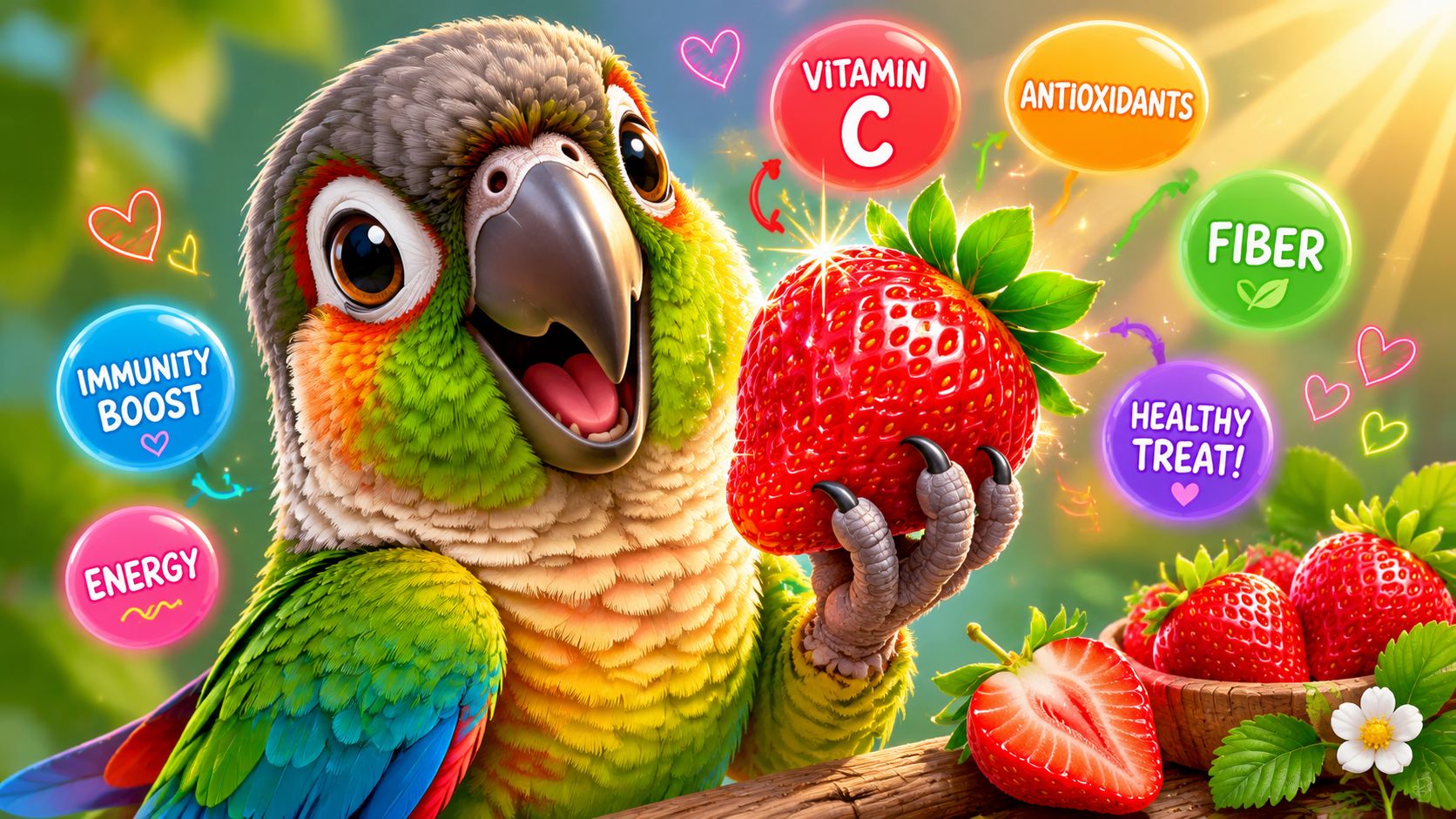
Strawberries bring more to the bowl than just bright color and snack-time excitement. Bird-focused nutrition guidance describes them as a low-calorie, high-water fruit that can add variety to a parrot's diet, with nutrients including vitamin C, vitamin K, vitamin B1, vitamin B6, potassium, and magnesium. The same guidance also reminds bird parents to offer fresh fruit in small quantities so staple foods stay front and center in the diet, as explained in this parrot nutrition guide on human foods parrots can eat.
What makes strawberries appealing
For many parrots, strawberries are a sensory treat. They're juicy, fragrant, and easy to hold or peck apart. That can be especially useful if you're offering more variety and trying to keep meals interesting.
Some birds like neat little slices in a dish. Others prefer a chunk they can grab with a foot and shred with dramatic flair. Either way, the berry becomes more than a snack. It becomes a little activity.
Simple benefits bird parents can appreciate
- Hydration support: Because strawberries are high in water, they can feel refreshing, especially when your bird enjoys moist fresh foods.
- Diet variety: A varied fresh food routine can keep parrots more interested in mealtime.
- Micronutrients: Strawberries contain the vitamins and minerals listed above, which is one reason many bird parents include them as part of a rotating fresh-food lineup.
If you're building a better fresh-food routine, Squawk Shop's guide to fruit for birds can help you think beyond a single treat and create more variety.
A strawberry is at its best when it adds interest to the diet, not when it becomes the main event.
That's the sweet spot. Fun, fresh, and bird-safe, with the rest of the meal plan still doing the heavy lifting.
Strawberry Safety What Every Bird Parent Should Know
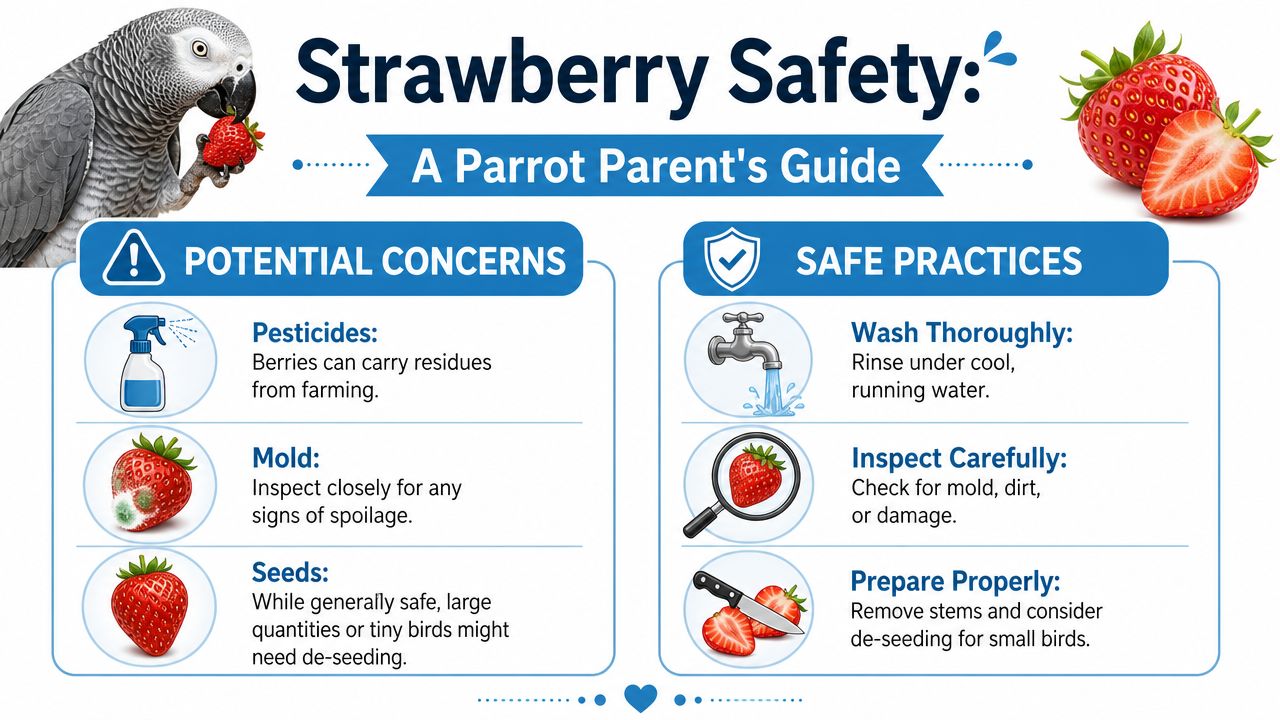
Strawberries are safe for parrots, but safe serving still matters. The biggest issues aren't usually the berry itself. They're what might be on it, what happens when too much fruit sneaks into the diet, and what people accidentally offer instead of fresh fruit.
Fruit should stay in the treat lane
One of the clearest feeding guidelines is that fruit should be only about 5% of total intake, and strawberries should stay a small fraction of the diet because their natural sugar can displace pellets and other nutrient-dense foods if fed too often. That concern is explained in this strawberry feeding guide for parrots.
That doesn't make strawberries “bad.” It just means they belong in the same category as other sweet fresh treats. Nice to offer. Not something to build the whole menu around.
The main safety checks
- Wash carefully: Fresh berries can carry dirt or residues from growing and handling.
- Check for spoilage: Soft fruit can mold quickly, and parrots should only get fresh, sound pieces.
- Skip processed strawberry foods: Strawberry jam, berries packed in syrup, candy, and heavily sweetened dried fruit aren't suitable choices for parrots.
Fresh, plain strawberry is the goal. If it comes with syrup, extra sugar, or dessert ingredients, leave it off your bird's menu.
What confuses people most
A common mix-up is thinking “natural sugar” means “unlimited.” It doesn't. Natural sugar is still sugar, and parrots have tiny bodies. A small extra amount can become a big dietary shift faster than many new owners realize.
Another point of confusion is products labeled “strawberry flavored.” Flavoring is not the same as fresh fruit. Crackers, yogurt snacks, cereal bars, or sweetened fruit pieces might sound harmless because they mention strawberries, but they are not the same thing as offering a fresh berry prepared for a parrot.
If you keep one rule in mind, make it this one. Offer fresh strawberries in modest amounts, and let pellets, vegetables, and other balanced foods stay in the starring role.
How to Prepare Strawberries for Your Parrot
A good treat starts with simple prep. The goal is to make the strawberry clean, easy to eat, and sized for your bird's beak and style of eating.
Start with a fresh berry
Pick strawberries that look ripe and clean, without mushy spots or mold. A firm berry is easier to inspect and easier to cut into tidy pieces.
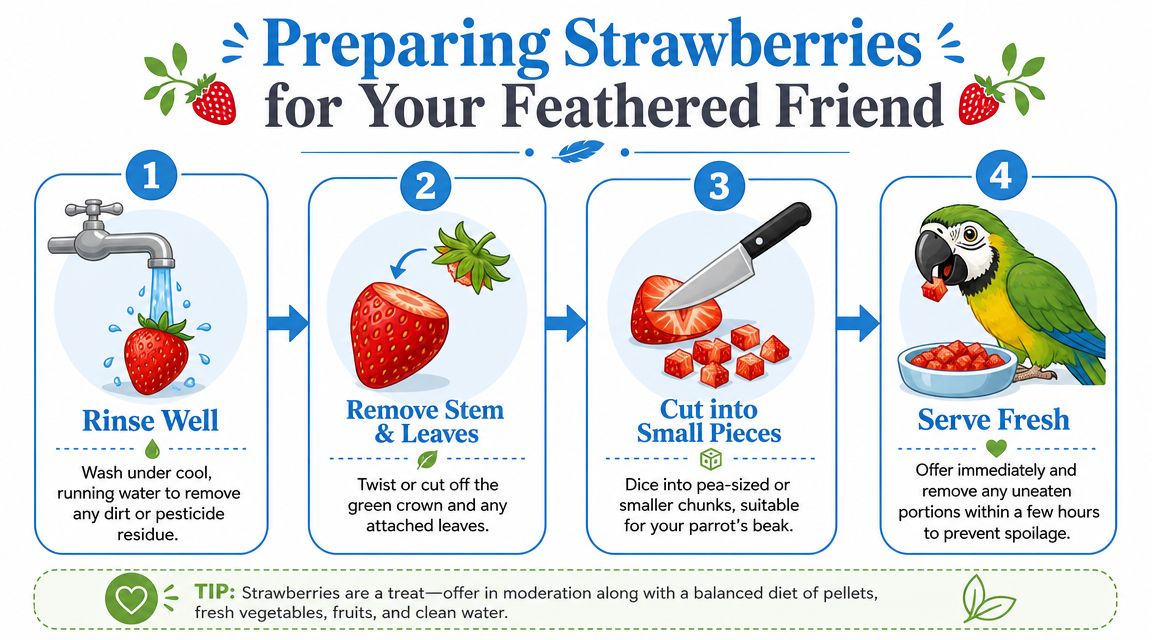
Then rinse it well under cool running water. That step matters even if the fruit looks clean.
What to remove and what is safe
Independent bird-care guidance notes that parrots can eat the fruit, seeds, and even the leafy tops or green crowns, which surprises a lot of people. The same guidance recommends limiting strawberries to 1 to 2 servings per week, with only a few berries per serving, to lower the chance of stomach upset from too much sugar, according to this bird-care article about strawberry leaves and parrots.
That means you don't need to panic over the tiny seeds. They're generally considered safe. Some bird parents still prefer to trim more carefully for very small birds, mostly for neatness and peace of mind.
A simple prep routine
- Rinse the berry well under cool water.
- Inspect every side for soft spots, mold, or damage.
- Trim if you want to. The top is considered safe, but many owners remove it for easier serving.
- Cut to bird size so your parrot can handle it comfortably.
- Serve fresh, then remove leftovers before they turn messy.
For a quick visual walk-through, this short video shows the prep idea in action:
Smaller birds do best with tiny, manageable pieces. Larger parrots can handle bigger chunks, but fresh and clean still matters just as much.
How Much Strawberry is Just Right
This is the part most bird parents really want. Not just “in moderation,” but what that looks like in the bowl.
The safest broad rule is already clear. Offer strawberries 1 to 2 times per week, with only a few berries per serving for the birds that can handle that amount, and scale down from there for smaller parrots. Since parrots vary a lot in body size, beak size, and eating style, it helps to think in terms of bird size categories rather than one serving for every species.
Strawberry Serving Guide by Parrot Size
| Parrot Size | Examples | Suggested Serving |
|---|---|---|
| Small | Budgies, parrotlets, lovebirds | A very small piece or a few tiny bites |
| Small to medium | Cockatiels, small conures | A few small pieces |
| Medium | Green-cheek conures, Quakers, Senegal parrots | Several bite-sized pieces, still well under a whole large berry |
| Medium to large | African Greys, Amazons | A modest portion made of small chunks |
| Large | Cockatoos, macaws | Up to a few berries as part of the serving guideline, not a fruit-heavy snack plate |
How to use the table in real life
A budgie doesn't need much at all. A tiny sliver or a couple of little nibbles is plenty. A cockatiel or conure might enjoy a few small chunks in a dish. An African Grey or Amazon can handle more, but “more” still means a treat-sized amount. A macaw may physically manage larger pieces, yet that doesn't mean strawberry should become a big daily side dish.
The easiest test is this. After serving strawberry, your bird should still be eager to eat their regular foods. If they start holding out for sweet fruit and ignoring balanced staples, the portion is too generous or the treat is showing up too often.
A helpful mindset
Think of strawberries the same way you think about training treats or special foraging rewards. They're valuable because they're special. Keeping them occasional helps protect both nutrition and novelty.
Turn Treat Time into Fun Time with Enrichment
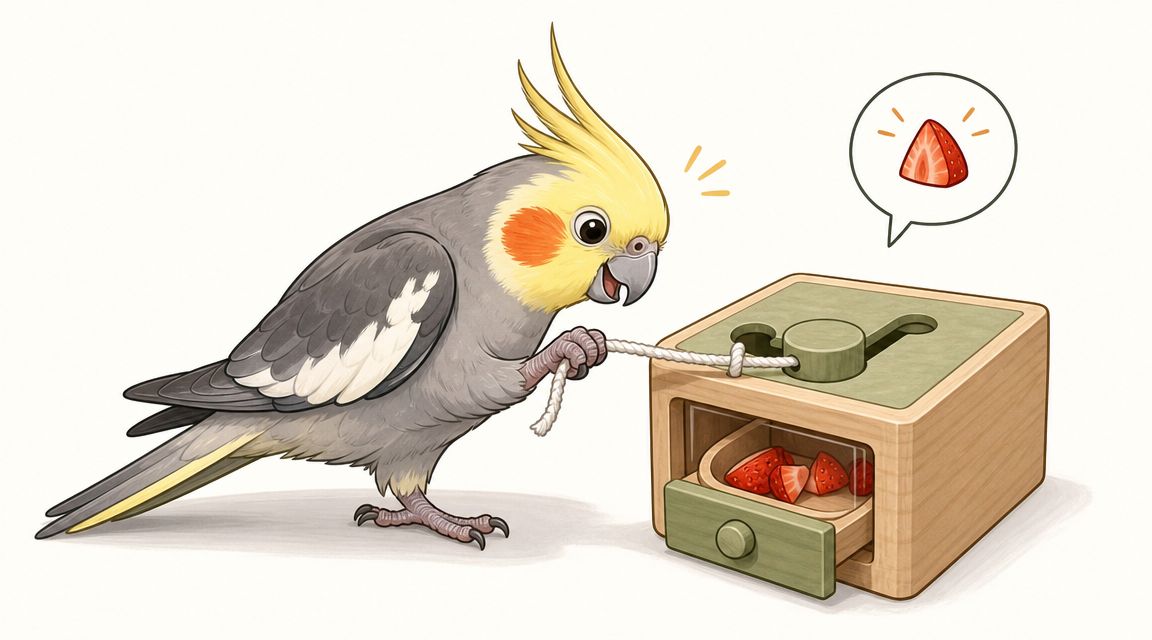
A strawberry doesn't have to land in a plain food cup to be useful. Treat time can double as enrichment, and that's often where parrots get the most joy. A little problem-solving, shredding, and searching taps into the behaviors they're built to use every day.
Easy ways to make strawberries more interesting
Instead of handing over a slice right away, try using small strawberry pieces as part of a simple activity.
- Tuck pieces into a foraging toy: Let your bird work a little to reach the treat.
- Offer on a bird-safe skewer: This gives many parrots a chance to nibble, shred, and play.
- Hide a few pieces in a paper cup or crinkle toy: Great for curious conures, cockatiels, and Greys who love to investigate.
- Pair it with training time: Tiny strawberry bits can be a special reward for recall, step-up practice, or calm handling.
Match the setup to your bird
A budgie may prefer a very easy setup with tiny visible pieces. A cockatiel might enjoy picking strawberry from a simple hanging toy. Larger parrots like Amazons, cockatoos, and macaws often enjoy working through a sturdier puzzle or holding a chunk in the foot while they explore it.
If you're building a treat routine around positive reinforcement, bird training treats can help you think through portion size, value, and variety. Squawk Shop also carries parrot foraging toys and other bird-safe enrichment gear that can be used to offer fresh treats in a more engaging way.
When a parrot has to search, tug, peel, or poke to reach a treat, snack time becomes mental exercise too.
That's a lovely shift in perspective. You're not only asking, “Can my parrot eat strawberries?” You're also asking, “How can I make this healthy little treat part of a happier day?”
If you'd like to turn snack time into enrichment time, take a peek at Squawk Shop. You'll find bird-safe toys, foraging options, cages, perches, and everyday parrot supplies that can help your feathered friend stay active, curious, and content while you build a balanced care routine.