

A Yummy Bird Bread Recipe Your Parrot Will Love
You know that feeling when your parrot is watching everything you do in the kitchen like a tiny feathered supervisor? That's usually when bird parents start thinking, “I want to make something special for you.”
A good bird bread recipe scratches that itch beautifully. It feels homemade and thoughtful, but it's also practical. You can bake a batch, freeze portions, and use it for snacks, training, foraging, and those moments when your bird needs something new to investigate besides your coffee mug.
The best part is seeing that first curious nibble. Some parrots dive in right away. Others act personally offended for a few minutes, then circle back and decide it might be worth shredding, tasting, and eventually loving. That little process is part of the fun.
More Than a Treat A New Way to Spoil Your Bird
Your parrot spots something warm in your hand, stretches their neck, then freezes. First comes the head tilt. Then the test nibble. Then the piece gets carried off like treasure. Homemade bird bread often gets that kind of reaction, and that is one reason I keep it in my regular rotation.
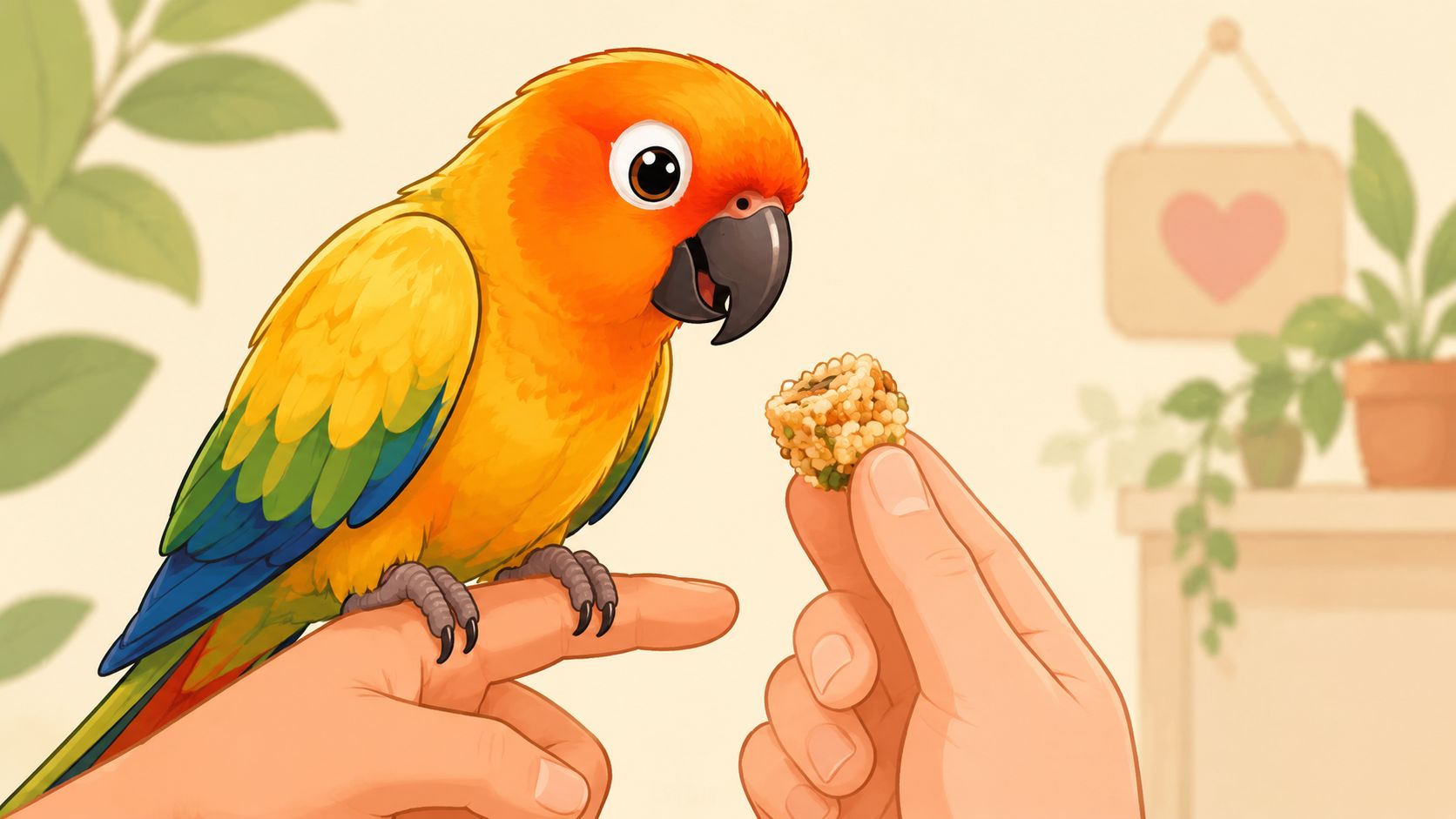
Bird bread earns its keep because it does more than satisfy a sweet little “I made this for you” moment. It gives you a soft, easy-to-portion food that can carry chopped vegetables, fit into a training session, and turn an ordinary feeding time into a small foraging job. That matters with parrots, because boredom shows up fast. A food item they can shred, hold, taste, and investigate usually gets more interest than another plain serving dropped in the bowl.
I also like it because it works with the rest of a balanced diet instead of replacing it. If your bird already eats a solid base of high-quality parrot food pellets, bird bread becomes a flexible extra. You can use it to introduce new textures, mix in bird-safe produce, or reward effort during training without relying on sugary human snacks.
Why bird bread earns a spot in the routine
Some homemade bird snacks are too messy to make again, or so rich that they only make sense once in a while. Bird bread is easier to live with. Bake a batch, cut it into small portions, and you have something useful for the week instead of a one-time novelty.
That practical side is what keeps bird bread in the “make again” category.
Bird bread works best when you use it as enrichment food, not just as a special snack.
What makes it so useful
A small square can help in several ways:
- Encourage tasting by pairing familiar texture with finely chopped bird-safe vegetables
- Break up routine for birds that seem bored with the same bowl setup every day
- Support foraging when you tuck pieces into paper cups, toys, or clean crinkle paper
- Help with training because soft bites are easy to portion into tiny rewards
- Build confidence for cautious birds that need time to investigate new foods
The best part is what happens after baking. One recipe can become breakfast, a foraging challenge, a training reward, or a busy-time activity while you clean cages or answer emails. That is a much better kind of spoiling. Your bird gets a treat, and a job to do with it.
Stocking Your Parrot Pantry Safe Ingredients and Tools
Before you mix anything, take a minute to build a bird-safe setup. Many bird parents find this step saves them trouble. A good bird bread recipe is flexible, but not every “healthy” kitchen ingredient belongs in a parrot bowl.
Start with a simple base
For a beginner-friendly loaf or tray bake, keep the foundation plain and easy to handle. Whole grain ingredients are popular because they give the batter body and make it easier to fold in bird-safe extras.
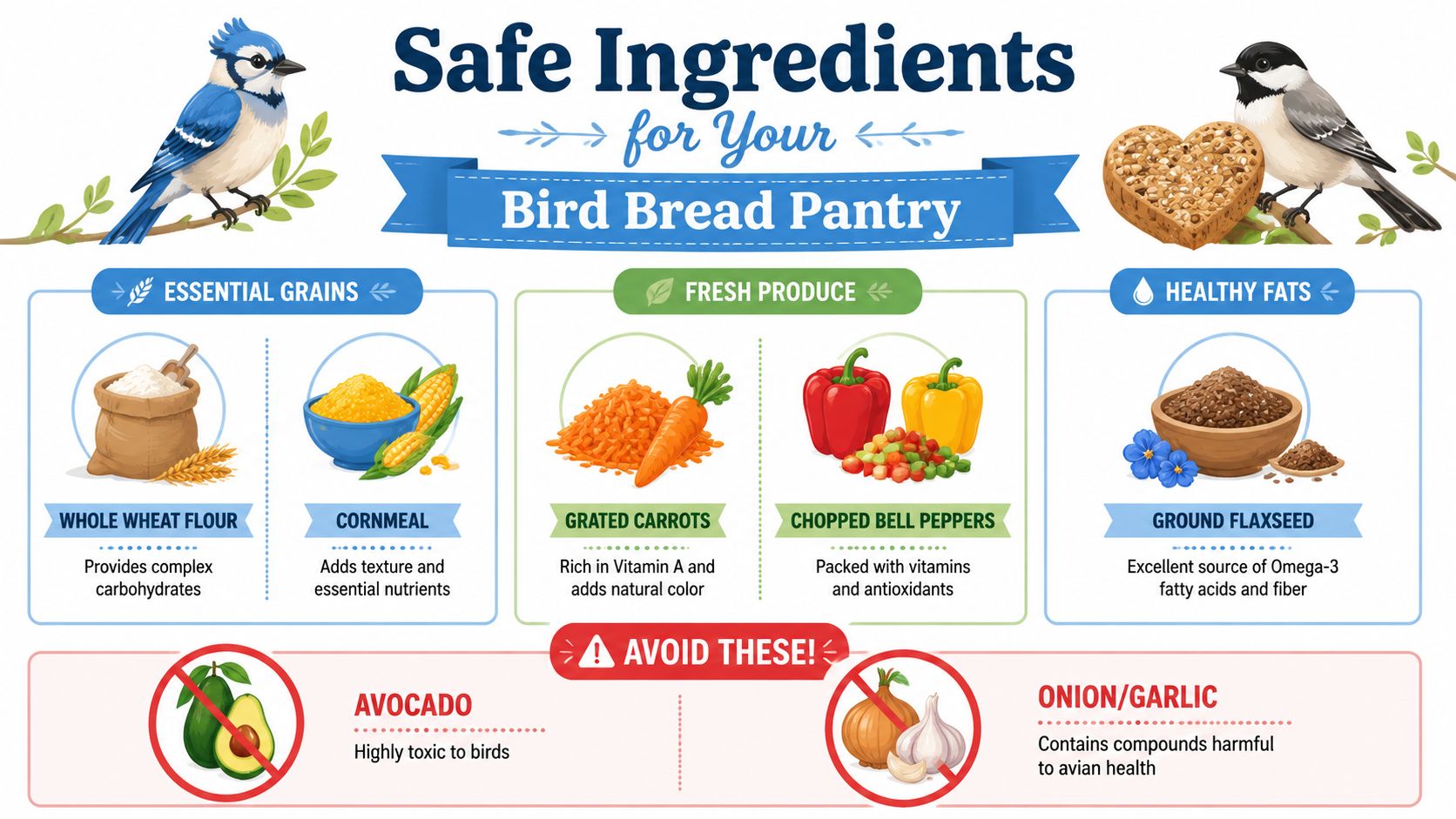
A practical pantry base often includes:
- Wholemeal or whole grain flour for structure
- Rolled oats for texture
- Water as the simplest mixing liquid
From there, you can customize carefully. The key point is that variability is the whole strength of bird bread. Some recipes use eggs, non-dairy milk, or applesauce, but what matters most is choosing ingredients that fit your specific bird's needs. Different parrots, including smaller birds, larger birds, breeders, or birds with calcium sensitivities, may need different choices, as discussed in this guide to healthy birdie bread variations.
Bird-safe add-ins that usually work well
Keep add-ins simple, clean, and familiar to your bird. Chopped or grated pieces tend to mix in better than big chunks.
- Vegetables like carrots, bell peppers, leafy greens, or squash
- Seeds or nuts in small amounts if they're already part of your bird's normal diet
- Pellets if you want the bread to taste more familiar to a pellet-fed bird
- Fruit in modest amounts, since wetter mixes can get tricky fast
If you're still building your parrot's everyday diet, Squawk Shop's article on bird food pellets is a helpful companion read.
Practical rule: Bird bread should fit into the diet your bird already has. It shouldn't be the thing that replaces a balanced feeding plan.
Ingredients I would skip
This is the safety-first part. Don't toss in ingredients just because humans eat them.
Avoid using:
- Avocado
- Onion
- Garlic
- Salty, sugary, or heavily seasoned foods
- Anything you aren't sure is bird-safe
Also be careful with random “boosters.” Just because an ingredient sounds nutritious doesn't mean it belongs in every parrot recipe.
Kitchen tools that make life easier
You don't need fancy gear. A few basics make the job smoother:
| Tool | Why it helps |
|---|---|
| Mixing bowl | Gives you room to combine dry and wet ingredients evenly |
| Spoon or spatula | Good for folding in produce without overworking the mix |
| Grater or knife | Helps keep vegetables small and manageable |
| Baking tray or muffin pan | Lets you choose slices, squares, or small portions |
| Cooling rack or plate | Helps moisture escape after baking |
If you prep these first, the recipe itself feels easy instead of chaotic.
The Ultimate Bird Bread Recipe Step by Step
A good batch starts before the pan goes into the oven. The mix should be sturdy, easy to portion, and forgiving enough that you can turn part of it into training treats or foraging pieces later.
Mix the dry ingredients first
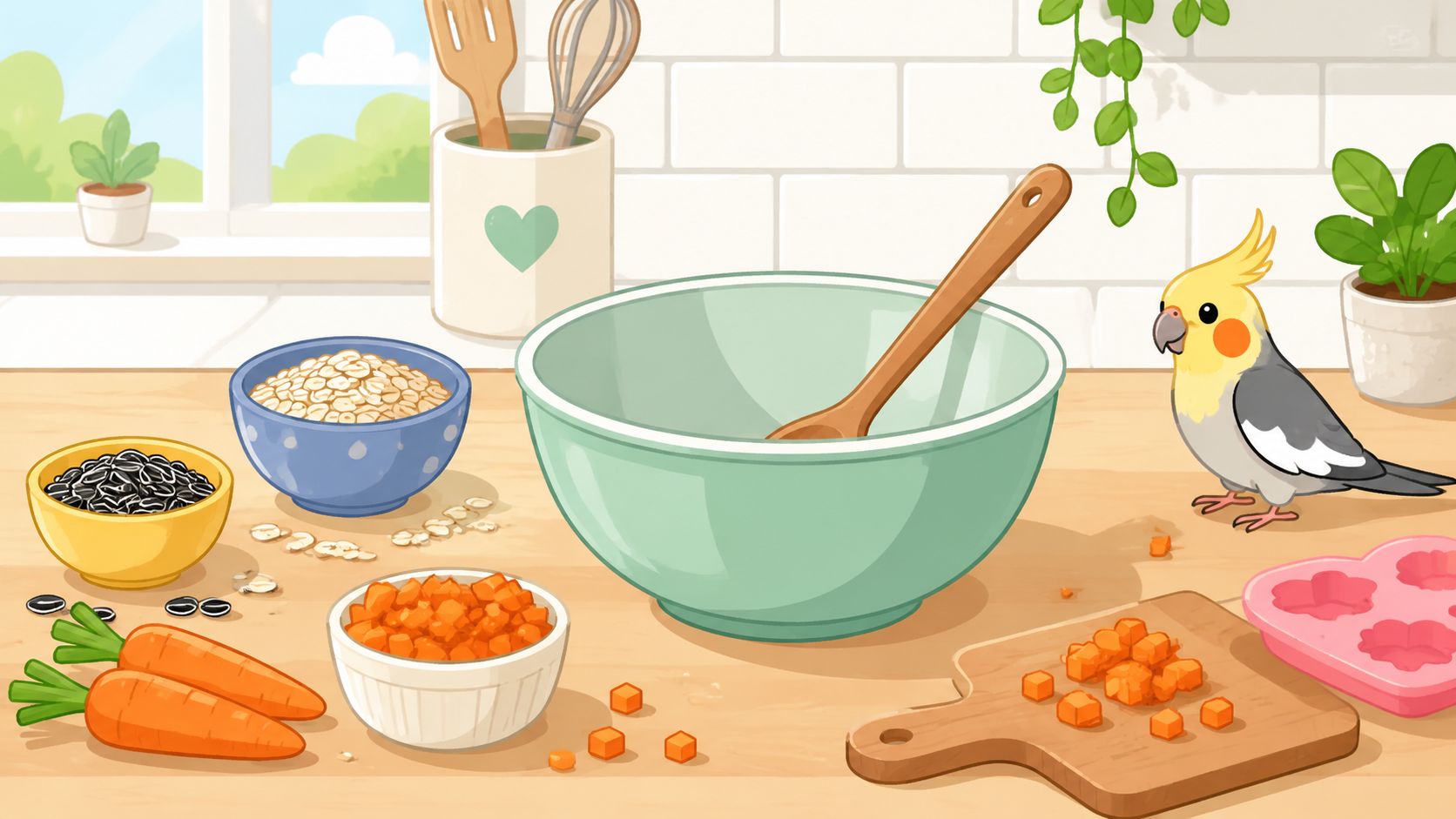
Start with a large bowl and combine:
- 2 1/2 cups of wholemeal flour
- 1 cup of rolled oats
- Any dry bird-safe extras you've chosen
Add 1 cup of water and stir until the mixture becomes a thick batter or a soft, pressable dough. The exact texture will shift depending on your flour and add-ins, so use the measurement as a starting point, not a rule carved in stone.
Fold in chopped vegetables, grated carrot, a spoonful of crushed pellets, or a light sprinkle of seed after the base comes together. I keep wet ingredients modest. Too much moisture gives you a gummy middle, and that kind of loaf is harder to portion cleanly for toys, training cups, or quick rewards.
Aim for the right texture
The best bird bread mixture feels moist and heavy, but it should still hold its shape on a spoon. If it runs like pancake batter, add a little more dry mix. If it breaks apart and won't press together, add a small splash of water and stir again.
Texture decides whether this recipe feels easy or frustrating.
A slightly firmer dough usually bakes more evenly and makes cleaner cubes once cooled. That matters if you want pieces that fit into foraging wheels, paper cups, treat clips, or mini training sessions without crumbling in your hand.
A crumbly, pressable dough usually gives better results than a loose, wet batter.
Bake it in the format that suits your bird
Spread the dough into a small baking dish, press it into little rounds, or spoon it into a mini muffin pan. Choose the shape based on how you plan to use it. A tray bake is great if you want cubes for shredding boxes. Mini muffins are handy if you want ready-made portions for training, travel carriers, or hanging toys.
Bake at 350 to 375°F (175 to 190°C) until the top is set and the center is cooked through. Many bird bread recipes fall in the 20 to 30 minute range, but pans, moisture, and thickness change the timing. Start checking early. For smaller portions like mini muffins, a toothpick test works well. For a tray bake, I also press lightly on the center. It should feel springy, not damp.
A practical note from my kitchen. Slightly drier bread is often more useful than ultra-soft bread if enrichment is the goal. Soft bread is fine for immediate serving. Firmer bread is easier to cube, hide, skewer, and tuck into foraging setups.
Here's a helpful video if you like seeing the texture and prep style in action:
A few baker's notes from the parrot kitchen
Birds have opinions. One of mine used to ignore neat little slices but went straight for rough-edged muffin pieces because they were easier to grab and shred. That changed how I bake. I now make at least part of each batch in smaller portions because they do double duty as food and activity.
If you plan to use the finished bread for enrichment, bake with the final job in mind. Mini muffins work well for stuffing into cups or cardboard trays. Thin tray bakes are better for cutting into tiny rewards. Slightly thicker squares hold up better on skewers once cooled.
The recipe is simple, but its primary advantage is flexibility. One batch can cover a treat, a training reward, and an afternoon foraging project.
Cooling Storing and Serving Your Creation
The oven part is done, but don't rush this stage. Fresh bird bread smells amazing, but if you pack it away warm, trapped moisture can make it soggy fast.
Let it cool all the way
Move the bread out of the pan once it's firm enough to handle. Cooling it on a rack or plate helps steam escape, which gives you a better final texture. If you cut it too soon, soft centers may crumble more than you want.
For serving, think in tiny portions first. Budgies and cockatiels usually do best with a very small piece. Conures and African Greys can handle a bit more. Larger parrots like Amazons, cockatoos, and macaws may enjoy a bigger chunk, but bird bread still works best as part of a varied feeding routine, not a giant bakery breakfast.
Batch prep is where bird bread shines
One of the most useful things about bird bread is that it can be made ahead. Once baked and cooled, it can be cut into portions and frozen. Some bird parents notice thawed pieces can turn a bit crumbly, but the convenience is worth it, especially for training or weaning support. Moist ingredients like pumpkin, berries, or chopped vegetables can affect shelf life and texture, which is why storage matters so much, as noted in this bird bread storage and batch-prep guide.
A simple storage routine
- For the fridge keep only a small active batch ready to use
- For the freezer portion pieces first so you only thaw what you need
- For serving later let pieces thaw naturally and check texture before offering
- For moist recipes keep a closer eye on freshness because produce-heavy breads spoil faster
Small batches in the fridge, larger batches in the freezer. That setup keeps bird bread useful instead of wasteful.
From Snack to Challenge Fun Enrichment Ideas
A lot of people stop at “my parrot ate the bird bread.” That's nice, but it's only half the fun. True magic happens when you turn that same recipe into an activity.
Why bird bread works so well for enrichment
Parrots love food they can manipulate. A neat pellet in a bowl is easy. A crumbly muffin piece tucked into paper, wedged into a foraging toy, or threaded onto a skewer makes them pause, investigate, and problem-solve.
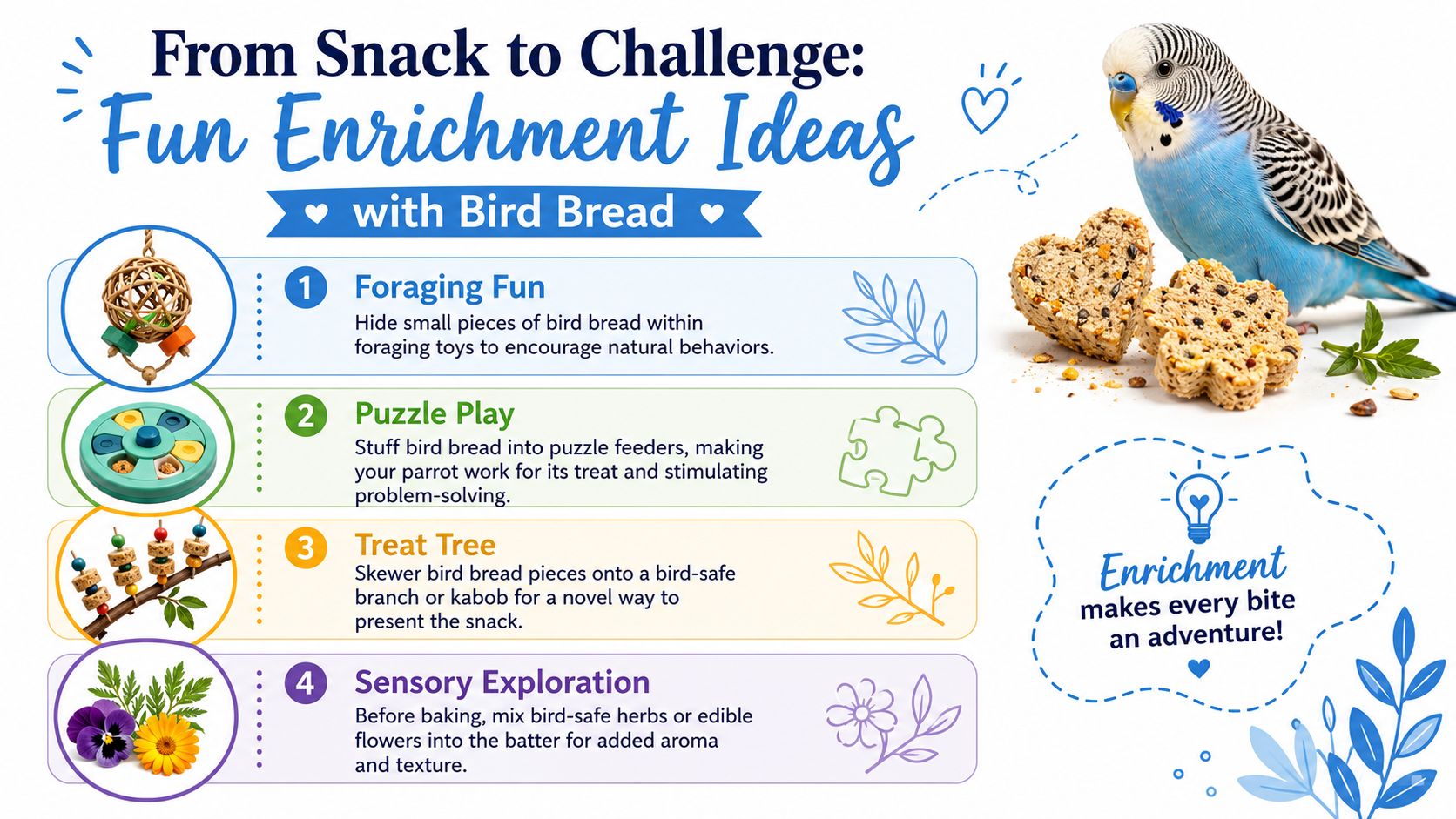
One expert suggestion I love is making a hole in each mini muffin before baking so the cooled bread can be threaded onto skewers or hung from toys. That turns snack time into a foraging job instead of a quick bite.
Easy ways to use it beyond the food bowl
- Hide tiny cubes in foraging toys so your bird has to search and pull
- Press a piece into a puzzle feeder for parrots that enjoy working things loose
- Thread mini muffins onto a bird-safe skewer for cage play or playstand time
- Crumble a little over familiar food to tempt a cautious eater into trying something new
- Offer different textures by serving one piece soft and another slightly drier
Bird bread offers more than just a recipe. It supports natural behaviors like chewing, tearing, exploring, and foraging.
Match the challenge to the bird
A budgie or cockatiel may prefer tiny soft crumbs in a shallow forage tray. Conures often enjoy digging pieces out of paper cups. Larger parrots like Greys, Amazons, cockatoos, and macaws usually appreciate chunkier pieces they can hold with a foot and destroy with enthusiasm.
If you want more ideas for keeping clever beaks busy, Squawk Shop's guide to the top 5 parrot toys that keep your bird busy pairs nicely with a bird bread routine.
Food can be enrichment when the bird has to explore, pull, shred, or work for it.
Your Bird Bread Questions Answered
How often can I give my parrot bird bread
Think of bird bread as a useful extra, not the whole menu. It can be part of enrichment, training, or variety, but it shouldn't crowd out your bird's main diet.
Can I use regular flour instead of whole grain flour
You can keep the recipe simple, but whole grain style bases are popular because they're sturdy and easy to pair with bird-safe add-ins. If you make a substitution, keep the rest of the mix plain and watch the texture closely.
My bird is picky. What if they ignore it
That's normal. Many parrots need time with a new food. Offer a tiny piece, crumble some over familiar foods, or use it in a foraging setup so interacting with it feels playful instead of suspicious.
Can I make it more customized for my species
Yes, and that's one of the best things about bird bread. Smaller parrots may do better with softer, plainer pieces. Larger parrots may enjoy denser chunks they can hold. Birds with unique dietary needs deserve extra care with ingredient choices.
What if I want to add spices or extras
Keep it simple and bird-safe. If you're curious about one common pantry add-in, Squawk Shop has a helpful read on whether birds can eat cinnamon.
Is bird bread supposed to look perfect
Not at all. If it bakes through, cools well, and your bird enjoys it safely, you've done great. Parrots don't care if the edges are uneven. They care whether it's fun to eat, fun to toss, and fun to investigate.
If you're building a happier, busier routine for your feathered friend, Squawk Shop is a lovely place to explore bird-safe toys, foraging gear, playstands, and parrot care resources that make enrichment easier every day. Happy birds really do make happy homes.