

Can Parrots Eat Chocolate: The Toxic Truth & Safe Treats
Chocolate is toxic to parrots and should never be offered under any circumstances. Even small amounts can cause serious illness, and one bird-care warning notes that 100 grams could be enough to be fatal for a parrot, with smaller species at even greater risk.
If you're reading this because your bird just grabbed a bite from a brownie, cookie, or candy wrapper, take a breath. Panic is normal when our feathered family gets into something dangerous, and chocolate is one of those foods where fast action matters. A curious conure on the couch, a cockatiel sneaking a nibble from a dessert plate, or an Amazon tearing into a shiny candy wrapper can turn a normal evening into a rush of worry.
The single most important takeaway is simple. Can parrots eat chocolate? No. Never.
That answer applies to budgies, cockatiels, conures, African Greys, Amazons, cockatoos, and macaws alike. Size changes the level of risk, but it doesn't make chocolate safe. What matters now is knowing why it's dangerous, how to spot trouble, what to do right away, and how to keep your home safely chocolate-free without making treat time boring for your bird.
The Unmistakable Answer to a Scary Question
A lot of bird parents land on this question in one of two moments. Either you're planning treats and wondering if a tiny taste is okay, or your stomach just dropped because your parrot got into human food. Both situations need the same answer. Chocolate is a hard no for parrots.
Parrots are clever, quick, and often very interested in whatever we're eating. That makes chocolate especially risky in real homes, not just in theory. A dropped candy piece, a mug cake on the coffee table, or a holiday dessert tray left unattended can be enough to create an emergency.
Why this answer has to be absolute
Some foods fall into a gray area. Chocolate doesn't. It contains compounds that birds can't handle safely, and even a small exposure can become serious fast. That means there isn't a "just a lick" amount that makes sense to test.
Practical rule: If chocolate touched your bird's beak, tongue, or crop by accident, treat it like a poisoning concern, not a snack.
This matters whether you share your life with a tiny budgie or a large macaw. Smaller parrots can be affected even more quickly, but no companion bird should be given chocolate on purpose.
What bird parents need most in the moment
When owners are scared, they usually want three things right away:
- A clear yes-or-no answer. No, parrots can't eat chocolate.
- A way to judge urgency. Any known ingestion should be taken seriously.
- A calm next step. Remove access, call for veterinary guidance, and gather details.
If your bird hasn't eaten any and you're just checking, that's excellent. Prevention is the win. If your parrot may have nibbled some already, don't wait to "see how they do." Quick action gives your feathered friend the best chance.
Why Chocolate is a No-Fly Zone for Parrots
Chocolate is dangerous to parrots because it contains theobromine and caffeine. Those two compounds are toxic to birds, and a parrot's body can't safely process them the way people do. PetMD's bird poisoning guidance notes that dark chocolate with 70% cocoa can have a theobromine concentration exceeding 10 mg/g, while milk chocolate has less than 3 mg/g, and even tiny amounts can trigger severe reactions in parrots.
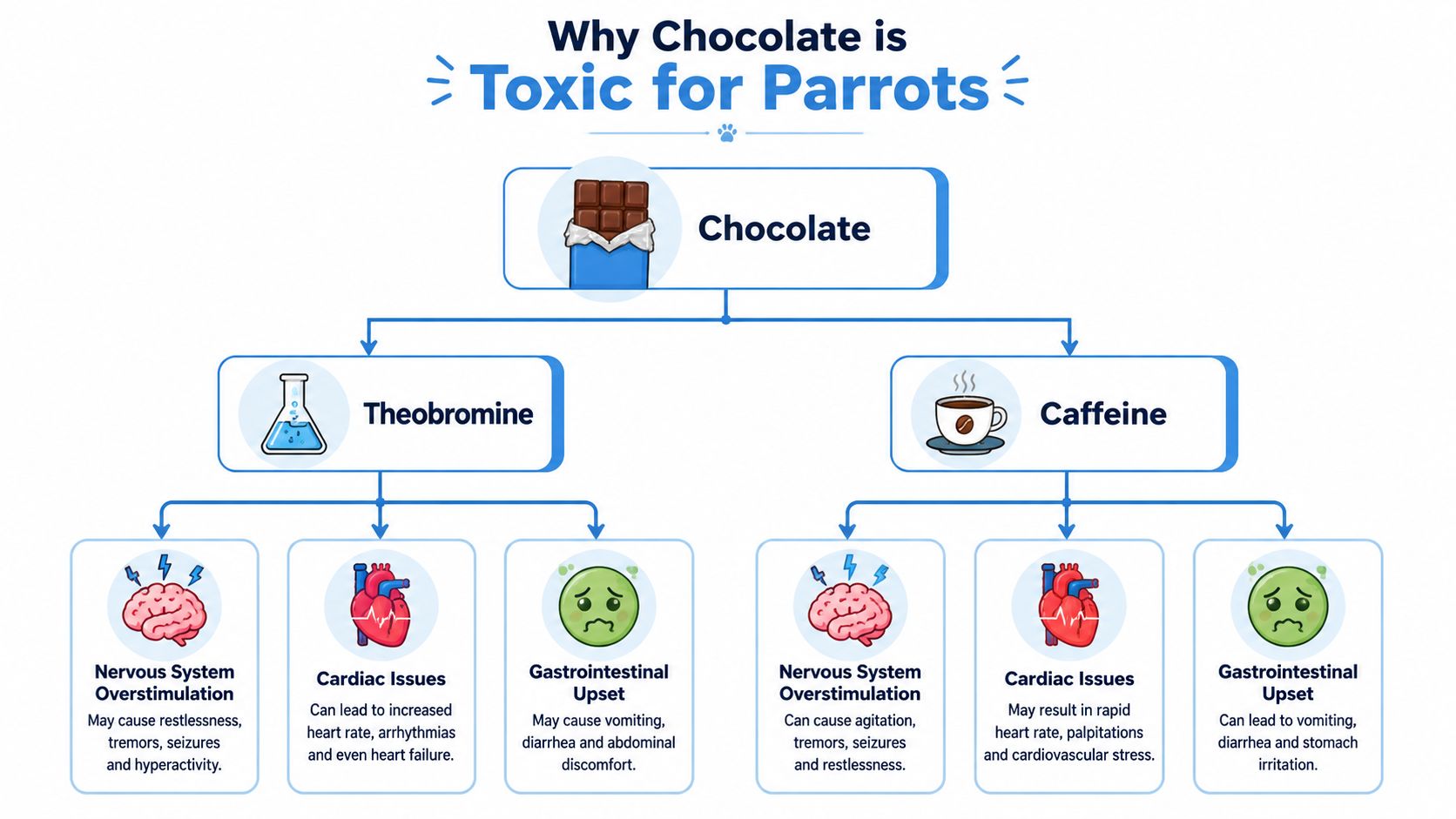
What those compounds do inside a bird's body
Imagine putting the wrong fuel into a very sensitive engine. The bird's system doesn't just get "a little upset." It can become overstimulated in ways that affect the nervous system, the digestive system, and the heart.
PetMD explains that caffeine and theobromine act as adenosine receptor antagonists, which leads to excessive central nervous system stimulation and cardiotoxicity in birds. In simpler words, chocolate can push a parrot's body into a dangerous overdrive.
That overstimulation can show up as frantic behavior, tremors, vomiting, diarrhea, and severe heart problems. In the worst cases, birds can develop seizures or dangerous rhythm changes.
Not all chocolate is equally dangerous
The word "chocolate" covers a lot of products, and that matters. The more cocoa solids a product contains, the more dangerous it tends to be for parrots.
A simple way to understand this is:
| Chocolate type | Relative concern for parrots | Why |
|---|---|---|
| Dark chocolate | Highest | More cocoa means more theobromine |
| Baking chocolate | Extremely dangerous | Very concentrated cocoa content |
| Milk chocolate | Lower than dark, still dangerous | Less cocoa, but still contains toxic compounds |
| Chocolate desserts | Unpredictable and unsafe | May combine chocolate with other unsafe ingredients |
This is why a tiny piece of dark chocolate can be more alarming than a larger smear of a lower-cocoa treat. It still isn't safe either way.
Chocolate safety works differently from foods like herbs or mild spices. If you're comparing human foods in your kitchen, it's helpful to know that some items may be tolerated in limited forms while others are absolute no-give foods, as discussed in this guide on whether birds can eat cinnamon.
What works and what doesn't
What works is simple prevention. Keep chocolate out of reach, don't share desserts, and assume wrapper-chasing counts as a real risk.
What doesn't work is guessing that a crumb is too small to matter, or assuming white, milk, or dark chocolate are all "basically the same." For parrots, the safest dose is none.
Recognizing the Signs of Chocolate Poisoning
Chocolate poisoning can look messy, fast, and confusing. Some birds act obviously sick. Others seem oddly wired before they crash. What you notice may depend on your bird's size, the kind of chocolate involved, and how much was eaten.
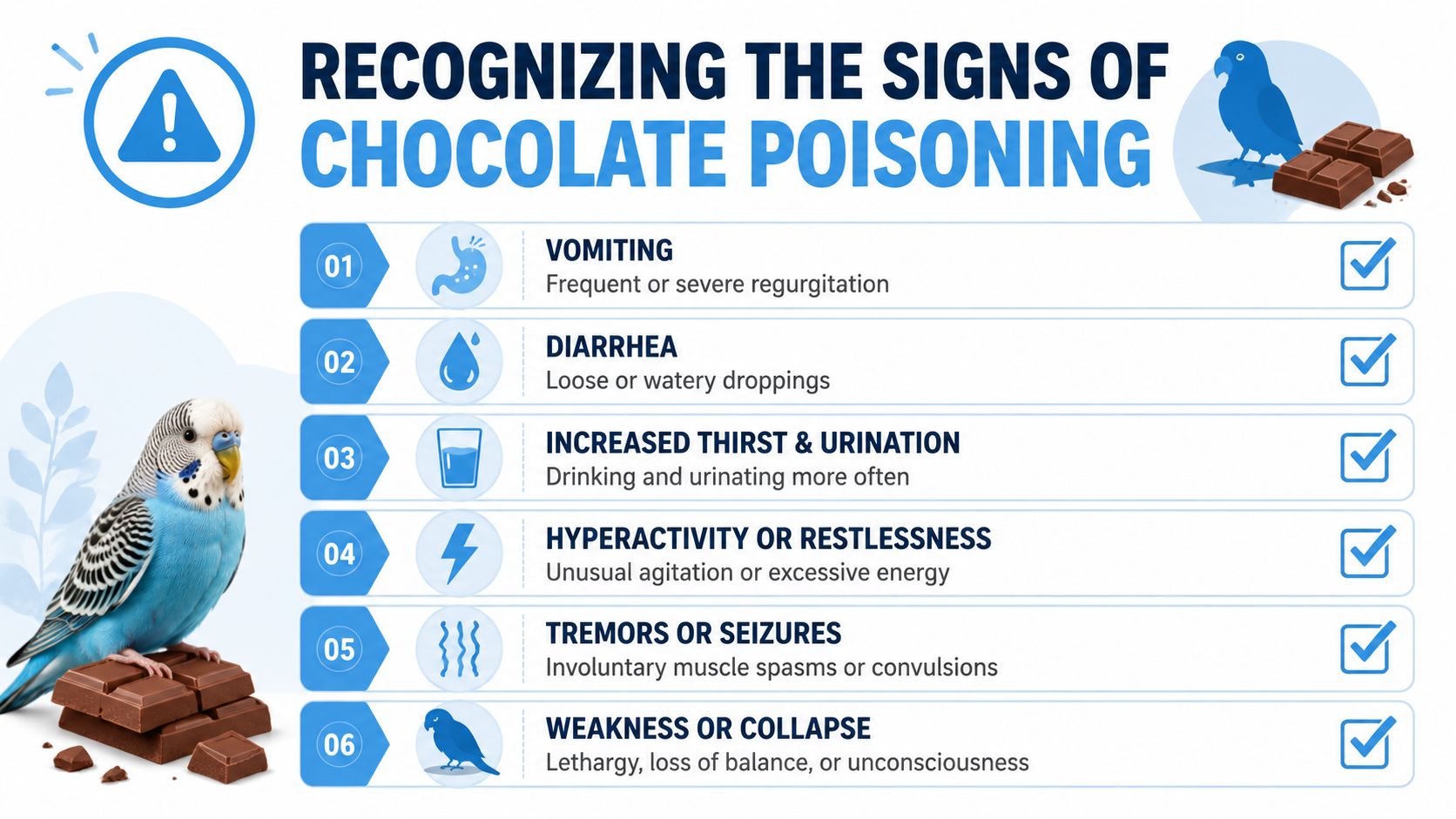
Early warning signs
These are the signs bird parents often spot first:
- Vomiting or regurgitation. Anything unusual coming up after a suspected nibble deserves attention.
- Diarrhea or watery droppings. Digestive upset is often one of the first clues.
- Restlessness. Your bird may seem agitated, unable to settle, or strangely frantic.
- Hyperactivity. A bird that suddenly seems overamped can be in trouble, not just excited.
Some parrots also look uncomfortable in a way that's hard to describe at first. They may pace, shift constantly, or act "off" compared with their usual behavior.
Severe signs that need urgent help
As toxicity worsens, signs can become much more serious:
- Tremors. Shaking isn't normal and shouldn't be watched at home.
- Seizures. This is an emergency.
- Weakness or collapse. A bird that can't perch well, slumps, or loses balance needs immediate veterinary care.
- Heart-related distress. You may not be able to identify a rhythm problem yourself, but a bird can become critically ill very quickly.
Any symptom after suspected chocolate exposure is enough reason to call an avian vet right away.
Why small birds worry us more quickly
A budgie, parrotlet, cockatiel, or conure has much less margin for error than a large macaw or cockatoo. That doesn't mean larger birds are safe. It means smaller bodies can run into danger with even less chocolate on board.
One of the hardest parts for bird parents is that symptoms don't always wait around politely. A bird can go from "maybe okay" to clearly unwell faster than many people expect. If your gut says something isn't right, trust that instinct and make the call.
Your Emergency Action Plan What to Do Immediately
If your parrot ate chocolate, focus on action, not guilt. Birds are fast, curious, and talented at finding trouble. What helps now is moving calmly and getting professional guidance quickly.
Start with this visual checklist, then work step by step.
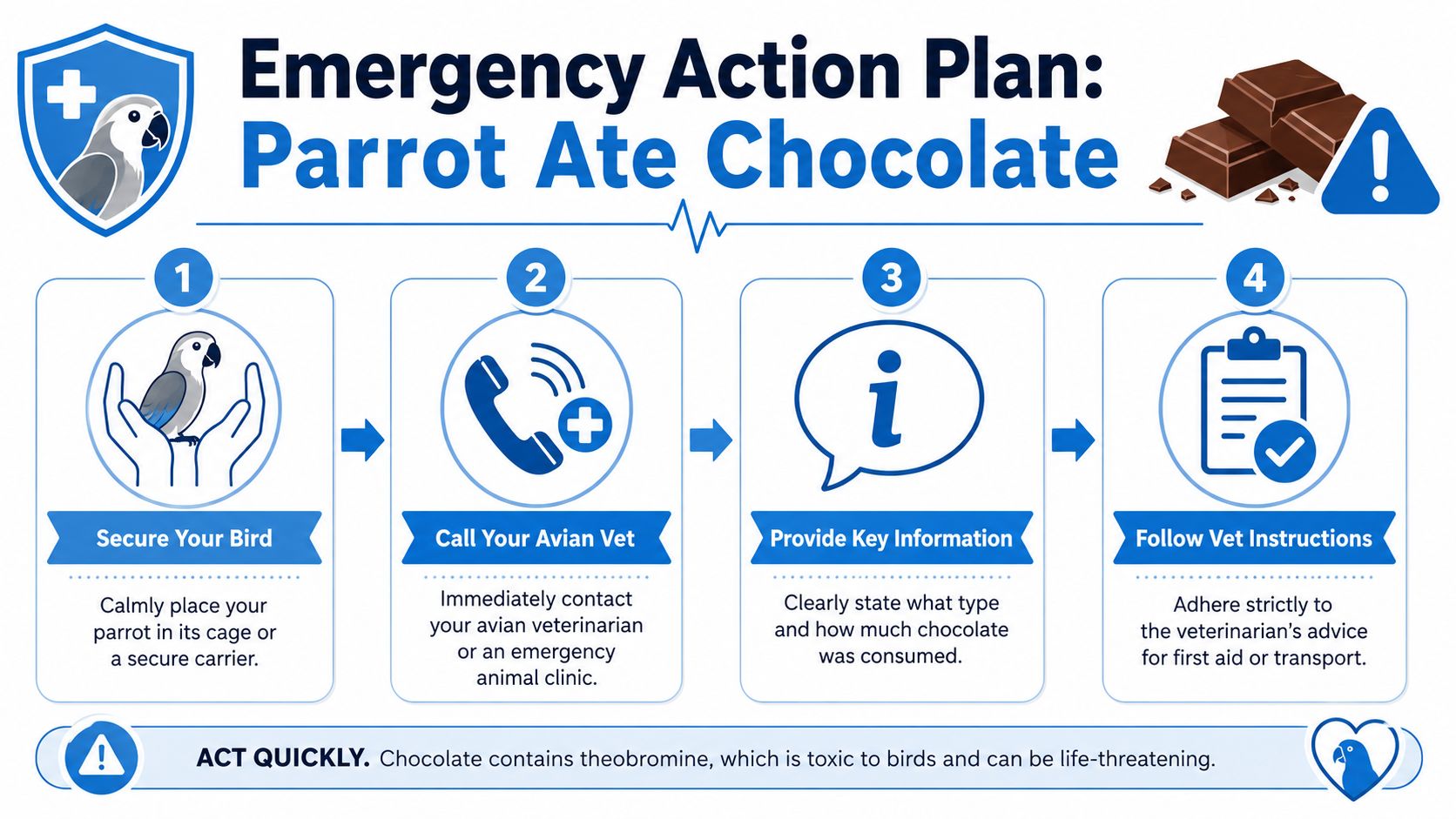
Step 1 Secure your bird and remove the chocolate
Put your parrot somewhere safe and quiet. A cage or secure carrier is usually best. Remove any remaining chocolate, crumbs, wrappers, frosting, or dessert dishes so your bird can't go back for another bite.
Try to stay steady with your body language and voice. Our flock picks up on panic very easily, and a frightened bird is harder to handle.
Step 2 Call an avian vet or poison service now
Call your avian veterinarian, an emergency animal clinic, or the Pet Poison Helpline at 855-764-7661. According to Birdtricks' chocolate toxicity guidance, toxicity is dose-dependent, and for a 500g parrot, eating 10g of 80% dark chocolate can exceed the toxic threshold and cause irreversible damage without immediate veterinary intervention.
This short video can help reinforce what urgent response looks like in a real-life situation.
Step 3 Gather the details your vet needs
Before or during the call, collect the information that will help the clinic advise you quickly:
- What kind of chocolate was it. Dark, milk, brownie, cookie, candy bar, cocoa powder, or something else.
- How much might your bird have eaten. Estimate if you can. Even a rough guess helps.
- What species is your bird. A budgie and a macaw don't present the same way.
- Your bird's weight, if you know it. This can be very useful for triage.
- When it happened. Minutes matter.
- Any symptoms you've seen. Vomiting, tremors, loose droppings, collapse, unusual behavior.
If you have packaging, keep it with you. Cocoa percentage matters. A label showing dark chocolate or a high cacao percentage can change the urgency of the response.
Bring the wrapper, container, or recipe details with you if you head to the clinic. It saves time and reduces guessing.
Step 4 Follow instructions exactly
Don't try home remedies unless a veterinarian specifically tells you to. Don't wait for symptoms. Don't assume your bird is fine because they still want to chatter, climb, or act annoyed with you.
The best outcome usually comes from speed, solid information, and professional treatment. Your job is to be the calm cockpit crew. Secure the bird, make the call, and move.
Safe Treats and a Chocolate-Free Home
Once the emergency piece is clear, the next step is making sure it doesn't happen again. The good news is that prevention can be simple, and treat time can stay fun without any risky human sweets in the mix.
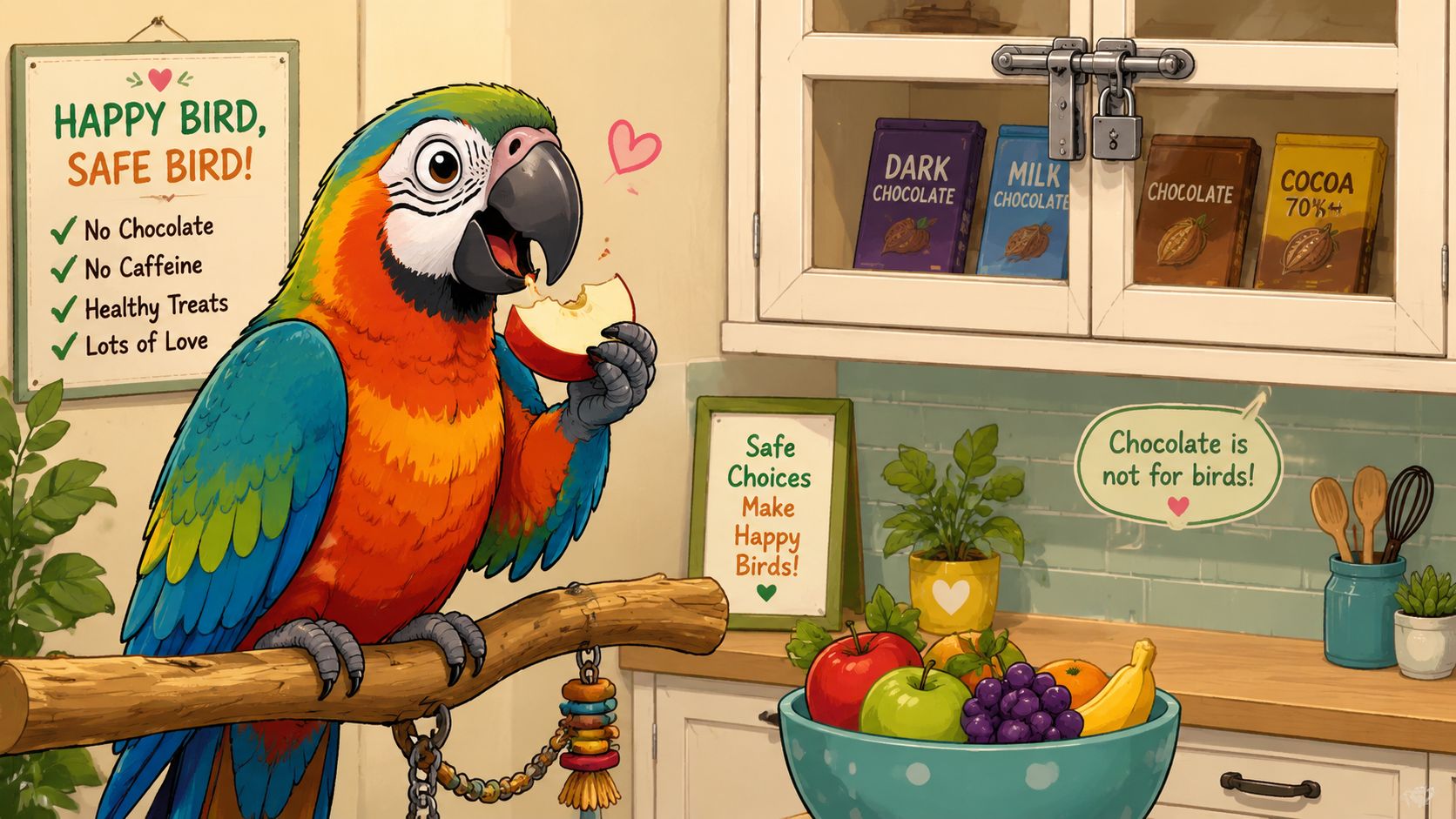
Bird-proof the snack zone
Most chocolate accidents happen during normal life. Movie night. Holiday baking. A candy bowl on the table. A child walking around with a cookie. Prevention works best when it matches real habits.
Here are the home changes that help most:
- Store sweets up high and closed. Curious beaks can open more than people expect.
- Clear low tables quickly. Coffee tables and side tables are prime danger zones.
- Watch wrappers. Birds are drawn to shiny, crinkly packaging.
- Set family rules. Everyone in the home should know that parrots don't share dessert.
A "just this once" household is usually where accidents happen. A clear no-sharing rule is easier to follow.
Offer treats that actually support good parrot care
Safe treats don't need to be boring. Many parrots enjoy fresh produce prepared in bird-safe portions and textures. Chopped fruit and vegetables can turn snack time into enrichment, especially when you vary shape, color, and presentation.
If you want ideas, this guide to fruit for birds is a helpful place to start with bird-safe options.
You can also make healthy treats work harder by using them as part of enrichment:
- Hide small pieces in foraging toys. This encourages natural search-and-discover behavior.
- Tuck treats into shreddable materials. It keeps busy beaks focused on safe fun.
- Rotate presentation. Skewers, cups, puzzle toys, and supervised foraging trays all change the experience.
- Match the size to the species. A budgie needs a different setup than an African Grey or macaw.
What works better than hand-feeding human snacks
Parrots often beg because they want inclusion, not because they need our exact food. Give them their own safe option at the same moment you're having yours. That solves the social part without the danger.
For bird parents building better treat routines, Squawk Shop carries parrot treats along with foraging and shredding toys that can turn snack time into enrichment instead of table begging. That's often the most practical fix for birds who think every family meal is a buffet invitation.
A busy beak gets into less trouble. Safe chewing, climbing, shredding, and foraging lower the odds that your bird goes hunting for forbidden snacks.
Building a Safe and Happy Home for Your Flock
Chocolate belongs on the human no-share list. For parrots, it isn't a special treat, a tiny indulgence, or a harmless taste. It's a genuine hazard.
The encouraging part is that this is a very preventable problem. When bird parents know the rule, store risky foods carefully, and keep their feathered family busy with safe enrichment, the odds of an accident drop dramatically. A well-set-up home helps with everything, from food safety to boredom to unwanted scavenging.
Nutrition and enrichment go hand in hand. Birds who have a solid daily routine, species-appropriate food, and interesting things to do are less likely to fixate on whatever's on our plate. If you're refining your bird's diet overall, this article on bird food pellets is a useful next read.
Our flock depends on us to make the safe choices they can't make for themselves. That's part of the joy and responsibility of living with such smart, curious companions. Keep chocolate out, keep enrichment in, and your home will be a happier place for birds and humans alike.
If you're building a safer routine for your feathered family, explore Squawk Shop for bird-safe toys, enrichment essentials, and practical parrot care resources that help keep treat time fun, stimulating, and chocolate-free.