

Toy Nuts and Bolts for Parrots: An Ultimate Guide
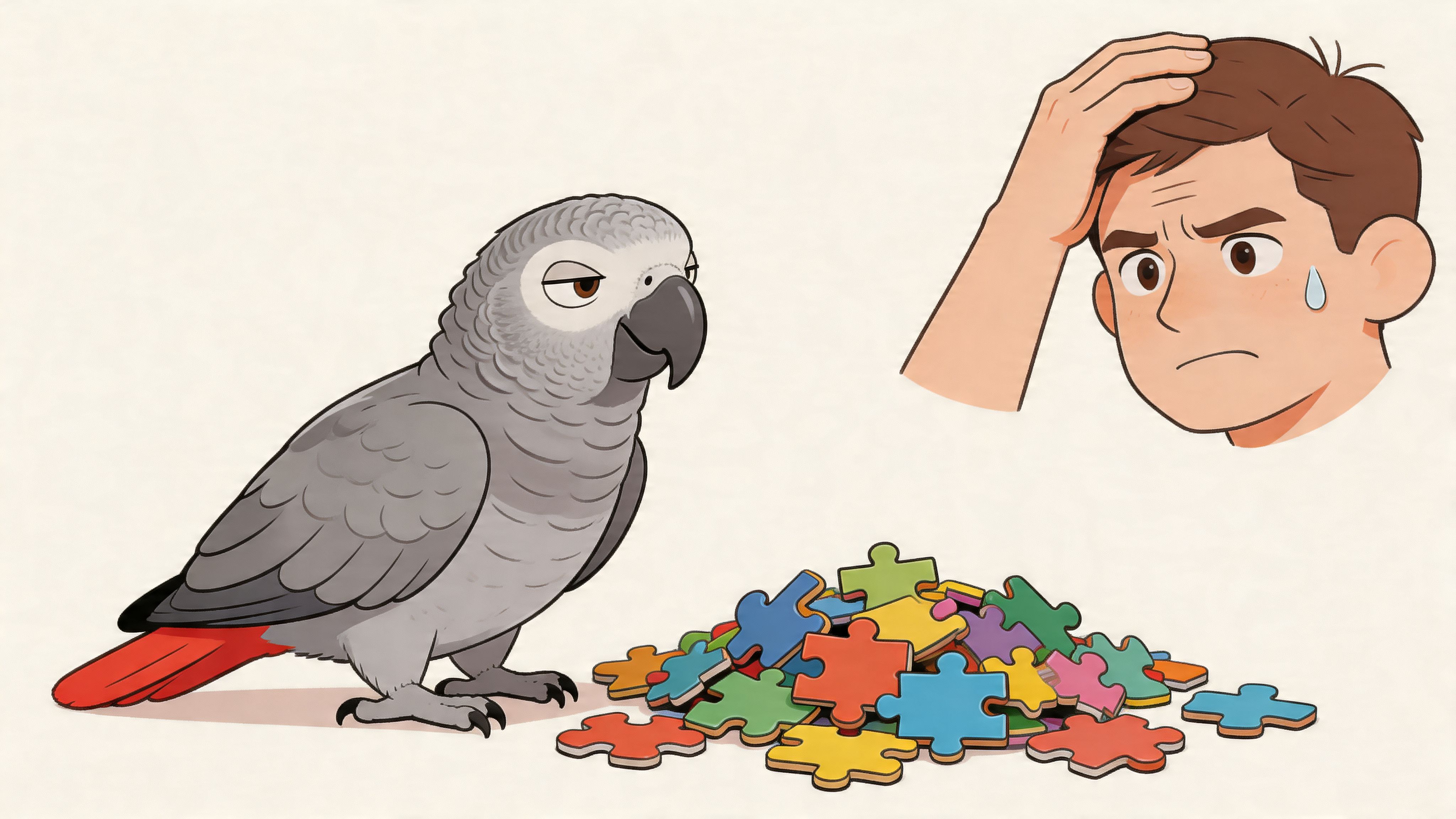
Gizmo once opened a simple puzzle toy, tossed the pieces on the floor, and then stared at me like I was the one who needed enrichment. That was the day I realized some parrots don’t need more toys. They need better problems.
The Toy That Finally Outsmarted My Parrot
Gizmo is the kind of bird who can turn “fun enrichment time” into “human humility hour.” He’ll shred paper in seconds, figure out an easy foraging cup almost right away, and treat most hanging toys like noisy decorations. If you live with an African Grey, Amazon, cockatoo, or another sharp feathered friend, you probably know that look. It’s the look that says, “You expect me to be impressed by this?”
That’s how I ended up trying toy nuts and bolts.
The surprise hiding in plain sight
At first, I didn’t think of them as parrot toys at all. Nuts and bolts toys are widely known as children’s manipulatives. They’re used for hand skills, shape matching, and problem-solving. But when I looked around for ideas specifically for birds, I noticed something odd.
The available content around toy nuts and bolts focuses on human child development, and the search results leave a big gap for parrot enrichment. The product space talks about fine motor skills and early learning, but not about birds using this kind of object for manipulation or foraging challenge, as noted in this overview of toy nuts and bolts search-result positioning.
That gap matters because parrots aren’t just chewers. Many of them are manipulators. They test, twist, pry, hold, inspect, repeat, and then do it all over again.
Why this felt different right away
The first time I offered Gizmo a chunky, bird-safe nut and bolt setup, he didn’t solve it instantly. He paused. He held the bolt with one foot, leaned down, tapped the nut with his beak, turned it slightly, stopped, and tried again. That pause told me everything. His brain had clocked in.
Some toys are fun. A good manipulation toy gives your parrot a job.
What I loved most was how simple the idea was. No flashing parts. No gimmicks. Just a shape that asked him to coordinate his beak, foot, grip, and patience.
Not just for “super genius” birds
This isn’t only for show-off parrots like Gizmo. A well-chosen toy nut and bolt setup can work for many species, as long as the size and material fit the bird. A conure may enjoy a lighter, easier version. An African Grey might like a firmer twist and a bigger challenge. A macaw usually needs something much more substantial.
If your bird gets bored fast, throws toys, or seems underwhelmed by basic cage accessories, this little category is worth your attention. It’s one of the best enrichment hacks I’ve found because it meets parrots where they already are. Curious. Hands-on. Busy-minded. Slightly dramatic.
Why Toy Nuts and Bolts Are a Parrot Brain Teaser
A parrot doesn’t look at a nut and bolt the way we do. We see hardware. They see a puzzle piece that moves, resists, and rewards effort.
That’s why toy nuts and bolts can be such a strong form of parrot enrichment. They create a challenge with layers. A bird has to hold one part steady, test the moving part, figure out the turning action, and stay interested long enough to repeat it. For many parrots, that’s much closer to a satisfying task than chewing through a block.
A full-body thinking toy
When a parrot works on a nut and bolt, several skills come together at once:
- Beak control helps the bird grip, turn, and test pressure.
- Foot use matters because most parrots want to pin or stabilize one piece.
- Body balance comes into play while they lean, shift, and adjust.
- Problem-solving keeps the bird engaged when the first try doesn’t work.
That combination is why I think of it as a 3D brain teaser. It isn’t only mental. It’s physical thinking.
Why twisting matters
In the wild, parrots spend a huge part of their day working for access. They hold food, peel layers, crack shells, strip bark, and investigate textures with amazing patience. A nut-and-bolt toy taps into that same style of effort.
Instead of “bite and destroy,” the task becomes “hold, test, turn, and discover.”
Practical rule: The best enrichment doesn’t only keep a parrot busy. It gives them something meaningful to figure out.
That’s also why these toys often appeal to birds who’ve grown tired of basic shredding toys. Shredding is great and still has a place in a healthy toy rotation. But some parrots crave a little resistance. They want a challenge that pushes back.
A better fit for smart, busy birds
If your bird tends to master simple toys quickly, toy nuts and bolts can slow the process down in a good way. The task changes depending on how tightly pieces fit, how easy they are to grip, and whether a treat is involved. That built-in variety helps prevent the “solved it once, bored forever” problem.
You can also pair this kind of toy with other enrichment methods. A bird might twist apart pieces to reach a favorite treat, or manipulate parts on a playstand before moving on to a foraging toy. If you’d like a broader look at why mental and physical enrichment matter so much, this guide on why bird toys are key to your parrot’s happiness and well-being is a helpful companion read.
The hidden benefit owners notice
A lot of parrot parents focus on whether a toy lasts. That’s fair. Birds can wreck a toy with joyful speed. But with nuts and bolts, the bigger win is often quality of engagement.
Here’s what that can look like at home:
- Your bird returns to the toy after stepping away.
- They start experimenting instead of only chewing.
- They use one foot more deliberately.
- They become interested in taking things apart, not just throwing them.
That last one made me laugh the first time Gizmo did it. He unscrewed the piece, dropped the nut, picked it back up, and gave me the proudest look in the room. It had big “I have invented engineering” energy.
How to Choose Bird-Safe Nuts and Bolts
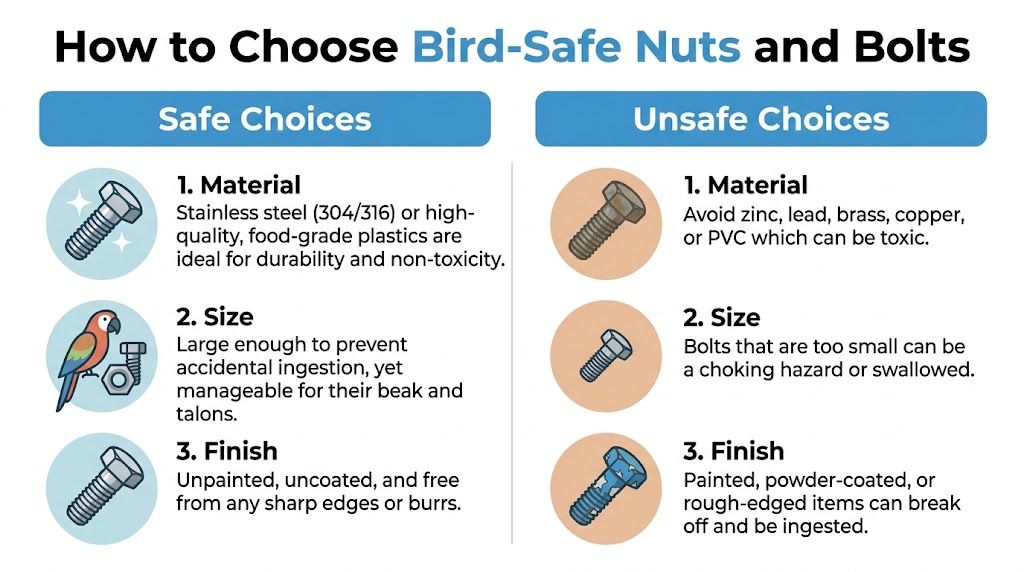
Not every toy nut and bolt set belongs anywhere near a parrot cage. Therefore, bird parents need to be picky, and that’s a good thing. The right choice depends on material, size, and finish.
Construction toys built around nuts and bolts have a long history. The concept was pioneered by Meccano in 1901, using reusable parts like metal strips, wheels, gears, nuts, and bolts for model building, which helped establish these components as educational manipulation toys for generations, according to this history of construction toys and Meccano. For parrots, though, our standards have to go beyond “educational” and focus on bird-safe use.
Start with material
Some materials are much better suited to parrots than others.
Stainless steel is often the strongest option for larger parrots and determined chewers. It’s durable, easy to clean, and a smart pick when you need something that can handle serious beak power.
High-quality plastic can work well for birds who are learning the concept, especially if the pieces are large, solid, and free from questionable coatings or weak seams. Plastic is often easier for beginners because it’s lighter and less intimidating.
Wood can be a nice middle ground in some toy designs. It feels natural, gives the bird texture variety, and can be less noisy than metal. The downside is wear. Some birds will chew wood quickly, and rough damage can change the safety of the toy fast.
Avoid questionable metals and finishes. Zinc-plated hardware is a common concern for bird owners, so it’s best left out of your enrichment setup.
Bird-Safe Nut & Bolt Material Comparison
| Material | Best For | Pros | Cons / Safety Notes |
|---|---|---|---|
| Stainless steel | African Greys, Amazons, cockatoos, macaws | Durable, washable, handles strong beaks well | Can be heavy or noisy if oversized for the bird |
| High-quality bird-safe plastic | Conures, cockatiels, some smaller parrots, beginners | Lightweight, easy to grip, less intimidating | Replace at the first sign of cracks, chips, or weak points |
| Natural wood with bird-safe construction | Birds who enjoy mixed textures and lighter manipulation tasks | Adds texture variety, quieter than metal, engaging to chew | Can splinter or wear down faster, needs frequent inspection |
Size matters more than many owners expect
A nut and bolt toy should be large enough that your bird can’t easily swallow parts, but not so big that it becomes awkward or frustrating to handle.
A few simple guidelines help:
- For smaller parrots: Choose lighter, easier-to-turn pieces with no narrow trap points.
- For medium parrots: Look for chunky components that allow clear foot-and-beak coordination.
- For large parrots: Go oversized and sturdy. Big birds can destroy flimsy parts quickly.
A macaw and a conure should not be working from the same sizing logic. Even two medium birds may prefer different shapes depending on beak style, confidence, and play habits.
If a piece looks “kind of okay,” it usually isn’t the right choice. With parrots, size should feel confidently appropriate.
Finish and design make a big difference
Even safe materials can become poor choices if the finish is wrong. Painted coatings, flaking surfaces, rough threads, sharp edges, or burrs can all turn a clever toy into a risky one.
Check for:
- Smooth threading that doesn’t scrape
- Rounded edges where possible
- No peeling paint or coating
- Solid construction without weak glued joins
- Open, simple shapes that are easy to inspect
This also helps to think about your bird’s bite style. Some parrots test with quick taps. Others commit like tiny feathered demolition crews. If your bird falls into the second group, it’s worth reading more about beak power and toy durability in this article on how strong a parrot’s bite force can be.
My favorite shopping mindset
I always ask three questions before bringing a new nut-and-bolt toy home:
- Can my bird grip this comfortably?
- Can I inspect every part easily?
- Will this stay safe after repeated chewing and twisting?
If the answer to any one of those is “maybe,” I keep looking.
Your Pre-Flight Safety Checklist for Every Toy
A safe toy on day one can become an unsafe toy later. That’s especially true with anything your parrot can twist, chew, throw, drag, or proudly slam against a perch.
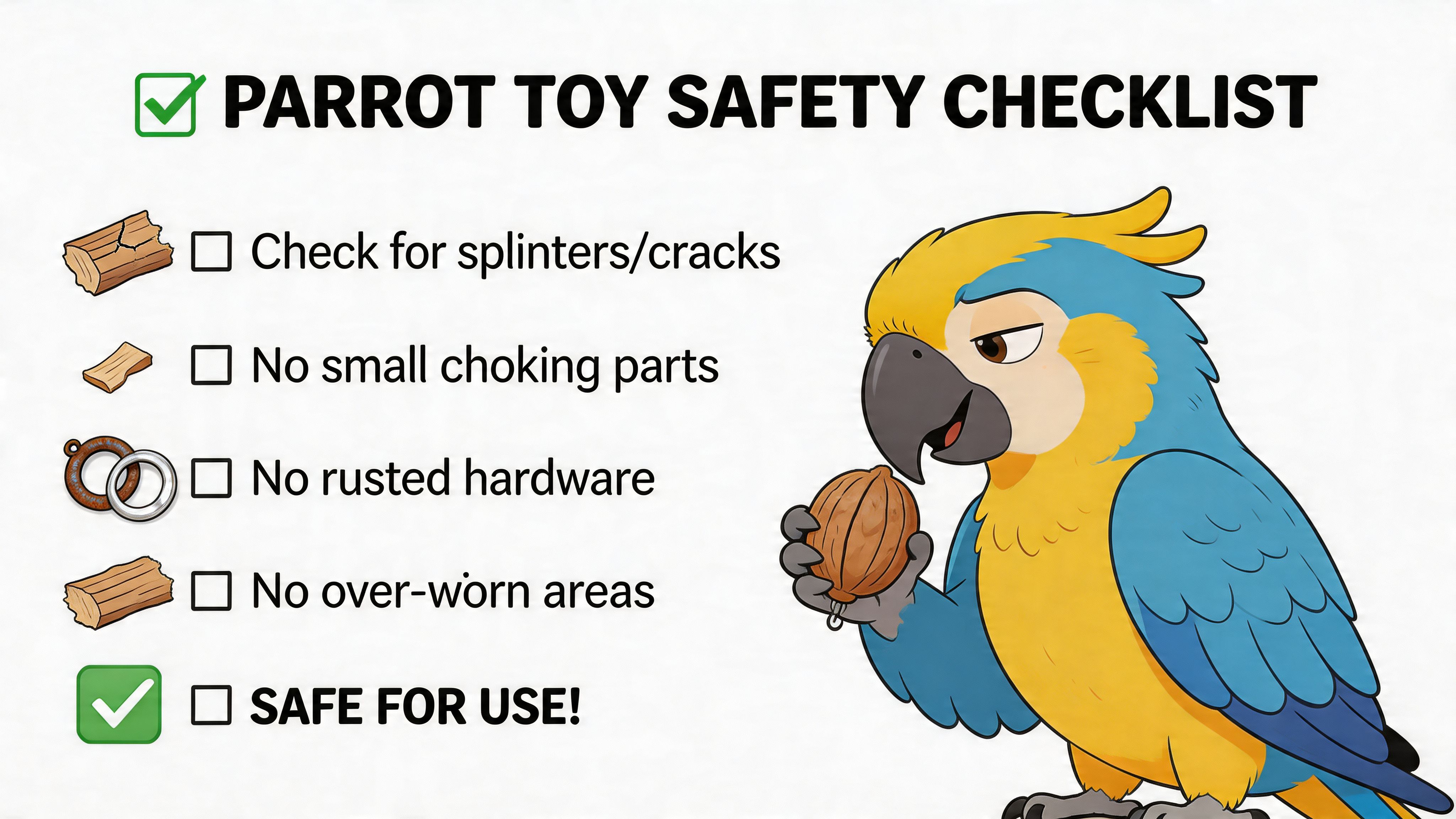
Before I hand Gizmo any new manipulation toy, I do the same routine every time. It takes only a few minutes, and it helps me catch problems before he does.
The first inspection
New toys deserve a close look before play starts. Manufacturing marks, rough spots, or hidden weak points don’t always show up in product photos.
I check for the following:
- Sharp edges or burrs that could scratch a beak, tongue, or foot
- Loose pieces that shift in a way they shouldn’t
- Cracks or stress lines in plastic
- Splits or splinters in wooden parts
- Strong chemical smells that make me put the item aside
Then I wash the toy well and let it dry completely before offering it.
The daily glance that matters
Once a toy enters the rotation, I don’t assume it’s fine forever. Parrots change toys with use. They grind edges down, widen gaps, and create wear in places you didn’t expect.
My quick daily check focuses on three things:
-
Has anything gotten smaller?
Chewed pieces can turn into swallow risks. -
Has anything gotten rougher?
A smooth toy can become abrasive after repeated beak work. -
Has anything started separating?
If parts don’t fit securely anymore, the toy is done.
Supervised play matters most when the toy is new. Your bird will tell you how they plan to use it, and that first answer is often very honest.
The sizing rule I never ignore
A good rule for parrot toys is this: too big to swallow, too simple to trap a beak or toe.
That means you’re watching for two opposite problems at once. Pieces shouldn’t be tiny enough to ingest. But they also shouldn’t create narrow spaces where a beak tip, nail, or toe could get caught.
If a design has awkward gaps, strange openings, or moving parts that pinch, I pass.
When to remove it immediately
Sometimes a toy goes from “fine” to “nope” in one play session.
Take it out right away if you notice:
- Broken threading
- Deep chew damage
- A loose fragment
- A cracked plastic edge
- Wood beginning to splinter
- Any part that no longer fits the way it should
I know it’s tempting to think, “It’s probably okay until tomorrow.” I’ve had that thought too. But parrots are fast, curious, and talented at finding the exact weak point you hoped they’d ignore.
Introducing the Puzzle to Your Feathered Friend
The biggest mistake I see with new enrichment toys is simple. People hang the toy in the cage and hope for the best.
Some birds will march right over and investigate. Many won’t. A new object can feel strange, noisy, or suspicious at first. With toy nuts and bolts, a gentle introduction usually works much better.
Start on neutral ground
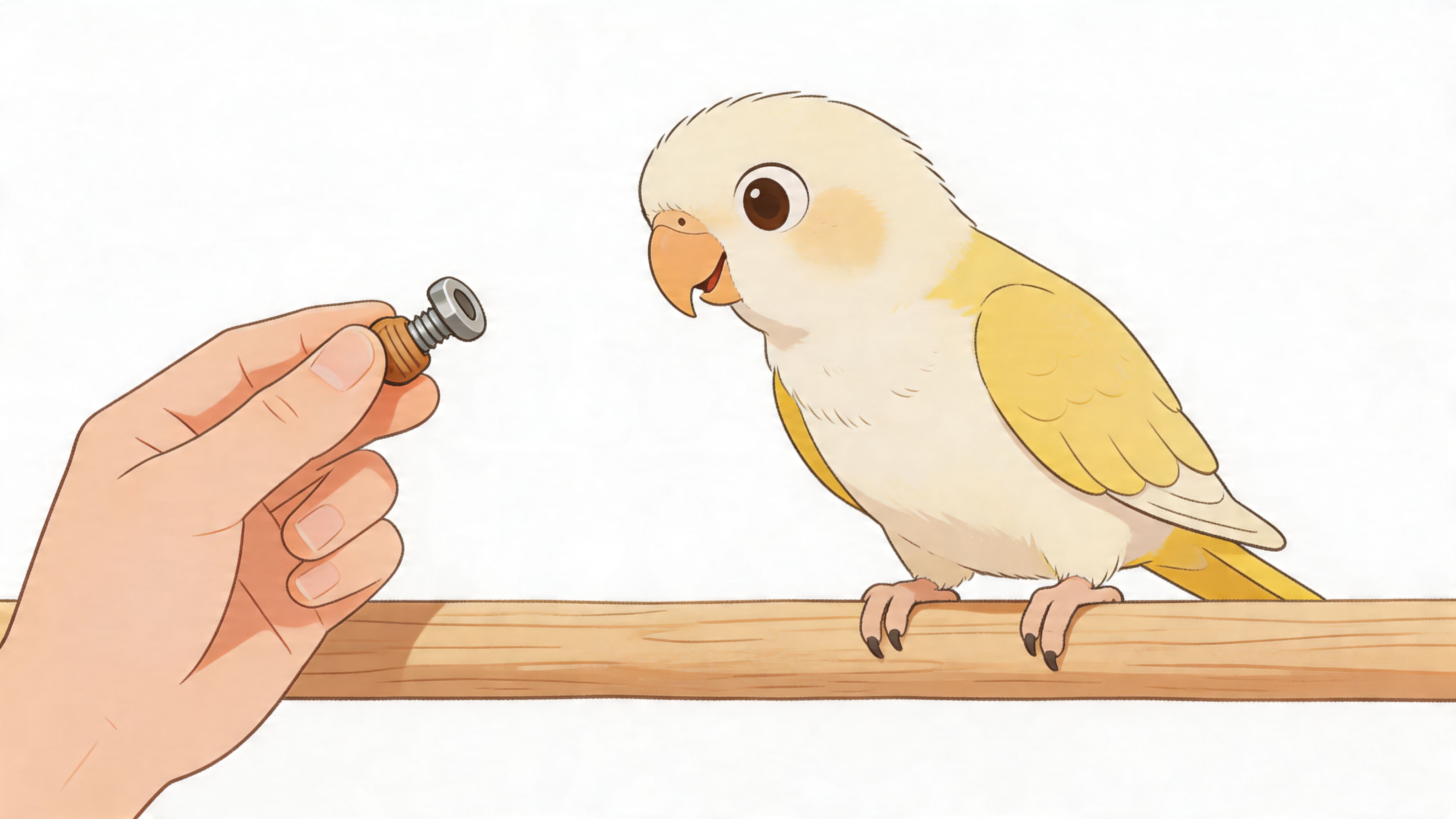
I prefer using a play area outside the cage for first introductions. A stable perch or training spot helps your bird focus without feeling like their whole cage setup has changed.
A sturdy stand gives you room to demonstrate and keeps the experience low-pressure. If your bird does best outside the cage, a natural perch setup like java wood playstands for parrots can make this kind of hands-on enrichment easier.
Let them inspect first
Don’t rush to “teach” the puzzle. Let your bird see the parts apart before you put them together.
I like to begin this way:
- Place one piece nearby and let the bird look at it.
- Hold it calmly so they can touch it with the beak if they want.
- Reward curiosity such as a lean-in, a tap, or a foot lift toward the object.
Some birds need a few short sessions just for this part. That’s okay. Curiosity grows faster when it doesn’t feel forced.
Model the action slowly
Parrots watch us closely. If I want Gizmo interested in something, I act like it’s the most fascinating object in the room.
I’ll hold the bolt, slowly twist on the nut, pause, then reverse the motion. No big performance. Just clear, calm movement.
That helps your bird notice two important things. First, the object moves. Second, the movement is repeatable.
A bird doesn’t need to understand the whole puzzle at once. They just need one clue that makes the object worth exploring.
Add a reason to care
Once your parrot seems comfortable, hide a favorite treat in the experience. One easy method is to partially screw the pieces together with a tiny treat placed where the bird has to manipulate the toy to reach it.
Good beginner setups often look like this:
-
Loose reward
Put the treat beside the toy parts so the toy predicts something good. -
Easy access puzzle
Lightly join the pieces so the reward is simple to get. -
Slight challenge
Tighten just enough that the bird has to hold and twist.
This progression keeps frustration low. You want interest, not annoyance.
If your bird seems unsure
Some parrots will act offended by the whole idea. That doesn’t mean the toy is a failure. It usually means the introduction moved too fast, the pieces feel too big, or the object is heavier or noisier than expected.
Try these adjustments:
- Use shorter sessions and end before your bird loses interest
- Offer the pieces apart instead of assembled
- Switch location if the cage makes the toy feel intrusive
- Pair with praise and favorite treats
- Celebrate tiny wins, even one touch or one turn
Gizmo’s first “success” wasn’t a full unscrew. It was one clumsy half-turn and a very smug pause. That still counted.
DIY Enrichment and Advanced Nut and Bolt Play
Once your bird understands the basic idea, toy nuts and bolts become more than a standalone puzzle. They turn into building pieces for bigger enrichment setups.
For experienced parrot owners, the fun begins. You can use these parts to create tasks that combine manipulation, chewing, foraging, and exploration in one activity.
Build a refillable challenge
One of my favorite uses is creating a simple, reusable station. A large bird-safe bolt can help secure chewable materials like soft wood or other destructible components to a stand or toy base. That gives your bird something to unfasten, chew around, investigate, and revisit.
The best versions are easy for you to rebuild but not instantly solved by the bird.
A few smart combinations include:
- Wood plus hardware for birds who like to chew and manipulate
- Treat hiding spots added between larger pieces
- Mixed textures so the task doesn’t feel repetitive
- Rotating layouts to keep the setup fresh
If your bird already enjoys searching and working for rewards, you can also combine this style of play with a broader foraging toy option like Gears and Rings, which fits nicely into a more advanced enrichment rotation.
Use the parts as connectors, not just toys
This mindset shift helped me a lot. Nuts and bolts don’t always need to be the entire toy. They can also be the mechanism inside the toy.
For example, a bird-safe bolt might hold together pieces that your parrot has to loosen before reaching the fun part. Or it can secure a chewable item in place so your bird has to work at the structure from different angles.
That creates a richer task because the bird isn’t only removing one object. They’re learning how parts relate to each other.
When a toy can change roles, it stays interesting longer.
Know when the game is over
Durable doesn’t mean forever. A nut-and-bolt toy should retire once wear starts affecting safety or function.
I stop using a piece when I see:
- Cracks
- Deep gouges
- Warping
- Loose fits
- Rough edges
- Any change that makes inspection harder
Retiring a toy isn’t wasteful. It’s responsible. The best enrichment routine isn’t built on making one item last endlessly. It’s built on offering safe variety and replacing pieces before they become a problem.
For birds like cockatoos and macaws, especially, that moment can come sooner than you’d think.
Your Nut and Bolt Questions Answered
Are toy nuts and bolts only for large parrots
No. Smaller parrots can enjoy them too, but the toy has to match the bird. A conure or cockatiel may do well with lighter pieces and a simpler turning action. A tiny bird should never get a version sized for a macaw just because it looks durable.
The key is choosing pieces your bird can grip and manipulate without strain.
What if my bird only throws the pieces
That still tells you something useful. Throwing can mean the toy is too easy, too unfamiliar, or being used as a game of cause and effect.
Try changing one variable at a time:
- Make the toy easier to hold
- Introduce it outside the cage
- Add a treat reward
- Use one piece at a time
- Shorten the session
Some birds need to explore by tossing first. That’s not failure. That’s data.
Are metal nut and bolt toys too noisy
Sometimes, yes. Some birds don’t mind noise at all. Others get startled by clinking sounds or use the toy like a tiny percussion instrument at the least peaceful hour of the day.
If sound becomes the issue, try a lighter option, a mixed-material design, or a setup used only during supervised out-of-cage play. Noise alone doesn’t make a toy unsafe, but it can affect whether your bird wants to engage with it.
Can conures use toy nuts and bolts
Many can, as long as the pieces are appropriately sized and easy to inspect. Conures are playful, curious, and often enjoy toys that involve handling. The biggest mistake is choosing something too small or too hard to manipulate.
For smaller species, go for a design that encourages success early. Confidence matters.
What if a piece breaks during play
Remove the toy right away and collect every part you can find. Then inspect the area carefully, including cage grates, nearby bowls, and the floor around the stand.
If you think your bird may have swallowed part of the toy or has an injury concern, contact an avian veterinarian promptly for guidance. It’s better to ask early than wait and guess.
How often should I inspect these toys
Briefly every day, and more closely whenever you clean or rotate toys. Manipulation toys deserve extra attention because they’re meant to move. That movement can create wear in spots that ordinary hanging toys don’t have.
If your bird is a heavy chewer, inspect even more often.
My parrot seems scared of the toy. Should I keep trying
Yes, but gently. Fear doesn’t always mean “never.” It often means “not like this.”
Back up to a simpler introduction:
- Show the toy from a distance
- Offer one piece instead of the full setup
- Pair it with praise or a favorite treat
- End before your bird gets overwhelmed
A cautious bird may need several calm sessions before curiosity wins.
Are toy nuts and bolts better than shredding toys
They’re different. Shredding toys meet one need. Toy nuts and bolts meet another.
A healthy enrichment setup usually includes both. Shredding supports chewing and destruction. Nuts and bolts support manipulation and problem-solving. Many parrots benefit from having each type in rotation rather than relying on one style alone.
Can I leave these toys in the cage all day
That depends on the toy, the bird, and how well you know your parrot’s play style. For a new toy, supervised use is smartest. Once you know how your bird handles it and the item has proven safe in real use, you can decide whether it belongs in the regular rotation.
If you’re unsure, supervised out-of-cage sessions are a great middle ground.
What’s the biggest mistake bird parents make with this type of toy
Usually it’s one of these:
- Choosing pieces that are too small
- Skipping the first inspection
- Moving too fast during introduction
- Assuming “made for kids” means “safe for parrots”
- Keeping damaged parts too long
Parrots are brilliant, busy, and wonderfully weird. They deserve toys chosen with that same level of care.
If your bird needs more than a toy to chew and destroy, toy nuts and bolts can be a lovely surprise. They ask your parrot to think with their feet, beak, and body. And for a lot of smart birds, that’s exactly the kind of challenge that keeps life interesting.
If you’re building a safer, more stimulating setup for your feathered friend, Squawk Shop is a helpful place to explore bird-safe parrot toys, foraging options, playstands, and everyday enrichment picks for species from conures to macaws. Happy birds make happy homes, and the right puzzle can go a long way.