

Dried Fruits and Vegetables for Parrots: A Safe Guide
I once watched a conure lock eyes with a bag of trail mix like it was treasure at the end of a pirate map. His person laughed, offered a raisin, then paused just in time and asked the question most bird parents eventually ask. “Wait. Is this safe?”
That little pause matters. Dried fruits and vegetables can be wonderful for parrots, but only when we choose and serve them with care. The snack aisle is built for humans, not budgies, cockatiels, conures, African Greys, Amazons, cockatoos, or macaws.
A Tasty Treat or a Risky Snack
A lot of us meet dried produce the same way. We’re packing lunch, mixing oatmeal, grabbing a crunchy fruit snack, and our feathered friend waddles over with that expert-level “share with me” stare. It feels harmless because fruit is healthy, right?
Sometimes yes. Sometimes very much no.
Human interest in dried fruits and vegetables keeps growing. The global freeze-dried fruits and vegetables market was valued at USD 27.11 billion in 2025 and is projected to grow to USD 28.82 billion in 2026, according to Fortune Business Insights on freeze-dried fruits and vegetables. That popularity is one reason more parrot owners are seeing freeze-dried berries, veggie crisps, and dried fruit blends everywhere, then wondering if those same products belong in the bird room.
The tricky part is that “dried” sounds simple, but it covers a flock of very different products. One bag may contain plain freeze-dried peas. Another may have added sugar, oils, salt, sulfur-based preservatives, or sticky fruit pieces that are far too concentrated for a parrot treat.
Why bird parents get mixed messages
Parrot owners usually hear two things at once:
- Fruit and vegetables are good: Fresh produce plays an important role in a varied parrot diet.
- Some dried snacks are risky: The drying method, ingredients, texture, and portion size can change everything.
Both are true.
Big picture: Dried produce isn’t automatically safe or unsafe. It depends on what was dried, how it was dried, and what got added along the way.
That’s why dried fruits and vegetables work best when you think of them as a tool, not a pantry free-for-all. The right piece can become a high-value training reward, a foraging surprise, or a crunchy texture some birds adore. The wrong one can bring too much sugar, unsafe preservatives, or a choking risk.
If you’ve felt confused, you’re in good company. Most bird parents have to unlearn the idea that anything sold as a healthy human snack must also be okay for parrots. It’s not about being paranoid. It’s about learning a bird-safe filter so you can treat with confidence and keep snack time sweet, not sour.
Not All Dried Snacks Are Created Equal
A bag that says “dried fruit” can hide a whole flock of differences.
One product is plain freeze-dried peas that shatter into neat little training crumbs. Another is a glossy banana chip fried in oil. Another is chewy mango with added sugar to keep it candy-sweet. They may sit on the same shelf, but for a parrot, they do not belong in the same category.
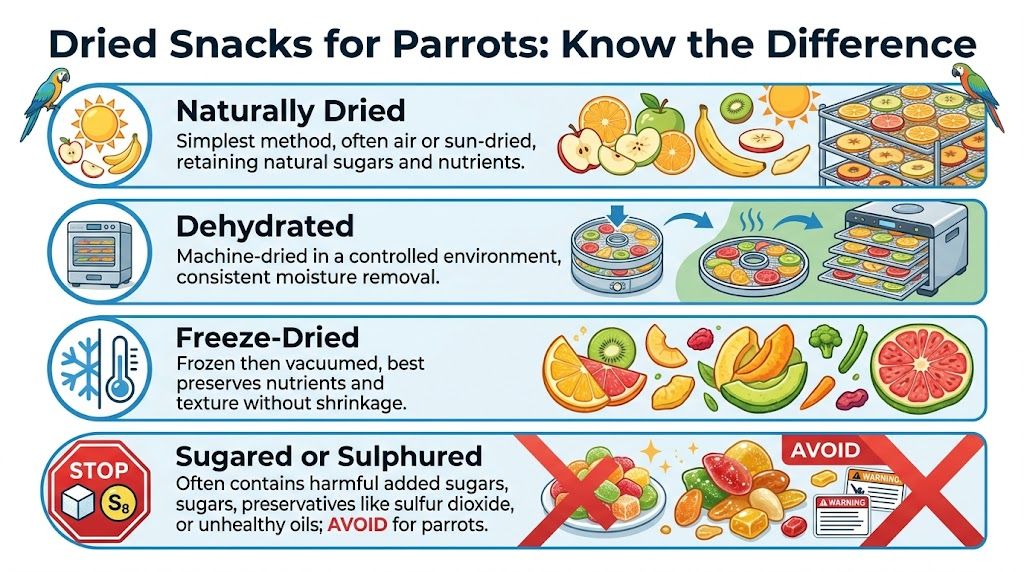
The three main drying styles
A simple way to sort dried produce is by how it was made and how it behaves in a beak.
Naturally dried foods are often air-dried or sun-dried. They usually feel chewy, leathery, and dense. Dried apricot pieces and wrinkled apple rings often land here.
Dehydrated foods are dried with warm moving air. Their texture can swing quite a bit. A dehydrated carrot slice may stay firm and crisp, while zucchini may dry into something lighter or more brittle.
Freeze-dried foods are the airy, crunchy ones. They tend to be very light, easy to break apart, and less sticky than many chewy dried fruits. For lots of parrots, that texture works well for training and foraging because it crumbles instead of stretching.
Why the method matters for parrots
This part gets overlooked.
Human snack advice usually focuses on calories, fiber, or whether a food feels “natural.” Parrot safety asks different questions. Will this piece splinter or gum up? Is it sticky enough to glue itself to the beak? Is it so sweet and concentrated that your bird starts choosing treats over better foods? A tiny body changes the math fast.
Texture is not just about preference. It affects safety and how you serve the food. Light, crisp pieces are often easier to tuck into a foraging toy or crush into smaller bits for little species. Dense, rubbery fruit can encourage oversized bites, messy beaks, and more excitement than you bargained for. Some birds handle that fine. Others turn one chewy strip into a full theatrical production.
The label test
The front of the package is advertising. The ingredient list is the actual introduction.
For parrots, the best labels look wonderfully boring. “Apple.” “Carrot.” “Bell pepper.” That kind of plain is a beautiful thing.
Pause if you see any of these:
- Added sugar
- Syrup
- Oil
- Salt
- Sulfur dioxide
- Sulfites
- Artificial color
- Flavoring
If you want more help building a bird-safe ingredient filter, the parrot care articles at Squawk Shop are a helpful place to keep learning.
A good rule is simple. If the snack reads like a recipe made for human cravings, put it back. If it reads like a single dried ingredient from the produce aisle, it deserves a closer look.
Dried vegetables often fit more easily into a parrot routine because they are usually less sticky and less sugary than fruit. Fruit can still have a place. It just needs a bit more caution, especially for smaller parrots, who can go from “cute little treat” to “too much richness” in a few pecks.
The Good Squawk Nutritional Benefits for Parrots
Once you remove the risky options, dried fruits and vegetables can earn a happy little place in your enrichment routine. Not a main course. Not a free-feed bowl filler. More like the bird version of a special snack you use with purpose.
Why parrots often love them
Parrots are texture detectives. Some birds adore juicy fresh foods. Others want crunch, snap, or a piece they can hold in one foot and nibble dramatically while staring at you like a tiny critic.
That’s where dried produce shines.
A plain dried green bean can be more interesting than a soft cooked one because it offers a different bite. A crisp bit of freeze-dried strawberry can feel exciting in a way fresh fruit doesn’t. A sliver of dried sweet potato can be easy to tuck into a toy, wedge into cage bars, or save as a “jackpot” reward during training.
Nutrition with a job to do
When dried produce is plain and offered in small amounts, it can support a balanced routine in a few useful ways.
It can make training more exciting
Some parrots work harder for a treat that feels special. If your bird ignores ordinary rewards during step-up practice or recall training, a tiny piece of bird-safe dried produce can become a higher-value motivator.
This works especially well with parrots that enjoy a crisp texture, like:
- Budgies and cockatiels: often like tiny, easy-to-hold flakes or crumbs
- Conures and caiques: may enjoy punchy flavors and crunchy sounds
- African Greys and Amazons: often appreciate treat variety and puzzle-based rewards
- Cockatoos and macaws: may enjoy larger, supervised pieces used in foraging setups
It helps with foraging enrichment
Dried fruits and vegetables are easy to hide. You can slip them into paper cups, tuck them in crinkle paper, thread safe-sized pieces into cardboard toys, or drop them into a foraging box with palm leaf, shredded paper, and clean foot toys.
That turns snack time into a job, which parrots usually love. Happy birds don’t just eat. They search, shred, sort, chew, and investigate.
Enrichment rule: If a food item makes your parrot think, manipulate, and explore before eating it, it’s doing double duty.
It offers variety without replacing the basics
A good parrot diet still centers on the foods your avian vet recommends, often including pellets and fresh produce. Dried fruits and vegetables fit best as extras. They add interest, not balance all by themselves.
A few practical examples:
- A cockatiel might enjoy a tiny crumble of plain dried carrot in a foraging cup.
- A conure may go wild for a crisp bit of plain freeze-dried bell pepper.
- An African Grey might find a thin piece of dried sweet potato worth working for during trick training.
- A macaw may enjoy supervised chewing on a larger plain veggie chip that isn’t sticky or tough.
Why vegetables often deserve first pick
If you’re new to dried produce for parrots, vegetables are often the gentler place to start. They’re usually less sugary, less gummy, and easier to fit into regular enrichment without creating a “dessert only” bird.
Good beginner ideas often include plain dried carrot, green bean, zucchini, or bell pepper. These can be broken into small pieces and paired with shredding or foraging activities.
A fruit-loving bird can still enjoy plain dried fruit in moderation, but the best approach is usually to think of fruit as a special reward and vegetables as the more frequent option.
The real win
The biggest benefit isn’t just nutrition on paper. It’s that dried produce can help you offer healthy variety in a practical way.
Fresh chop is wonderful, but it spoils fast. Dried options can be handy when you want a shelf-stable enrichment add-on, a training treat that won’t drip, or a tiny reward to hide in a puzzle toy. Used thoughtfully, they help make healthy habits easier for both bird and human.
The No Fly Zone Risks and What to Avoid
This is the part every bird parent needs, because dried snacks can go from helpful to harmful very quickly.
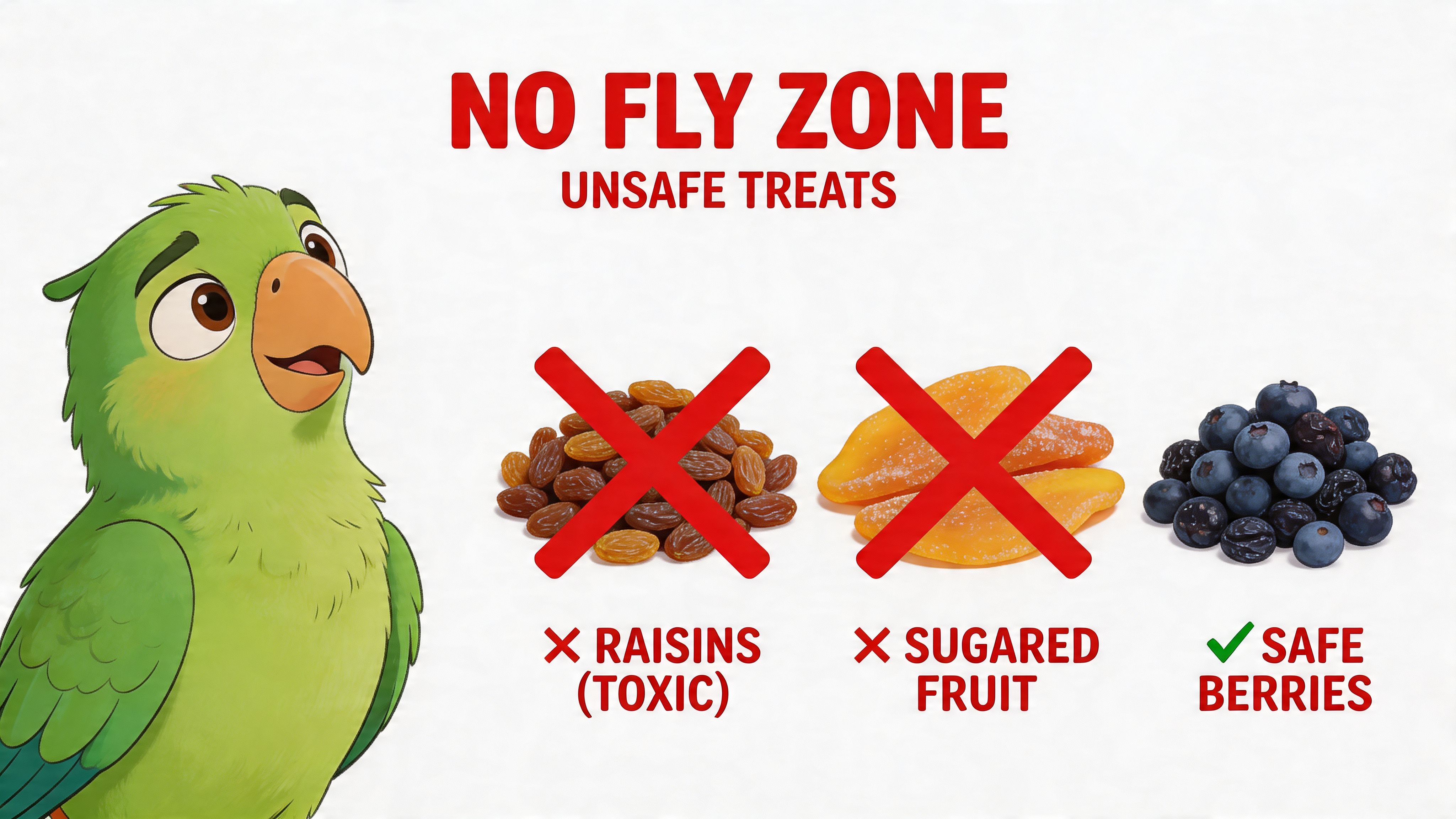
A significant and often overlooked issue for parrots is the risk tied to common dried fruits like raisins and sulfured apricots. Human snack content often focuses on nutrition, but Straits Research notes the concern around dried fruits, preservatives, and parrot safety. That gap matters because parrots are small, sensitive animals, and “fine for people” doesn’t mean fine for birds.
Sugar gets concentrated fast
Fresh fruit comes with water. Drying removes that water and leaves a much more concentrated bite.
For parrots, that can make dried fruit easy to overeat. A bird that would nibble a small bit of fresh apple may become very enthusiastic about a sweeter, more concentrated dried version. The problem isn’t only the sugar itself. It’s the speed and amount a bird can take in before you realize they’ve had too much.
Birds that already fixate on sweet foods can become picky if dried fruit is offered too often. Then fresh vegetables and balanced foods suddenly seem less exciting, which is a familiar headache in many parrot homes.
Preservatives are a hard no
Some dried fruits are treated to stay bright and pretty on the shelf. That glossy orange apricot or unusually vivid fruit mix may look appealing, but color can be a warning sign.
Watch out for labels that mention:
- Sulfur dioxide
- Sulfites
- Added sugar
- Glaze
- Artificial colors
- Sweeteners
Plain and unsulfured is the safer lane. If a bag of dried fruit looks flashy, sticky, or candy-like, let it keep flying right past your cart.
If the snack looks more like confectionery than produce, it doesn’t belong in a parrot treat jar.
Texture can create choking trouble
Dried produce isn’t only about ingredients. Texture matters too.
Some pieces are leathery, gummy, or stringy. Others harden into awkward shapes with sharp edges. A bird that grabs a piece too large for its size may struggle to break it down safely, especially if the snack sticks to the beak or roof of the mouth.
That risk goes up with:
- Very sticky fruit strips
- Large chewy chunks
- Tough peels
- Dense pieces handed to small birds
Budgies, parrotlets, lovebirds, and cockatiels need much tinier pieces than larger parrots. Even macaws and cockatoos should be supervised with unfamiliar dried foods. Big beak does not equal zero risk.
Storage problems can ruin a safe snack
Even a plain homemade treat can become unsafe if it isn’t fully dried, cooled, and stored well. Moisture is the troublemaker here.
If dried fruits and vegetables are tucked away while still warm, or if they soften in a humid kitchen, mold can creep in before you notice. A piece that smells off, feels tacky when it should be crisp, or shows any visible fuzzy growth belongs in the trash.
Red flags to trust
You don’t need a lab coat to spot a problem. Trust the simple signs.
| Warning sign | What it may mean |
|---|---|
| Bright, unnaturally vivid color | Possible preservatives or additives |
| Sticky or syrupy feel | Added sugar, poor quality, or excess moisture |
| Strong candy-like smell | Flavoring or sweetener |
| Softening after storage | Moisture exposure |
| Visible mold or odd spots | Unsafe, discard immediately |
Raisins deserve special caution
Many bird parents are surprised by how often raisins show up in “healthy” mixes. For parrots, they’re not a casual share-from-your-snack choice. Between concentrated sugar and the broader safety concerns raised for common dried fruits, raisins are best kept off the menu.
A safer mindset
The simplest rule is this. Dried vegetables are usually easier to work with than dried fruits, and plain single-ingredient products are better than blends. When in doubt, skip it.
That’s not being overly cautious. That’s experienced bird-parent wisdom with a few fewer emergency phone calls attached to it.
Your Parrot's Safe Snack List
Once you know what to avoid, shopping and serving gets much easier. The goal isn’t to memorize a giant forbidden-food scroll. It’s to build a simple habit. Choose plain products, favor vegetables, keep portions tiny, and skip anything sticky, sweetened, or preserved.
The Squawk Shop Safe & Unsafe List
| Produce | Safety Level | Notes |
|---|---|---|
| Plain dried carrot | Safe to Serve (Plain & Unsulfured) | Good beginner option. Break into tiny pieces. |
| Plain dried green bean | Safe to Serve (Plain & Unsulfured) | Nice crunchy texture for foraging. |
| Plain dried bell pepper | Safe to Serve (Plain & Unsulfured) | Colorful and easy to crumble into toys. |
| Plain dried zucchini | Safe to Serve (Plain & Unsulfured) | Mild flavor. Best in small pieces. |
| Plain freeze-dried peas | Safe to Serve (Plain & Unsulfured) | Crisp and easy to portion. |
| Plain dried apple | Serve with Caution (High Sugar) | Offer small pieces only. |
| Plain dried banana | Serve with Caution (High Sugar) | Skip banana chips with oil or sugar. |
| Plain dried mango | Serve with Caution (High Sugar) | Very sweet when dried. Use sparingly. |
| Plain dried strawberry | Serve with Caution (High Sugar) | Better as an occasional training treat. |
| Raisins | Avoid Completely | Best kept off the menu for parrots. |
| Sulfured apricots | Avoid Completely | Preservative risk. |
| Sweetened cranberries | Avoid Completely | Usually heavily sweetened. |
| Yogurt-covered fruit | Avoid Completely | Not plain produce and too rich. |
| Fruit trail mix blends | Avoid Completely | Often contain added sugar, oils, or unsafe extras. |
| Vegetable chips with salt or oil | Avoid Completely | Human snack product, not a parrot treat. |
Portion size by bird size
Many loving bird parents accidentally overdo it. Dried foods are small, light, and easy to hand out again and again. Your parrot, of course, will often act as if one more piece is required by law.
A good visual guide helps.
Tiny parrots
Think budgies, parrotlets, and lovebirds.
Offer a piece about the size of a small seed or a tiny crumble. For crisp freeze-dried items, even a broken flake can be enough. These birds don’t need much to feel rewarded.
Small to medium parrots
Think cockatiels, green cheeks, sun conures, Senegal parrots, and caiques.
A piece about the size of a sunflower seed kernel is often plenty for fruit. Vegetables can be slightly larger if they’re light and crisp, but still keep treats very small.
Medium to large parrots
Think African Greys, Amazons, eclectus parrots, small cockatoos.
A piece around the size of your fingertip can work, depending on texture. Dense chewy items should stay smaller than airy crunchy ones.
Very large parrots
Think macaws and large cockatoos.
A piece no bigger than the tip of your thumb is usually enough for a treat. Large birds can physically handle more, but that doesn’t mean they should get a handful.
Serving rule: If you can imagine giving the same amount three or four more times in one day, start smaller.
How often is sensible
Use dried produce as a sometimes food. It shines in training, foraging, travel setups, or as a backup when you want a clean, shelf-stable option. It should not crowd out fresh vegetables, pellets, or the regular foods your bird does well on.
A few practical habits make a big difference:
- Rotate choices: Don’t let one sweet fruit become the only reward your bird wants.
- Watch droppings and behavior: Any new treat can disagree with an individual bird.
- Serve one new item at a time: That makes it easier to spot what your parrot likes and tolerates well.
- Supervise first servings: Especially with chewy textures.
If you want to pair safe dried produce with bird-specific goodies, browse bird treats for parrots and keep the same standard in mind. Short ingredient list, bird-safe purpose, sensible portions.
A simple way to remember it
Choose the snack that looks the most like plain produce and the least like people food. That one rule catches a lot of problems before they ever reach the cage door.
Your DIY Dehydration Station
The first time I made dried veggie treats at home, I felt very proud for about twenty minutes. Then I opened the jar the next day and found soft slices clinging together like they were plotting trouble. My parrot was interested. I was not. That little kitchen flop taught me one of the biggest bird-safety lessons with dried produce: drying the food is only half the job. Drying it evenly, cooling it fully, and storing it well are what make it safe enough to serve.
Homemade dried produce has one big advantage for parrot families. You know exactly what went in. No added sugar, no oils, no sulfites, and no vague flavor extras that belong in people snacks, not bird bowls.
Start with produce that dries well
Choose clean, fresh produce your bird already eats comfortably. For a first batch, vegetables are usually easier than fruit because they tend to be less sticky and less sugary.
Good beginner choices include:
- Carrots: thin coins
- Bell peppers: narrow strips or tiny squares
- Zucchini: very thin rounds or half-moons
- Green beans: short pieces
- Sweet potato: very thin slices
- Apple: paper-thin slices for an occasional fruit treat
Skip produce that is bruised, slimy, or past its best. A dehydrator is not a rescue mission. Drying removes moisture. It does not erase spoilage.
Cut for safety, not just appearance
Even pieces dry at a similar pace, which helps you avoid a risky batch with one damp piece hiding among safe ones. That matters more for parrots than many people realize. A piece that feels dry on the outside can still hold moisture inside, and trapped moisture is where storage problems begin.
Small cuts also make serving safer. Tiny birds should not have to wrestle a leathery strip like it owes them money.
A simple rule helps here. Cut pieces to the size you would feel comfortable offering whole after drying. If the fresh piece already looks oversized, it will not improve later.
Three easy ways to dry produce at home
Oven method
Set your oven to its lowest temperature. Line a tray with parchment and place the produce in a single layer with space between pieces.
Check it often. You want drying, not roasting. If edges brown, curl fast, or smell cooked, the heat is too high. A slightly cracked oven door can help if your oven tends to trap steam.
This method works best for small test batches.
Air fryer with dehydrate setting
An air fryer with a dehydrate mode can work nicely for bird treats, especially if you want to try one vegetable before making more. Keep pieces in a single layer and avoid crowding the basket.
Because many air fryer baskets are compact, this is a good option for treat-sized batches, not giant weekend prep sessions.
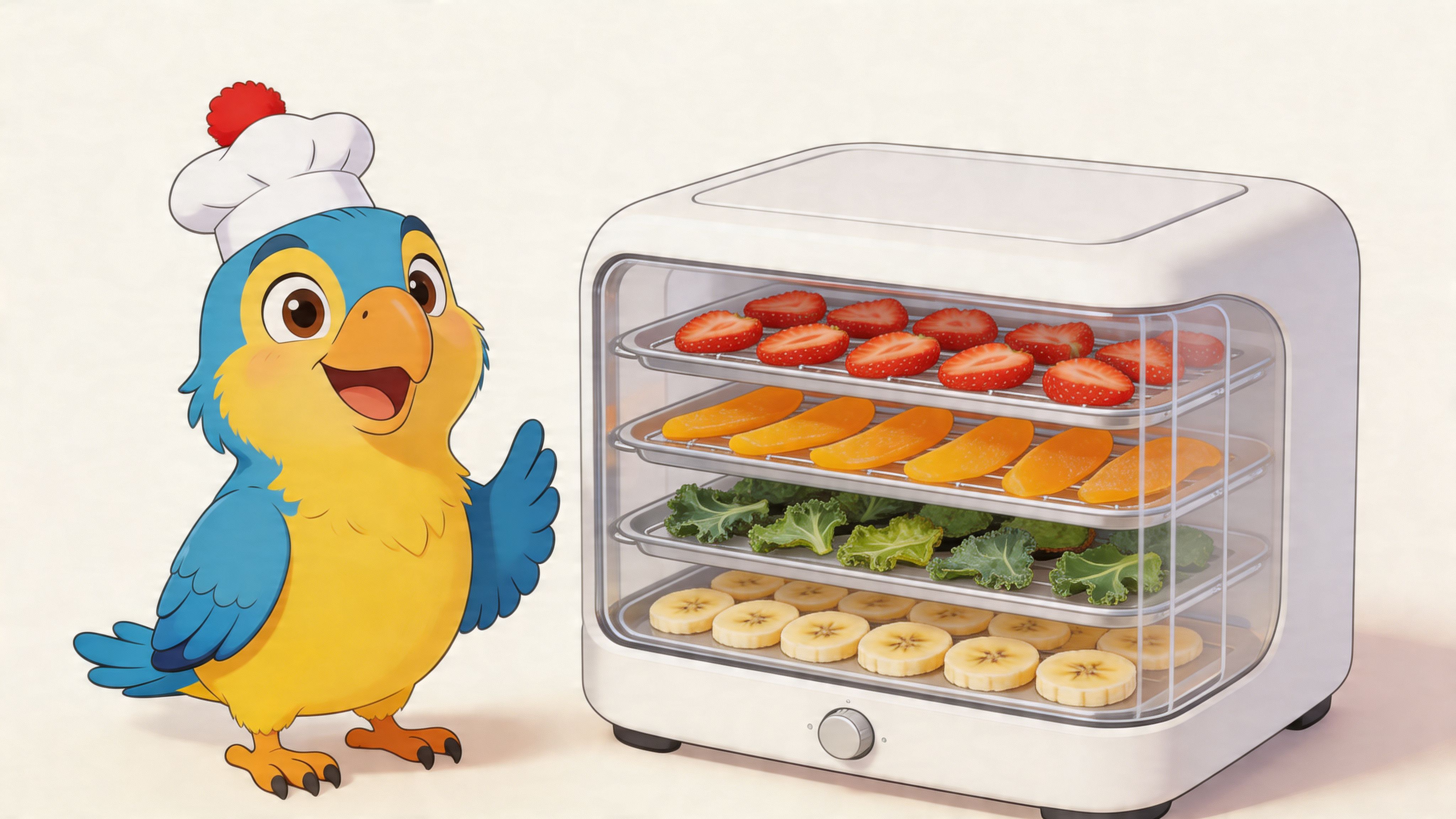
Food dehydrator
A dehydrator gives the most even results for most homes. Gentle airflow and steady low heat are helpful because they dry the produce without cooking it as harshly as some ovens can.
That steady pace matters. Your goal is simple. Pieces should be dry through the center, not just dry-looking on the outside.
A quick visual guide
Some bird parents like seeing the process before trying it at home.
Three simple bird-safe ideas
Crunchy Carrot Coins
Slice carrots very thin and dry them until they are crisp all the way through. If the middle still bends, keep going.
These are easy to snap into smaller bits for little parrots and easy to tuck into paper cups or a 4-way foraging toy for parrots.
Bell Pepper Confetti
Cut bell pepper into tiny squares or very fine strips. Dry until the pieces feel light and no longer soft.
This works especially well for smaller species because the serving size stays naturally tiny. You can scatter a few pieces into a tray without turning snack time into a sugar rush.
Sweet Potato Stars
Slice sweet potato as thinly as you can. If you want a bit of fun, cut shapes before drying.
These can become chewy if cut too thick, so keep them extra thin and check them carefully before serving. For small birds, break them into crumbs or corners.
Cooling and storage decide whether the batch stays safe
This part gets overlooked all the time, and it is where many homemade treats go wrong.
Let every piece cool completely before it goes into a container. Warm food in a sealed jar creates condensation, and condensation puts moisture right back where you worked to remove it. A jar of dried treats should feel boringly dry. No fogging, no softness returning, no sticky patches.
Store finished treats in:
- Airtight glass jars or containers
- A cool, dry cupboard
- Clearly labeled batches with the date
- Small amounts you will use fairly soon
Before serving, give the batch a quick parrot-parent inspection. If a piece smells odd, feels tacky, looks wetter than the rest, or has softened after storage, throw it out. Birds are talented at acting offended by waste. They are less talented at reading spoilage.
Common beginner mistakes
Nearly everyone makes one of these at first.
Cutting slices too thick is a big one. Mixing different produce on the same tray can also cause trouble because carrots, peppers, apples, and sweet potato do not all dry at the same speed. Packing food while it is still warm is another classic mistake. So is making a huge batch before you know whether your bird even likes zucchini chips.
Start small. One tray teaches you more than a produce mountain.
Keep the project simple
Homemade dried produce does not need to turn your kitchen into a tiny bird bakery. A small batch of plain, well-dried vegetables is more useful than a fancy mix that is hard to dry evenly or hard to portion safely.
That approach keeps the focus where it belongs. Not on making Instagram snacks. On giving your parrot a clean, bird-appropriate treat you can trust. And yes, your feathered food critic will probably still react like you opened a five-star seed-free bistro.
Foraging Fun and Smart Shopping
The best use for dried fruits and vegetables usually isn’t “put it in a bowl and call it a day.” It’s turning that food into an activity.
Make treats earn their wings
Parrots are natural foragers. They like to search, pry, tear, and solve little food puzzles. Dried produce fits beautifully into that routine because it’s tidy, light, and easy to hide.
Try a few simple ideas:
- Tuck pieces into shredded paper: Hide a few plain dried veggie bits in a foraging tray.
- Stuff them into cardboard toys: Great for birds who love ripping and excavating.
- Weave them into cage-safe paper strips: This encourages picking and pulling.
- Use them as jackpot rewards: Save the most exciting safe treat for recall, harness practice, or a new behavior.
- Scatter tiny pieces in supervised play areas: Especially helpful for birds that enjoy ground-style foraging.
A crunchy reward inside a puzzle often feels more special than the same reward handed over openly. That little bit of effort makes the snack part of enrichment, not just part of feeding.
Smart shopping keeps things simple
If you’re buying pre-made dried produce, a quick checklist can save a lot of label squinting.
Look for these words
- Unsulfured
- No added sugar
- No salt
- No oil
- Single ingredient
- Plain freeze-dried or dehydrated
Walk away from these clues
- Sweetened
- Candied
- Glazed
- Seasoned
- Trail mix
- Yogurt-covered
- Sulfur dioxide or sulfites on the label
A small sustainability bonus
There’s another nice feather in the cap for dried produce. Some brands use cosmetically imperfect produce that people often call “ugly produce.” According to Seawind Foods on using ugly produce to reduce waste, this practice helps reduce the estimated 20 to 30% of produce wasted before it reaches consumers.
That doesn’t change the bird-safety checklist, but it’s a thoughtful extra. If two plain, bird-safe options look equally good, choosing one that supports waste reduction is a lovely bonus for the planet.
A smart parrot snack can support two good habits at once. Better enrichment at home, less waste upstream.
One last practical reminder
Dried fruits and vegetables work best when they stay in the “special helper” role. They can support training, enrich a parrot cage setup, and make foraging more interesting. They should not replace fresh produce, pellets, species-appropriate variety, or good observation of your individual bird.
If your parrot turns into a tiny fruit bandit the moment sweet treats appear, lean harder into dried vegetables. If your bird struggles with chewy textures, choose light crisp options or make smaller homemade pieces. If a product label feels confusing, skip it and choose the simpler one.
That’s the heart of safe parrot care. Fewer guesses. Better choices. More enrichment. Happier birds and happier homes.
For bird parents ready to put safe treats to work, a foraging toy like the 4 Way Foraging Fun can turn tiny dried veggie pieces into a much more rewarding activity.
If you’d like more bird-safe ideas for treats, foraging, toys, and everyday enrichment, visit Squawk Shop. It’s a helpful place to find parrot gear and education designed to keep your feathered friend busy, safe, and cheerfully up to a little healthy mischief.