

Can Parrots Eat Watermelon? A Fun & Safe Guide
You’re cutting a cold slice of watermelon on a warm day, and your parrot is already leaning in from the playstand, eyes bright, beak ready, absolutely convinced that whatever you’re eating should also be theirs.
That’s a familiar bird parent moment.
The good news is yes, parrots can eat watermelon. It can be a refreshing, bird-safe treat when you serve it the right way. The key is remembering that “safe” doesn’t mean “all they want,” and “treat” doesn’t mean “meal replacement.”
Watermelon works best when you think of it as two things at once. First, it’s a juicy little summer snack. Second, it’s a chance to add enrichment, foraging, and a bit of happy mess to your bird’s day. For many parrots, the fun isn’t just eating the fruit. It’s picking it up, investigating the texture, digging for seeds, and working at it with that clever beak.
A Summer Treat to Share With Your Flock
A lot of new bird parents ask the same question in the same way. Their parrot spots a piece of watermelon, starts doing the interested head tilt, and suddenly you’re wondering if one tiny bite is harmless or a terrible idea.
It’s harmless when it’s prepared well and offered in moderation.
That “in moderation” part matters. Watermelon is a lovely warm-weather treat for budgies, cockatiels, conures, African Greys, Amazons, cockatoos, macaws, and plenty of other companion parrots. But it works best as a small extra, not a big fruit feast in the food bowl.
Practical rule: If you think of watermelon as a special treat and an enrichment activity, you’re already on the right track.
What I like about watermelon for parrots is how many boxes it can check at once. It’s soft, easy to portion, and often interesting enough to spark curiosity even in birds who aren’t adventurous eaters. Some birds nibble the flesh first. Others go straight for the seeds. Some just enjoy turning a neat serving into a dramatic art project across the cage bars.
That’s normal parrot behavior. Mess often means engagement.
A good watermelon routine is simple:
- Start small: Offer a little piece, not a plateful.
- Prepare carefully: Skip the rind and serve fresh pieces.
- Watch your bird: Notice how they handle the texture, moisture, and seeds.
- Use it creatively: Treat time can become foraging time.
When bird parents ask “can parrots eat watermelon,” what they usually want is reassurance. They also want the practical details that keep treat time safe. That’s where the core value is. A safe treat is nice. A safe treat that also supports beak work, curiosity, and daily enrichment is even better.
The Sweet Scoop on Watermelon Nutrition
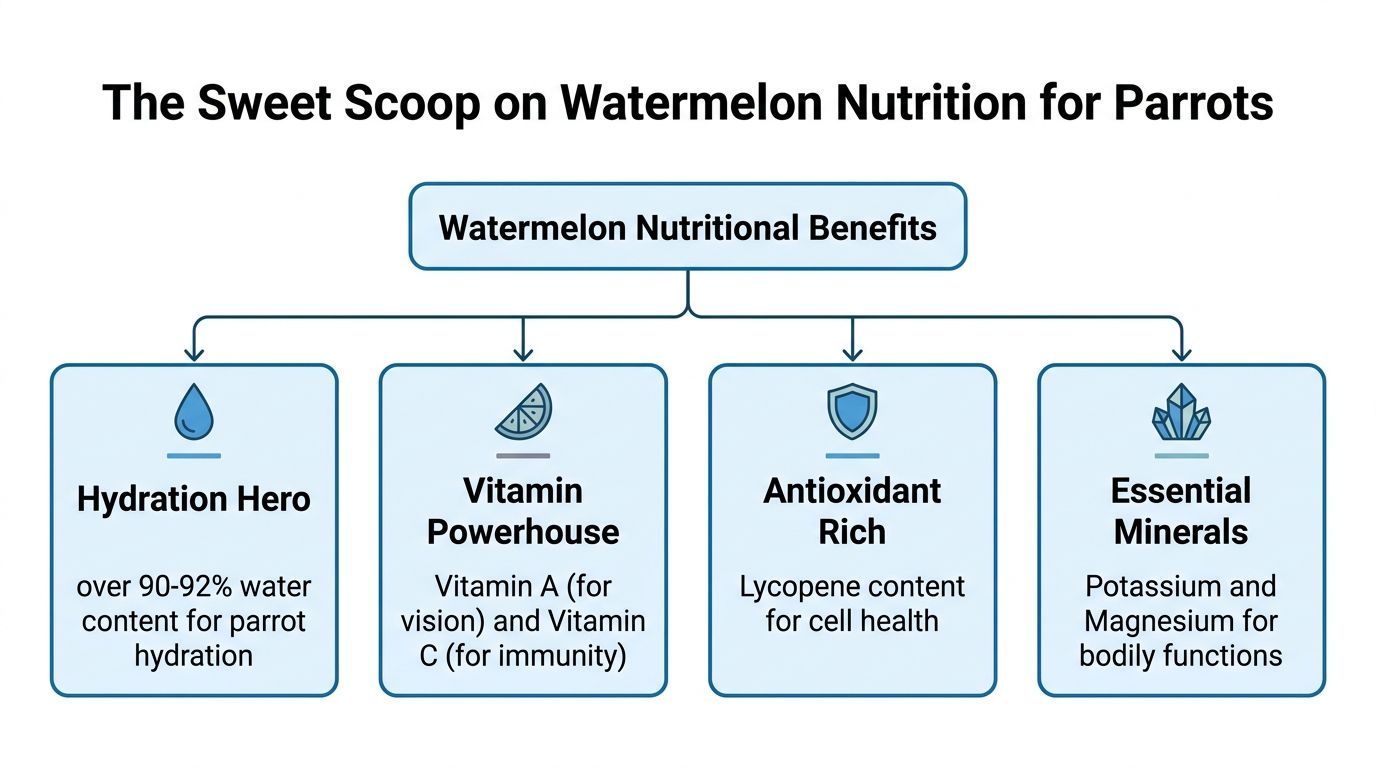
Watermelon earns its place as a summer treat because it brings something many parrots enjoy right away. Moisture.
According to Hepper’s watermelon guide for parrots, watermelon contains approximately 90-92% water, which makes it a helpful hydration-friendly food during hot weather or in dry indoor spaces. That same source also notes that fruit should make up no more than 5-10% of a parrot’s overall diet, with an ideal balance of 75% veterinary-approved pellets, 15-20% vegetables, and 5-10% nuts and protein.
Why parrots enjoy it
Think of watermelon as a hydrating snack, not a nutritional foundation. It can be especially appealing to parrots that like juicy foods or need a little variety in warm weather.
It also provides helpful micronutrients. Watermelon offers vitamin A, vitamin C, vitamin B6, potassium, and phosphorus. Those nutrients support things like immune function, eyesight, tissue support, nerve and muscle function, and bone health. Seeds also contain minerals including magnesium, zinc, copper, and folate, which adds another reason many parrots enjoy picking through the fruit instead of only licking the juicy parts.
Why it still belongs in the treat category
The catch is sugar. Even naturally sweet fruit can become too much of a good thing for a companion parrot that spends more time perched than flying laps through a forest canopy.
Pet parrots usually have lower activity levels than wild birds. That’s why fruit needs to stay in the small-treat lane. A bird can love watermelon and still do best with pellets and vegetables doing the heavy lifting nutritionally.
A simple way to think about it is this:
| Part of the diet | Best role |
|---|---|
| Pellets | Main daily nutrition |
| Vegetables | Variety and nutrient support |
| Nuts and protein | Controlled extras |
| Watermelon and other fruits | Small treats and enrichment |
If your bird already tends to beg for sweet foods, it helps to serve watermelon after the regular meal instead of before it. That keeps the treat from crowding out better staple foods.
Where support items fit in
Hydrating foods are useful, but they don’t replace a strong daily setup. Many bird parents also like offering a mineral support option such as an infused mineral block for birds with sea shells alongside a balanced feeding routine.
Watermelon is a “nice addition” food. Pellets and vegetables are the “must show up every day” foods.
That’s the sweet spot. Let watermelon be refreshing, fun, and occasional. That’s when it tends to work best.
The Good The Bad and The Rind
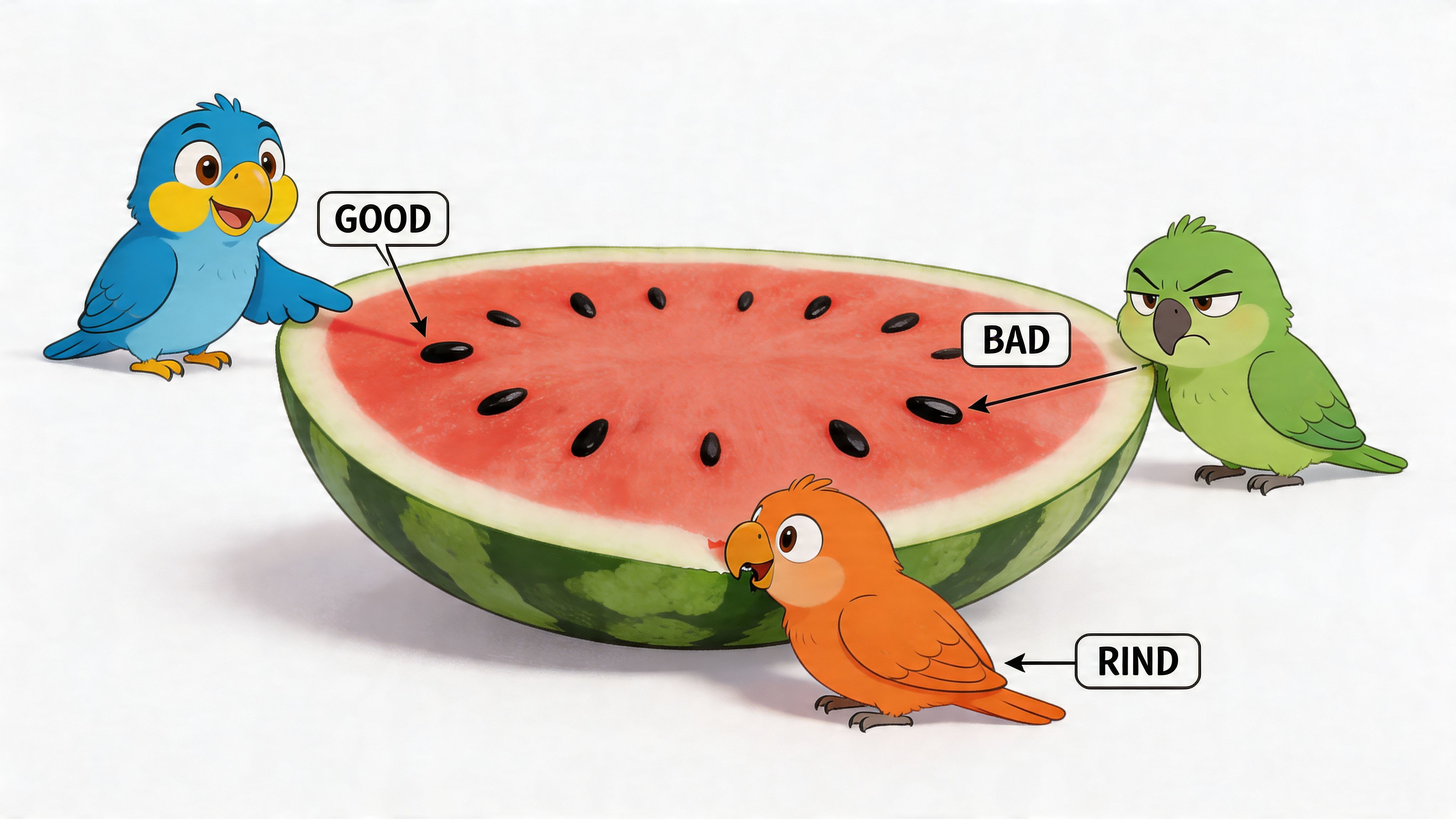
Safety questions around watermelon usually come down to three things. Seeds, rind, and how much is too much. Once you know those answers, this becomes one of the easier fresh treats to use.
Seeds are the good news
A lot of people hear “fruit seeds” and assume all seeds are dangerous for birds. That’s not true.
As explained in this video on safe watermelon feeding for parrots, watermelon seeds are safe and can even act as a preferred foraging stimulus for parrots. That source notes that parrots often target the seeds first because of the crunch and nutrient density, and that the seeds contain about 30% protein along with healthy fats.
That makes watermelon different from fruits with problematic seeds, like apples. Watermelon seeds don’t fall into that same risk category.
Why many parrots go straight for the seeds
Watermelon becomes more than snack food; it becomes a mini job.
Parrots are wired to crack, pry, sort, hold, and chew. A seed-filled bite gives them something to investigate. You’ll often see a conure pause and manipulate the piece, or a Grey carefully work the center first. That behavior is useful. It engages the beak and the brain.
A plain cube of fruit disappears quickly. A seeded piece invites work.
Some parrots don’t just eat watermelon. They excavate it.
The rind is where caution makes sense
The rind is the part I’d skip.
It’s tough, bulky, and not the easiest part for many parrots to handle well. It also has more of the “outside world” on it, which means more reason to be cautious about residue even after washing. If your goal is a safe, simple treat, the flesh is the easy win and the rind isn’t worth fussing with.
For most bird parents, serving rind-free chunks is the cleanest and safest habit.
Fresh matters
That same seed-focused source also notes that seeds should be fresh. Once cut fruit sits around, it gets less appealing and less hygienic. Moist foods can go downhill quickly, especially in a warm bird room or under cage lighting.
This is one of those practical parrot care habits that makes a bigger difference than people expect. Fresh in, leftovers out.
Portion control matters more than enthusiasm
A parrot may act like watermelon should become a full lifestyle. Don’t let the performance fool you.
Large juicy servings can create problems that many bird parents notice fast. Messier cages, wetter droppings, and a bird that starts holding out for sweet foods instead of eating regular meals. Over time, too much sugary fruit can push weight in the wrong direction, especially in less active companion birds.
Here’s a simple size guide without turning snack time into math:
| Bird size | Good starting portion |
|---|---|
| Small birds | A very small bite-sized piece |
| Medium birds | A few small chunks |
| Large birds | A modest chunk or two, not a bowlful |
If you’re unsure, start smaller than you think. You can always offer another tiny piece next time. It’s much harder to undo a habit of overserving.
What tends to work best
- Seeded flesh pieces: Great for birds that enjoy crunch and foraging.
- Small servings: Easier on diet balance and easier to monitor.
- Short treat sessions: Better than letting wet fruit sit around.
- Observation: Check droppings, appetite, and interest in regular foods after offering it.
What doesn’t work well is tossing in a huge wedge, leaving rind attached, and treating fruit like free-choice cage food. Watermelon shines as a controlled treat. That’s the difference between a fun summer snack and a sticky, wasteful mess.
How to Serve Watermelon Safely
Once you’ve decided to share some, preparation is straightforward. A little care at the cutting board goes a long way.
Start with a clean melon
Wash the outside before you cut into it. That matters because the knife passes through the surface and into the part your bird will eat.
If you prefer, choosing organically grown fruit may help some bird parents feel better about residue concerns, but washing is still a smart step either way.
Prep the part you actually want to serve
Remove the rind and set aside only the soft inner flesh. You can leave the seeds in if the piece is fresh and suitable for your bird to handle.
Cut the fruit into a size that matches your parrot’s body size and eating style. A cautious cockatiel may do better with tiny pieces placed in a dish. A bolder Amazon or macaw may enjoy a chunk they can grip and work on.
Serving tip: Room temperature or lightly chilled fruit is usually easier than giving a bird something frozen solid.
Use a simple safety checklist
- Wash first: Clean the outside before slicing.
- Skip the rind: Serve the flesh only.
- Match the size to the bird: Tiny parrots need tiny pieces.
- Offer fresh: Cut only what you plan to use soon.
- Clean up promptly: Remove leftovers before they get messy.
Many bird parents like pairing fresh foods with a rotating stash from a bird treats collection, so fruit doesn’t become the only “special” item a parrot expects.
Don’t leave moist fruit sitting in the cage
This matters more than the slicing technique.
Wet foods spoil faster than dry foods. If your parrot has finished the fun part and started flinging the rest, it’s time to remove what’s left. That keeps bowls cleaner, reduces sticky surfaces, and helps avoid the gross little science experiment that old fruit can become.
A good routine is simple. Serve it, supervise it, enjoy the chaos, then clear the leftovers and wipe the area down.
That keeps treat time fresh, safe, and easy to repeat.
Turn Treat Time into Brain Games
The biggest missed opportunity with watermelon is serving it in a plain bowl and stopping there. Yes, your parrot will probably still enjoy it. But with a little creativity, you can turn a soft treat into a short enrichment session.
That’s where watermelon gets more interesting.
Let your parrot work for it
Parrots are problem-solvers. Even easy food becomes more exciting when they have to search, pull, shred, or manipulate it a bit first.
A seeded watermelon piece can encourage:
- Foraging
- Beak use
- Texture exploration
- Focused play
- Short problem-solving sessions
That’s why many experienced keepers use treats as enrichment tools, not just snacks.
Easy ways to serve watermelon as enrichment
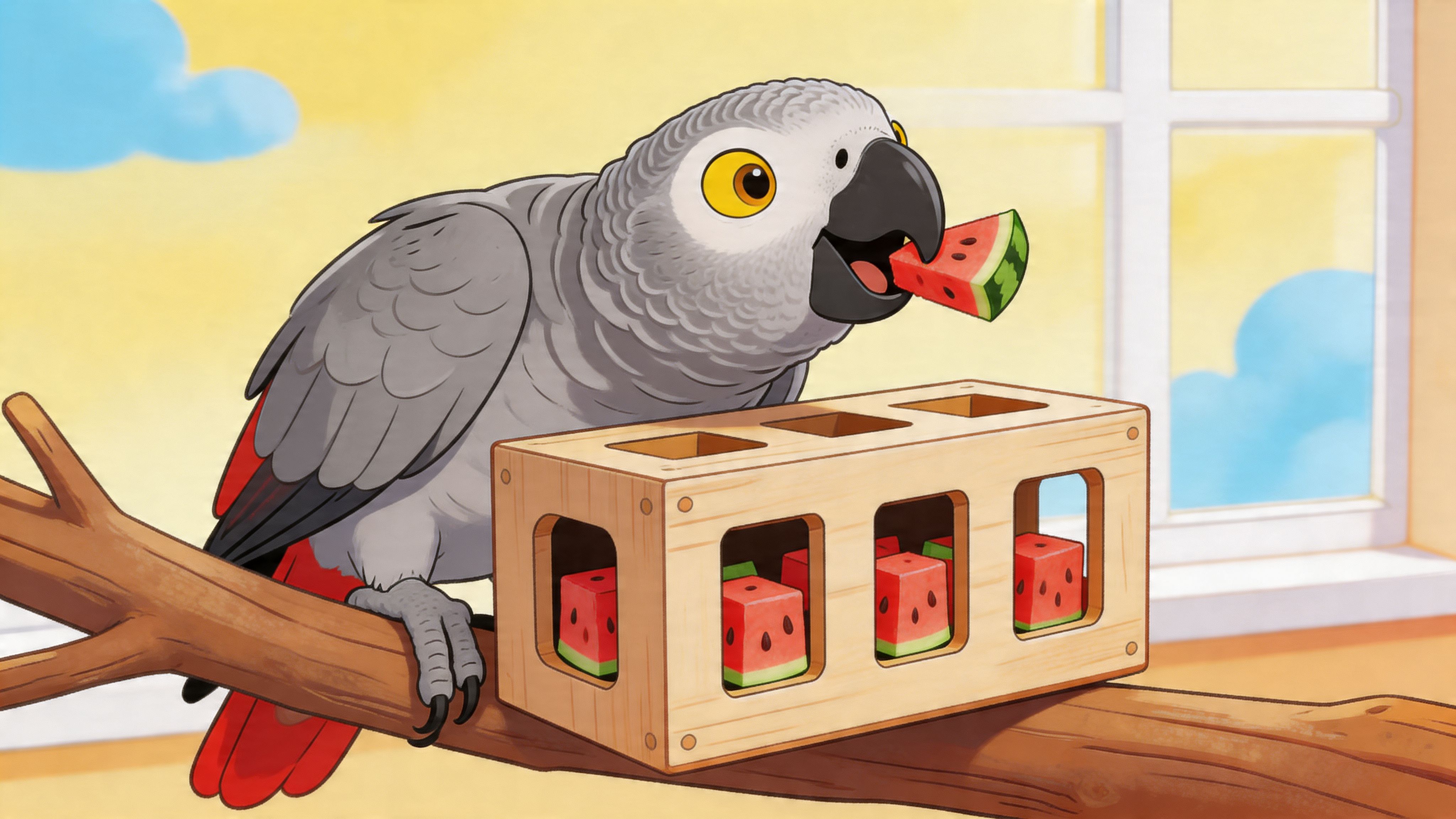
One option is to place a small piece inside a foraging toy that’s easy to clean after use. A simple puzzle feeder can slow the whole process down and give your bird a reason to stay engaged longer.
Another good approach is skewering a few rind-free chunks onto a bird-safe holder or hanging setup so your parrot has to climb, balance, and nibble instead of just leaning over a bowl.
You can also tuck a few tiny pieces into paper layers or safe shredding material for birds that enjoy tearing things apart before they eat.
If your bird is new to foraging, start easy. Let them see and smell the treat first. Success builds confidence.
A good beginner setup
The 4 Way Foraging Fun toy is the kind of setup that works well for parrots learning that food can be discovered, not just delivered. With soft treats like watermelon, use very small pieces and clean the toy soon after the session.
That keeps the activity fun without turning it into a sticky cleanup headache later.
Enrichment doesn’t have to be complicated. It just needs to give your bird a reason to think and interact.
A quick example helps. A conure given one small watermelon chunk in a dish may finish in moments. The same chunk divided into smaller bits and tucked into a foraging setup can create a much longer, more stimulating experience. The bird pauses, investigates, extracts, chews, and goes back for more.
That’s a better use of the same treat.
Here’s a helpful example of birds engaging with enrichment setups during treat-based play:
What works and what doesn’t
What works well
- Small pieces
- Short, supervised sessions
- Easy-to-clean toy surfaces
- Fresh fruit used right away
- Matching the challenge to the bird
What usually flops
- Overstuffing a toy with wet fruit
- Hiding pieces so well your bird gives up
- Leaving fruit in a toy for too long
- Using one setup forever without changing it
Rotation matters. Some days a dish is fine. Some days a skewer, a puzzle, or a shredding setup keeps things more interesting. Happy birds rarely want the exact same routine every single day.
Watermelon Tips for Your Specific Flock
Not every parrot tackles watermelon the same way. Species, size, confidence, and beak strength all change what a good serving looks like.
Small parrots
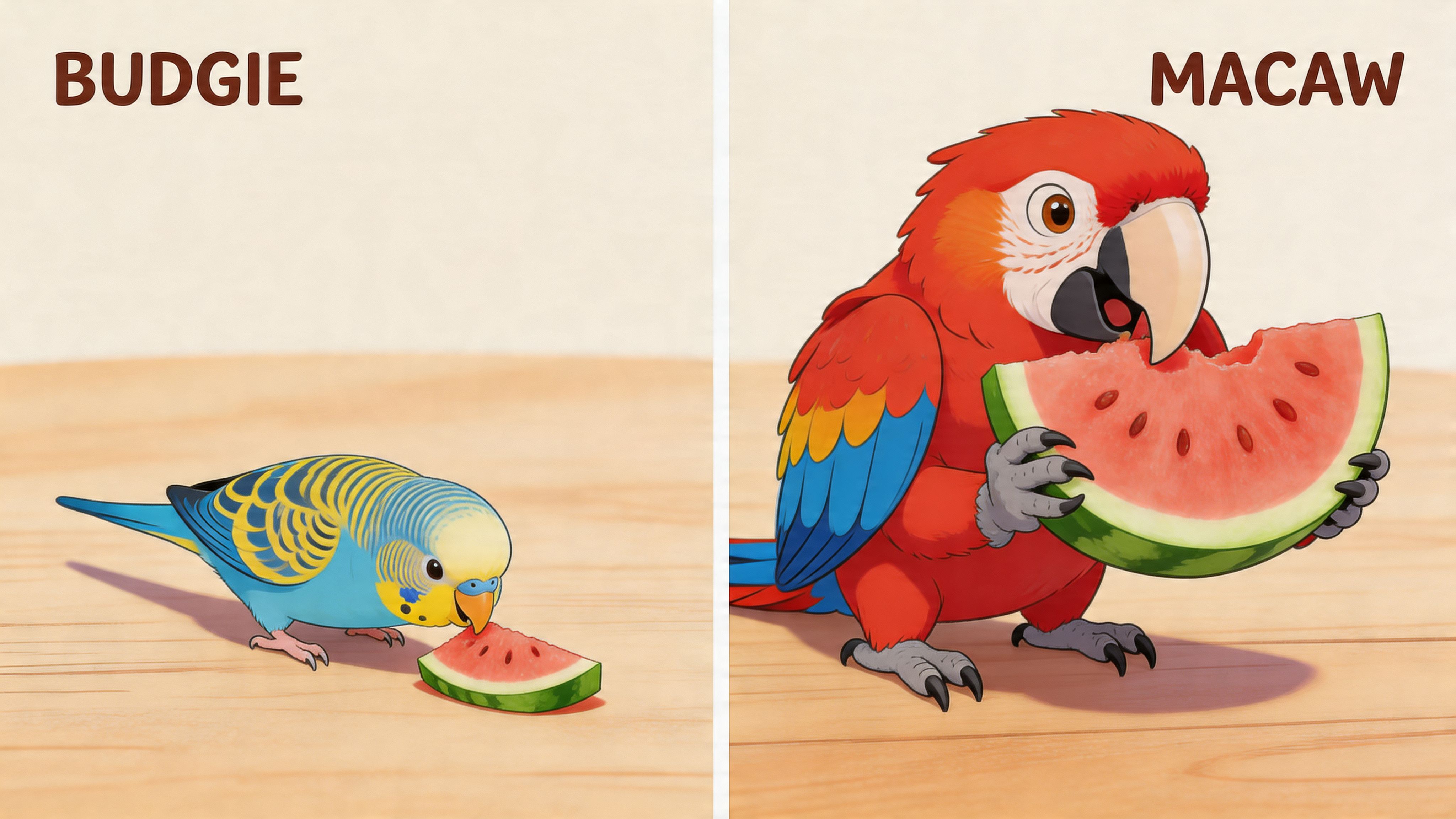
Budgies and cockatiels often do best with very small, manageable pieces. If the chunk is too big, they may ignore it or just lick the moisture off the surface.
For these birds, finely cut pieces in a shallow dish often work better than a giant hand-held chunk. If they’re hesitant, try offering watermelon alongside familiar veggies so the new item feels less suspicious.
Medium parrots
Conures, caiques, and similar birds usually bring more confidence and more chaos to treat time.
These birds often enjoy a slightly larger piece they can pick up, toss, or investigate for seeds. Medium parrots are also great candidates for basic foraging setups. They tend to enjoy the “hunt” part almost as much as the treat itself.
Large parrots
African Greys, Amazons, cockatoos, and macaws can handle more substantial pieces, but “more substantial” shouldn’t turn into “serve half a melon.”
Larger parrots often love the work of manipulating seeded chunks. They may hold the food in one foot, strip out the center, and leave you with a very creative cleanup job. Give them enough to engage with, but keep the serving clearly in treat territory.
Breeding and molting birds need extra care
This is one area where caution is the smart move.
According to ZuPreem’s fresh fruit guidance for birds, melons may be offered in moderation during breeding and molting periods, but the reason isn’t clearly explained. That matters because these are demanding phases for a parrot’s body. The same source notes that for birds putting energy into feather growth or egg production, the high water content and lower nutrient density of watermelon could be a concern, and an avian vet should guide feeding during those times.
A quick decision guide
| Situation | Best approach |
|---|---|
| Tiny or cautious bird | Offer a very small soft piece in a dish |
| Bold medium parrot | Try a few chunks in a simple foraging setup |
| Large experienced parrot | Serve a modest seeded chunk for beak work |
| Bird in molt or breeding condition | Keep it cautious and ask your avian vet |
If you live with a mixed flock, don’t serve everyone the exact same portion. A budgie and a macaw don’t need the same size treat, and they definitely won’t make the same kind of mess with it.
A Sweet and Safe Summer Treat
Watermelon can absolutely earn a spot in your parrot care routine. It’s safe when served thoughtfully, refreshing in warm weather, and much more fun than a simple yes-or-no food list makes it sound.
The best approach is easy to remember. Serve the flesh without the rind, keep portions modest, let your bird enjoy the safe seeds, and use it as a chance for foraging and enrichment, not just snacking. That’s what turns an ordinary fruit treat into something that supports a happier, more engaged companion bird.
For new bird parents, this is one of those nice confidence-building wins. You can share a little summer snack with your feathered friend and feel good about doing it responsibly. For experienced keepers, watermelon is a handy tool for variety, beak work, and short enrichment sessions that break up the day.
Happy birds usually aren’t just well-fed. They’re curious, busy, and invited to use their brains.
If you’re ready to make treat time more enriching, explore Squawk Shop for bird-safe foraging toys, feeding accessories, playstands, and parrot care essentials that help turn everyday snacks into fun, safe activities for your flock.