

Can Parrots Eat Blueberries: Benefits And Risks
TL;DR: Yes, absolutely! Parrots can eat blueberries, and they can be a healthy treat when they make up only 5-10% of total intake and the daily diet stays around 75-80% high-quality pellets with the rest from vegetables, nuts, proteins, and a small fruit portion. For larger parrots, keep it modest, and for a first try, start with one blueberry before offering more.
You’re eating a handful of blueberries, and from across the room you feel that stare. Not a subtle one, either. It’s the full parrot audit, complete with head tilt, bright eyes, and the unspoken question every bird parent learns to recognize fast: “Are you sharing that?”
That’s usually when people ask, can parrots eat blueberries? They can, and it’s a smart question to ask before a berry ever reaches a beak. With parrots, “safe” and “good every day in any amount” are not the same thing.
Blueberries sit in the nice middle ground. They’re a good treat, they’re easy to serve, and most parrots find them fun to squish, toss, and investigate. The trick is knowing how to fit them into a balanced parrot diet without letting the fruit bowl steal the spotlight from pellets and vegetables.
Your Guide to Sharing Blueberries with Your Parrot
A lot of new bird parents worry they’re overthinking treats. They’re not. Parrots are curious, clever, and often very persuasive. If you’ve got a budgie inching toward your breakfast plate or an Amazon making “sampling noises” from the playstand, caution is a good habit.
Blueberries are one of those foods that often go over well because they’re soft, easy to hold, and naturally appealing. A tiny budgie may peck at the skin first. A conure may grab one like treasure and run off to the highest perch. A cockatoo may turn the whole event into performance art.
Why this question matters
Treats do more than fill a crop. They shape habits.
If a parrot learns that sweet foods arrive constantly, it may start ignoring the foods that should carry most of the diet. That’s where many feeding problems begin. A berry here and there is lovely. A steady stream of fruit every time your bird looks cute is where things get sticky.
Practical rule: If a food feels like a “special snack,” treat it like one.
What works in real homes
The bird parents who do best with fruit usually keep it simple:
- Serve small amounts: A few bites feel exciting to a parrot without becoming the main event.
- Offer fruit after the regular meal: Birds are less likely to hold out for sweets when pellets and vegetables come first.
- Use treats with purpose: Blueberries shine as training rewards, foraging rewards, or occasional bowl extras.
What doesn’t work is free-pouring fruit into the dish and calling it healthy just because it came from the produce aisle. Parrots need balance, not a smoothie bar.
Blueberries can absolutely have a place in your bird care routine. They just work best when you use them thoughtfully, the same way you’d use bird-safe toys, rotating perches, and foraging opportunities to keep your feathered friend happy and engaged.
The Berry Good Benefits of Blueberries for Parrots
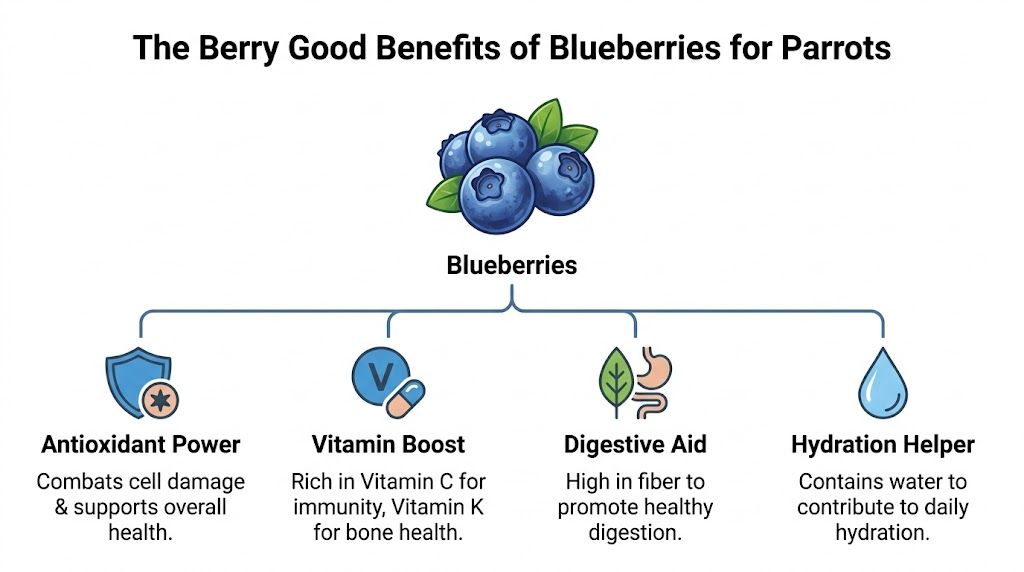
Blueberries may be small, but they bring a lot to the perch. They’re considered a safe and nutritious treat for parrots when fed in moderation, and they contain bioflavonoids, vitamins C, K, and E, potassium, manganese, and dietary fiber according to this veterinary-informed blueberry guide for parrots.
Why these nutrients matter
Think of antioxidants as a little cleanup crew. Day after day, a parrot’s body deals with normal wear and tear. Antioxidants help support overall health by helping the body handle that stress. Blueberries are especially known for bioflavonoids, which is one reason they get so much attention as a smart fruit choice.
Then there are the vitamins.
- Vitamin C: Supports normal immune function
- Vitamin K: Plays a role in normal body processes tied to health and maintenance
- Vitamin E: Adds another layer of nutritional support
- Potassium and manganese: Helpful minerals for body function
- Fiber: Useful for digestion
That doesn’t mean a blueberry is a miracle food. It means it earns its spot as a good occasional treat.
The quiet upside bird parents notice
Blueberries have another advantage. They’re easy to work into everyday life.
A parrot can hold one. You can mash one for a smaller bird. You can tuck a piece into a foraging toy. That matters because the best foods for companion parrots often do double duty. They nourish the body and wake up the brain.
A healthy treat is even better when it also gives a parrot something to explore, shred, peel, or hunt for.
Why moderation still matters
Even a good food can become a poor habit if it crowds out better staples. Blueberries belong in the treat lane, not the foundation of the diet. The same source notes that they should stay a small part of the overall menu, and that fits what seasoned parrot owners already know: birds do best when fruit adds variety, not when it takes over the bowl.
One more practical note. The same source points out that up to 90% of conventional produce can have pesticide residues, which is why many bird parents prefer organic blueberries for sensitive avian systems. If organic isn’t available, washing well becomes extra important.
Potential Risks of Serving Blueberries
Blueberries are safe for parrots, but “safe” still comes with a few common-sense cautions. Most of the problems come from how they’re served, how often they’re served, or what gets skipped before serving.
Sugar can sneak up on companion birds
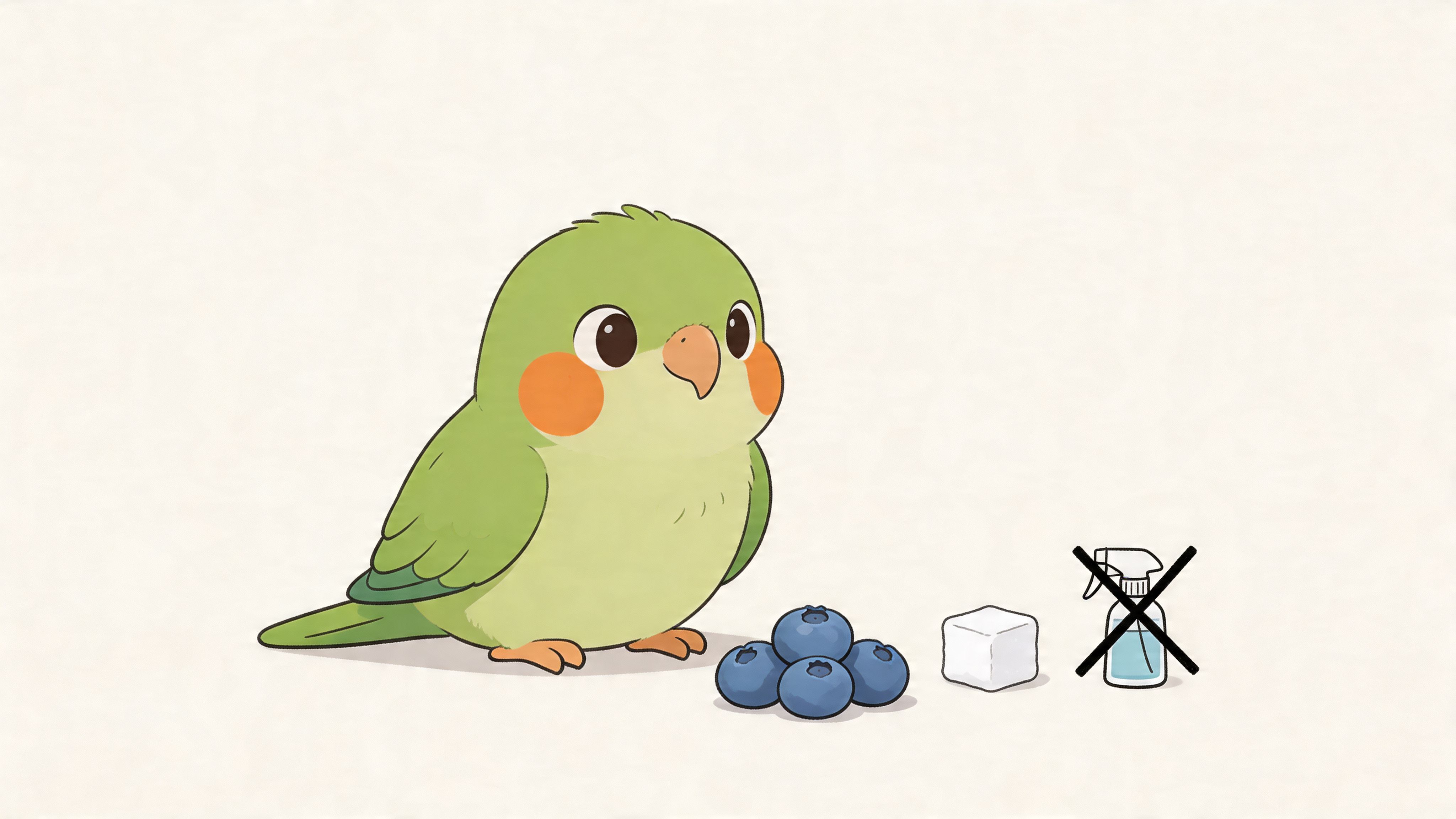
Fruit contains natural sugar. That doesn’t make blueberries “bad,” but it does mean they need a light hand, especially for parrots who spend more time on a perch than doing laps around the living room.
A sedentary bird can get a little too enthusiastic about sweet foods. Then veggies start looking boring, and pellets get flicked aside with dramatic flair. Over time, that’s not the direction you want a daily diet to go.
A simple fix helps a lot:
- Keep fruit small and occasional
- Lead with the main meal
- Use blueberries as treats, not bowl fillers
Pesticides are a real practical concern
Parrots are small, sensitive animals. A residue you barely think about on your own fruit matters more when you’re feeding a companion bird.
Here’s the safest routine:
- Inspect the berries and toss any that look moldy or damaged.
- Wash them thoroughly before serving.
- Choose organic when possible if that fits your routine and access.
If organic isn’t easy to find, don’t panic. Washed blueberries are still a much better choice than unwashed ones.
Clean fruit is part of bird-safe feeding, just like clean bowls and fresh water.
Choking and mess management
For many parrots, blueberries are soft enough to be low fuss. Still, bird size matters. A macaw can crush a berry without a second thought. A budgie or parrotlet may do better with a berry that’s mashed or broken open first.
That’s less about danger and more about good setup. If your bird is tiny, hesitant, or new to fresh foods, changing the texture makes the experience easier.
Also, blueberry juice goes everywhere. Perches, cage bars, favorite shirts, your coffee mug if you’re unlucky. Serve in a place that’s easy to clean, and remove leftovers before they turn into a sticky science project.
How to Prepare and Serve Blueberries Safely
Serving blueberries well is easy once you have a little routine. Most bird parents only need to learn it once, and then it becomes second nature.
Start with clean, fresh berries
Pick blueberries that are firm and fresh-looking. Skip any that are wrinkled, leaking, or moldy.
Then wash them thoroughly. Even if the package looks lovely and farm-fresh, your parrot doesn’t need surprises from the produce aisle. After washing, pat them dry so they’re less slippery in the bowl or foraging setup.
Match the berry to the beak
Practical feeding beats one-size-fits-all advice.
- Small parrots: Mash or split the berry so they can explore the inside easily.
- Medium parrots: Whole berries often work fine, though some birds prefer them lightly squished.
- Large parrots: Whole berries are usually the easiest option and also great for enrichment.
If your bird has never tried blueberries before, start with one blueberry. Let them taste it, investigate it, or ignore it for a day. Some parrots dive right in. Others need a few calm introductions before they decide it’s acceptable cuisine.
Blueberry Serving Guide for Parrots
| Parrot Size / Species | Serving Size Per Feeding |
|---|---|
| Budgies, parrotlets, lovebirds | Start with part of one berry or one mashed berry |
| Cockatiels, small conures | Start with one berry, then a small amount if well tolerated |
| Red Lored Amazon | 3-4 berries per feeding |
| African Greys, Amazons, Cockatoos | Keep portions modest |
| Macaws | Keep portions modest |
For feeding, a sturdy dish helps keep juicy treats from rolling all over the cage floor. A quick-locking crock for fresh foods and treats is especially handy if your bird likes to flip lightweight bowls for sport.
Easy ways to introduce a picky eater
Some parrots don’t recognize fresh food as food right away. That’s normal.
Try one of these:
- Mash a little blueberry onto a favorite vegetable: It adds scent and color without overwhelming the bird.
- Offer it while you eat your own: Parrots are shameless food thieves and excellent copycats.
- Use playtime curiosity: Put a berry on the playstand instead of the food bowl.
- Mix a tiny piece into the usual dish: Just enough to be noticed.
If your parrot rejects it, don’t keep pushing in the same session. Remove it, try again another day, and stay relaxed. Birds read pressure very well. The calmer you are, the more willing they tend to be.
Blueberry Guidelines for Different Parrot Species
Not every parrot should get the same blueberry routine. Species, body size, and activity level all matter. A busy little bird and a larger companion parrot lounging on a favorite perch don’t use food the same way.
Small parrots often handle tiny fruit portions well
Budgies, parrotlets, lovebirds, and cockatiels usually need very small servings because they’re small birds. Their blueberry portion should look almost comically modest to us. That’s fine.
These birds also may need texture help more often. A split or mashed berry can be easier to investigate than a whole one that rolls away like a bowling ball.
Medium and large parrots need more restraint than many owners expect
Species-specific feeding is of paramount importance. Existing guidance often stays broad, but this species-focused discussion of blueberries for parrots notes that larger parrots like African Greys, Amazons, and Cockatoos have a higher obesity risk from excess fruit sugar. It also notes anecdotal owner reports suggesting 2-3 berries, 2-3 times per week as a sensible upper limit for some of these birds.
That won’t fit every single bird perfectly, but the bigger point is solid. Medium-to-large parrots can be very good at convincing their people they need another treat. They usually don’t.
Bigger beak doesn’t always mean bigger fruit allowance.
Think beyond species name
Two Amazons can live very different lives. One may be active, constantly climbing, chewing, and moving between perches and a playstand. Another may be more sedentary and more interested in snacks than exercise.
That’s why feeding by species alone isn’t enough. Consider:
- Activity level: More movement usually means more flexibility
- Current body condition: A bird carrying extra weight needs tighter treat boundaries
- Overall diet quality: Blueberries should never replace vegetables
- Personality: Some parrots fixate on sweet foods faster than others
Macaws, cockatoos, African Greys, and Amazons often do best when blueberries stay in the “special event” category. Conures and cockatiels may enjoy them more often in tiny amounts. Budgies often need the berry modified more than they need more of it.
Turn Snack Time into Playtime with Blueberry Enrichment
The smartest way to serve blueberries isn’t always in a bowl. It’s in a challenge.
Parrots are built to search, manipulate, tear, hold, and investigate. If you drop every treat into the same cup at the same time each day, you miss a big chance to support natural behavior. Blueberries can become a tiny reward that makes your bird think, move, and problem-solve.
Simple enrichment ideas that actually work
You don’t need a complicated setup. In fact, simple usually wins.
- Tuck a berry into paper foraging layers: Let your parrot shred before the snack appears.
- Place one on a playstand path: Your bird walks, climbs, and discovers it along the way.
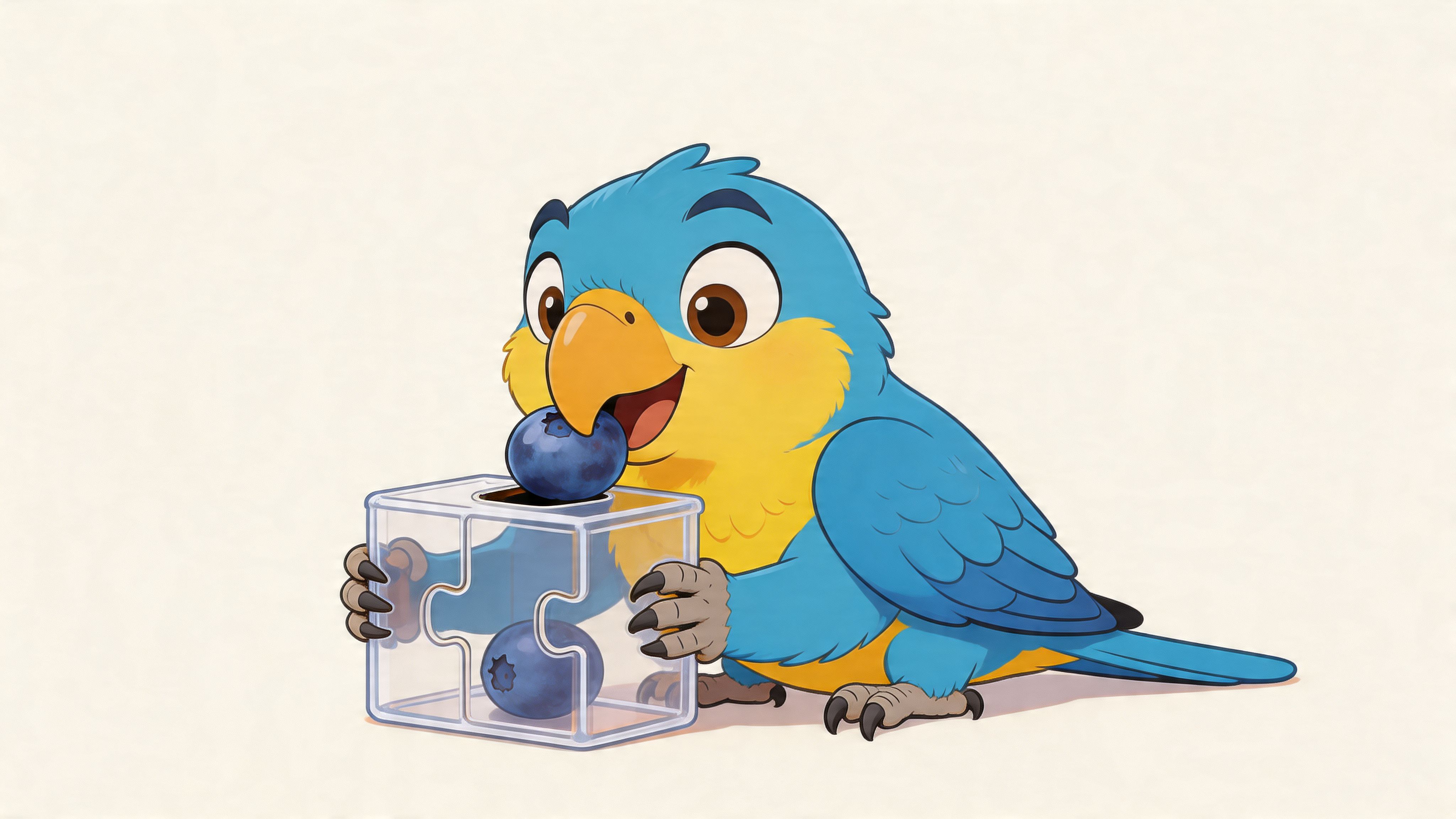
- Hide a piece in a puzzle feeder: Great for birds who rush through treats.
- Press a mashed bit onto a safe chew item: Now it’s part snack, part investigation.
A blueberry is especially useful for foraging because it’s interesting. It smells different, feels different, and can be squished, peeled, or carried off like prized loot.
Why this matters more than bowl feeding
Food enrichment slows parrots down in a good way. It gives them a job. That matters for busy species and for companion birds who spend a lot of time indoors.
A bird that works for a treat often seems more satisfied than a bird that gulps it down. That’s one reason enrichment-first care matters so much. If you want a deeper look at why mental stimulation matters every day, this article on why bird toys support parrot happiness and well-being is worth a read.
Food can be nutrition, but for parrots it should also be an activity.
A few blueberry play rules
This is the part where enthusiasm needs a tiny leash.
Use blueberries in enrichment only when:
- The toy is easy to clean: Sticky fruit left behind gets unpleasant fast.
- You can supervise at first: Especially with a new setup.
- You remove leftovers promptly: Fresh fruit doesn’t belong sitting around all day.
- The challenge fits the bird: A macaw puzzle may frustrate a budgie, and a budgie setup may bore a cockatoo in seconds.
Some of the best sessions are the simplest. One blueberry tucked into crinkled paper. One berry placed on a java wood branch. One tiny reward hidden in a foot toy cup. It doesn’t take much to turn snack time into a little adventure.
What to Watch For Signs of an Adverse Reaction
Most parrots do fine with blueberries, especially when the serving is small and the fruit is properly washed. Still, any new food deserves a little observation.
Signs to keep an eye on
After offering blueberries for the first time, watch for:
- Changes in droppings: A slight color change can happen with richly colored foods, but ongoing digestive upset is different.
- Low energy: A bird who seems unusually quiet or withdrawn after a new food should be watched closely.
- Loss of appetite: If your parrot refuses regular food afterward, pause the treat.
- Digestive discomfort: Repeated messiness, obvious discomfort, or behavior that seems off
If you notice anything concerning, stop feeding blueberries and contact an avian veterinarian, especially if the signs continue or seem severe.
For general bird care questions, travel setups, cage basics, and other common concerns, Squawk Shop’s parrot care FAQ page is a helpful place to keep bookmarked.
Keep first introductions boring
That may sound funny, but it works. Offer one new food at a time, in a small amount, on a calm day. Don’t mix three new fruits into a grand buffet and then try to guess what caused a problem.
A Berry Happy Bird is a Healthy Bird
Blueberries are one of those treats that can earn a happy little spot in a parrot’s routine. They’re nutritious, easy to serve, and fun to turn into enrichment. The sweet spot is simple. Keep them moderate, wash them well, and make sure they never crowd out the foods your bird needs most.
For many parrots, the magic is not just eating the berry. It’s finding it, peeling it, smashing it, and feeling very proud about the whole production. That’s a good reminder for all of us in the flock. Healthy bird care isn’t only about nutrients. It’s also about curiosity, movement, and joy.
If your feathered friend lights up when food becomes a game, you’re on the right track.
If you’d like more ideas for building a safer, more enriching routine, take a peek at Squawk Shop. It’s a great place to find parrot-friendly gear, from foraging toys to playstands and cage essentials that help keep clever beaks busy and happy.