

Accessories for Birds: The Ultimate Enrichment Guide
Bringing a bird home can make you feel like you need to buy the whole pet aisle at once.
You see swings, bells, ladders, rope perches, bowls, huts, puzzle toys, mineral blocks, travel carriers, and about twelve things labeled “parrot fun.” Then the questions start. Does my bird need all this? What is helpful? What’s safe? What will just collect dust in the corner of the cage?
Most bird parents start in the same place. We want our feathered friend to feel safe, busy, comfortable, and loved. That’s a wonderful instinct. The tricky part is learning that good accessories for birds aren’t about filling space. They’re about meeting needs.
A parrot cage should work more like a tiny apartment, gym, kitchen, playground, and classroom all in one. A budgie, cockatiel, conure, African Grey, Amazon, cockatoo, or macaw doesn’t look at an accessory and think, “Nice decor.” They think, “Can I chew this? Climb it? Stand on it? Search for food in it? Feel secure near it?”
Bird parents all over the world are thinking this way more than ever. The global market for bird cages and accessories was valued at USD 4.36 billion in 2025 and is projected to reach USD 6.26 billion by 2031, according to Research and Markets’ bird cages and accessories market report. That tells us something simple and encouraging. More people are investing in thoughtful, specialized care for their birds.
If you're brand new, take a breath. If you've lived with parrots for years and still tweak cage setups every month, you're in good company too. A good habitat is never “done.” It grows with your bird.
A happy bird usually isn't a bird with the most stuff. It's a bird with the right stuff, arranged in a way that supports natural behavior.
If you’re still gathering the basics, a new bird owner checklist can help you sort must-haves from nice-to-haves before you start shopping.
Welcome to the Flock More Than Just Cage Decor
The first time you set up a cage, it’s easy to think in objects.
One perch. Two toys. Food cups. Water bowl. Done.
Then your bird comes home and teaches you otherwise. Maybe your cockatiel sits in one corner because the perch feels awkward. Maybe your conure ignores the shiny toy but attacks the cardboard tag it came with. Maybe your African Grey wants to inspect every new item like a tiny, suspicious landlord.
A habitat meets needs
That’s why it helps to swap one idea for another. You’re not decorating a cage. You’re building a habitat.
A good habitat gives your bird chances to:
- Move well by climbing, balancing, and changing position
- Use the beak naturally by chewing, shredding, and exploring
- Think and solve through foraging and toy interaction
- Rest comfortably in places that feel stable and secure
- Stay interested so the day has variety
Children need books, climbing toys, snacks, quiet corners, and chances to play. Parrots aren’t children, of course, but the comparison helps. A bare cage is a lot like an empty room with one chair in it. Safe? Maybe. Enriching? Not really.
Why random shopping often backfires
Many beginners buy accessories by appearance. We’ve all done it. Bright colors catch the eye. Cute shapes look fun. But birds care more about function than style.
A great toy for a budgie may be laughably flimsy for a macaw. A thick perch that suits a large Amazon can be hard for a cockatiel to grip. A cozy-looking item might not be a good choice if it’s made from materials that fray or encourage unsafe chewing.
Practical rule: Before you buy any accessory, ask one question first. “What need does this meet for my bird?”
That question changes everything. It helps you choose with purpose, not panic.
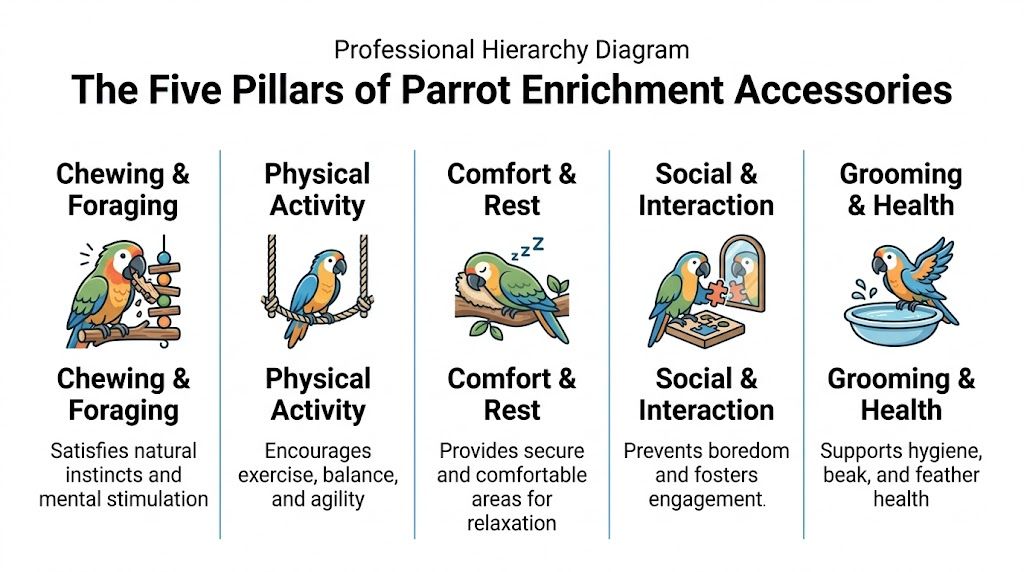
The Five Pillars of Parrot Enrichment Accessories
When bird parents feel overwhelmed, I like to sort the whole cage setup into five simple buckets. If your bird has support in each of these areas, you’re building a home that feels lively and balanced instead of cluttered.
Toys for play and chewing
Parrots are busy beaks with feathers attached. Chewing isn’t bad behavior. It’s normal behavior.
Shredding toys, soft wood blocks, palm leaf toys, cardboard, paper streamers, and leather strips all give birds a healthy place to direct that energy. Without outlets, many parrots start inventing their own projects. That might mean cage bars, food bowls, wall trim, or your favorite book.
Small birds often enjoy lighter materials they can manipulate easily. Larger parrots usually want thicker wood, chunkier parts, and more resistance.
A useful toy mix often includes:
- Destructible toys for shredding and tearing
- Noise-making toys for birds who like movement and sound
- Foot toys for holding, tossing, and chewing outside the cage
- Puzzle-style toys for clever species that need a little challenge
If your bird seems bored by a toy, it may not be a bad toy. It may just not match your bird’s play style. In such situations, observing matters more than guessing. You can learn a lot from what your parrot destroys first.
For a closer look at why toy choice matters so much, this article on why bird toys are key to your parrot's happiness and well-being is worth a read.
Perches for foot health and movement
Perches are easy to underestimate because they look simple. They are not simple.
A perch is where your bird stands, shifts weight, rests, eats, grooms, and watches the world. If every perch in the cage is the same size and texture, your bird’s feet do the same job all day long. Variety matters.
Natural branches, rope perches, and grooming-style perches all have different uses. A well-set cage usually includes more than one type. Think of perches like shoes. One pair might be fine for a short errand, but you wouldn’t want to wear the exact same pair for every activity, every day.
Foraging for instinct and brain work
Wild parrots don’t find all their food sitting in one bowl, ready to go. They spend time searching, peeling, breaking, sorting, and problem-solving. Pet birds still carry that instinct.
Foraging accessories turn mealtime into an activity instead of a quick snack stop. You can use cups, puzzle toys, paper parcels, cardboard trays, vine balls, and simple hide-and-seek setups.
A beginner foraging setup can be wonderfully plain:
- Start visible by placing a treat in a cup your bird can see.
- Add one step by tucking the treat under paper.
- Build challenge slowly with drawers, boxes, or puzzle toys.
That gradual approach helps nervous birds and prevents frustration.
Foraging isn’t extra. It’s one of the clearest ways to make a companion bird’s day feel more natural.
Cage comforts and useful add-ons
Not every accessory has to be exciting. Some should make daily life smoother.
Bath dishes or misting-friendly setups can support feather care. Extra feeding stations can reduce crowding in shared spaces. Platform perches can help birds that like a flat resting spot. Cage skirts, seed guards, and thoughtfully placed liners help the humans in the house too, which matters more than we sometimes admit.
Comfort accessories should still be chosen with care. A restful setup is good. A cluttered or hard-to-clean setup is not.
Look for items that improve routine rather than just adding bulk.
Nutrition and health aids
Some of the most overlooked accessories for birds are the quiet, useful ones. Mineral blocks, cuttlebone, and calcium-support items may not look as exciting as a toy bundle, but they belong in the wider habitat picture.
These items don’t replace a balanced diet, and they shouldn’t be treated like a magic fix. What they do offer is another way for birds to interact with their space through nibbling, scraping, and natural wear.
They’re especially helpful when paired with the other pillars. A cage shouldn’t be all nutrition tools and no fun, or all toys and no practical support. Good enrichment is a mix.
A simple way to check your setup
If you stand in front of your bird’s cage and can point to something from each pillar, you’re on strong footing.
| Pillar | What it supports | Simple examples |
|---|---|---|
| Play | Chewing, shredding, curiosity | Wood toys, paper toys, foot toys |
| Perching | Balance, comfort, foot use | Natural branches, rope perches, platforms |
| Foraging | Problem-solving, instinct | Treat cups, puzzle feeders, paper wraps |
| Comfort | Routine, rest, cleanliness | Bath dish, extra bowls, resting spots |
| Health aids | Beak use, nutritional support | Mineral blocks, cuttlebone, calcium items |
Bird enrichment works best when these pieces support each other. A toy entertains. A perch supports the body. A foraging toy gives that beak and brain a job. A bathing setup helps grooming. Together, they turn a cage into a place where a bird can live well.
Safety First How to Pick Bird-Safe Accessories
Safety isn’t the boring part of parrot care. It’s the part that lets everything else work.
A toy can be colorful, enriching, and expensive, but if it’s made with risky hardware or poor construction, it doesn’t belong near your bird.
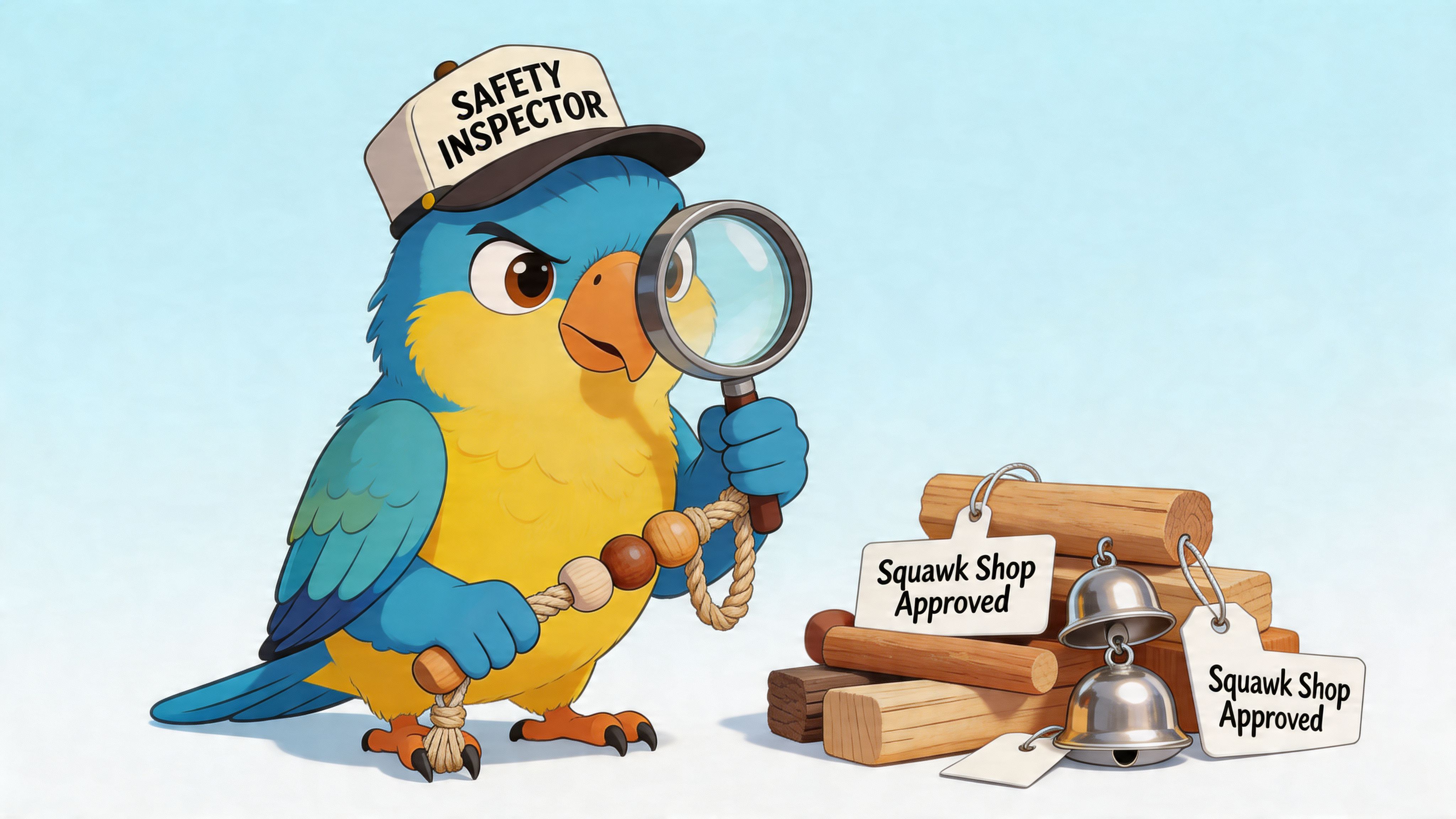
Check the hardware first
Most bird parents look at the toy itself. The smarter move is to look at the connectors.
Toy fastener safety is important. According to Super Bird Toys safety guidance, split key rings and spring clamps are responsible for 15-25% of reported toe and tongue injuries in pet parrots. Quick-links and pear links are a safer swap for many setups because they reduce trapping risks.
That may sound like a tiny design detail. It isn’t. Birds explore with their beaks, feet, and tongues. Small gaps and moving parts can become big problems fast.
When you inspect toys and cage accessories, check for:
- Safer connectors like properly sized pear links or quick-links
- Smooth edges with no sharp points or burrs
- Secure knots and parts that won’t come apart too easily
- Appropriate scale so tiny birds don’t get overwhelmed and large birds don’t snap parts instantly
Choose materials with care
Bird-safe materials matter because parrots chew first and ask questions never.
Natural wood is popular for good reason. It’s satisfying to chew, pleasant to climb, and works across many toy and perch styles. Stainless steel is a strong option for hardware. Some acrylic accessories can also be useful when they’re sturdy and thoughtfully made.
What you want to avoid is the mystery bin effect. If you can’t tell what the material is, who made it, or how it’s finished, skip it.
Pay close attention to metal coatings and flaking finishes. The verified guidance provided for this article notes concerns around zinc exposure and recommends bird-safe hardware choices over poorly finished alternatives. That’s a good reminder that “metal” is too broad a category to trust on its own.
A good rule is simple. If a bird can chew it, you should know what it’s made of.
Watch for wear and tear
Even safe accessories can become unsafe with time.
Rope frays. Wood splits. Leather dries out. Plastic cracks. A toy that started out perfectly suitable can become a snagging or swallowing risk after enthusiastic use.
Regular inspection pays off. I like to think of it as doing a quick cage scan the same way you’d check a kid’s playground before recess.
Remove an accessory when it becomes damaged, not when it becomes unrecognizable confetti. Birds often reach that point first.
A short visual refresher can help you spot common hazards before they become habits:
Match safety to your bird’s bite
Not every bird uses accessories the same way. A budgie may delicately nibble. A cockatoo may conduct a full demolition review. A macaw may test every attachment like a quality-control manager with bolt cutters.
That’s why “bird-safe” has to include your own bird’s strength and habits. If your parrot destroys hardware, snaps toy parts quickly, or pries open closures, you’ll want heavier-duty options and closer monitoring. This bite-force article gives helpful context on how strong is a parrot’s bite force.
A smart shopping checklist
Use this quick filter before adding any accessory to the cage:
- Know the material before you buy
- Inspect the fastener before you inspect the color
- Skip tiny trap points around rings, clamps, and hooks
- Choose the right scale for your bird’s body and beak
- Recheck weekly for wear, fraying, or loose parts
Safe accessories for birds aren’t the flashiest ones. They’re the ones your parrot can enjoy over and over without hidden risks.
Matching Accessories to Your Bird's Species and Size
One of the biggest mistakes in parrot care is buying for “birds” as if all birds use accessories the same way.
They don’t.
A budgie, cockatiel, conure, African Grey, Amazon, cockatoo, and macaw may all enjoy play and enrichment, but they interact with their world very differently. Beak strength, foot size, confidence level, and problem-solving style all matter.
Small birds need lighter, easier wins
Budgies and cockatiels usually do best with accessories they can manage comfortably.
Think thinner shreddables, lighter vine balls, soft paper toys, petite swings, and narrow natural perches. If a toy is too heavy or awkward, many small birds won’t engage with it. It’s like handing a toddler a suitcase and calling it a toy.
Small birds often love movement and texture. They also benefit from beginner-friendly foraging, such as treats tucked into crinkled paper or easy-open toy cups.
Medium parrots often want a mix of fun and challenge
Conures, caiques, and some similar-sized parrots often enjoy a little chaos in the best way.
They’re playful, active, and often curious enough to appreciate toys with multiple parts. These birds do well with medium-strength wood, leather strips, climbing accessories, bells or sound elements that are bird-safe, and beginner-to-intermediate puzzle toys.
This group is often where bird parents first notice how personality affects buying. One conure may want to wrestle a toy. Another may prefer to focus on shredding for an hour. Variety lets you discover what clicks.
Large parrots need durability and scale
African Greys, Amazons, cockatoos, and macaws need accessories that respect their size and power.
That includes larger climbing surfaces, heavier-duty toy hardware, chunkier chew materials, and perch diameters that fit the foot properly. Perch variety is especially important here. According to Kaytee’s avian care guidance, foot disorders affect 20-30% of captive parrots, and alternating perch diameters is part of preventing those problems. The same guidance recommends varied diameters such as 1-2 inches for African Greys and 1.5-3 inches for macaws.
That doesn’t mean every perch should be huge. It means the overall setup should give the feet different jobs across the day.
Perches should let the foot wrap comfortably, not stretch awkwardly and not sit frozen in one exact shape all day.
Accessory sizing at a glance
| Bird Size | Examples | Recommended Perch Diameter | Toy Type Recommendation |
|---|---|---|---|
| Small | Budgies, parrotlets, cockatiels, finches | Smaller diameters that allow a comfortable grip | Light shreddables, paper toys, small swings, simple foraging cups |
| Medium | Conures, caiques, small pionus | Mixed diameters based on foot size | Medium wood toys, climbing toys, beginner puzzle toys, foot toys |
| Large | African Greys, Amazons | 1-2 inches | Durable wood toys, larger foraging toys, thicker rope perches |
| Extra large | Cockatoos, macaws | 1.5-3 inches | Heavy-duty chew toys, strong hardware, oversized climbing toys |
Personality changes the final choice
Species gives you a starting point. Personality gives you the final answer.
A cautious rescue bird may prefer simple, low-pressure toys at first. A young and energetic Amazon may want climbing, hanging toys, and foraging challenges every day. A senior cockatoo might appreciate easier-to-access perches, platform spots, and toys that don’t require intense acrobatics.
Life stage matters too:
- Young birds often enjoy active climbing and easier novelty
- Adult birds usually benefit from a balanced rotation of chew, forage, and rest tools
- Senior birds may need comfort, stability, and simpler access
- Rescue birds often need slower introductions and a predictable setup
One practical option for bigger parrots is to look at species-appropriate collections rather than general toy pages. That can make it easier to compare scale, durability, and hardware before you buy.
The right accessory isn’t the one another bird loves online. It’s the one your bird can use safely, confidently, and often.
Adventures Beyond the Cage Travel and Playstand Gear
A cage should never be the whole world.
Parrots benefit from having places to go, things to climb, and safe ways to join everyday life outside the bars. Two accessory types make a big difference here. Playstands and travel carriers.
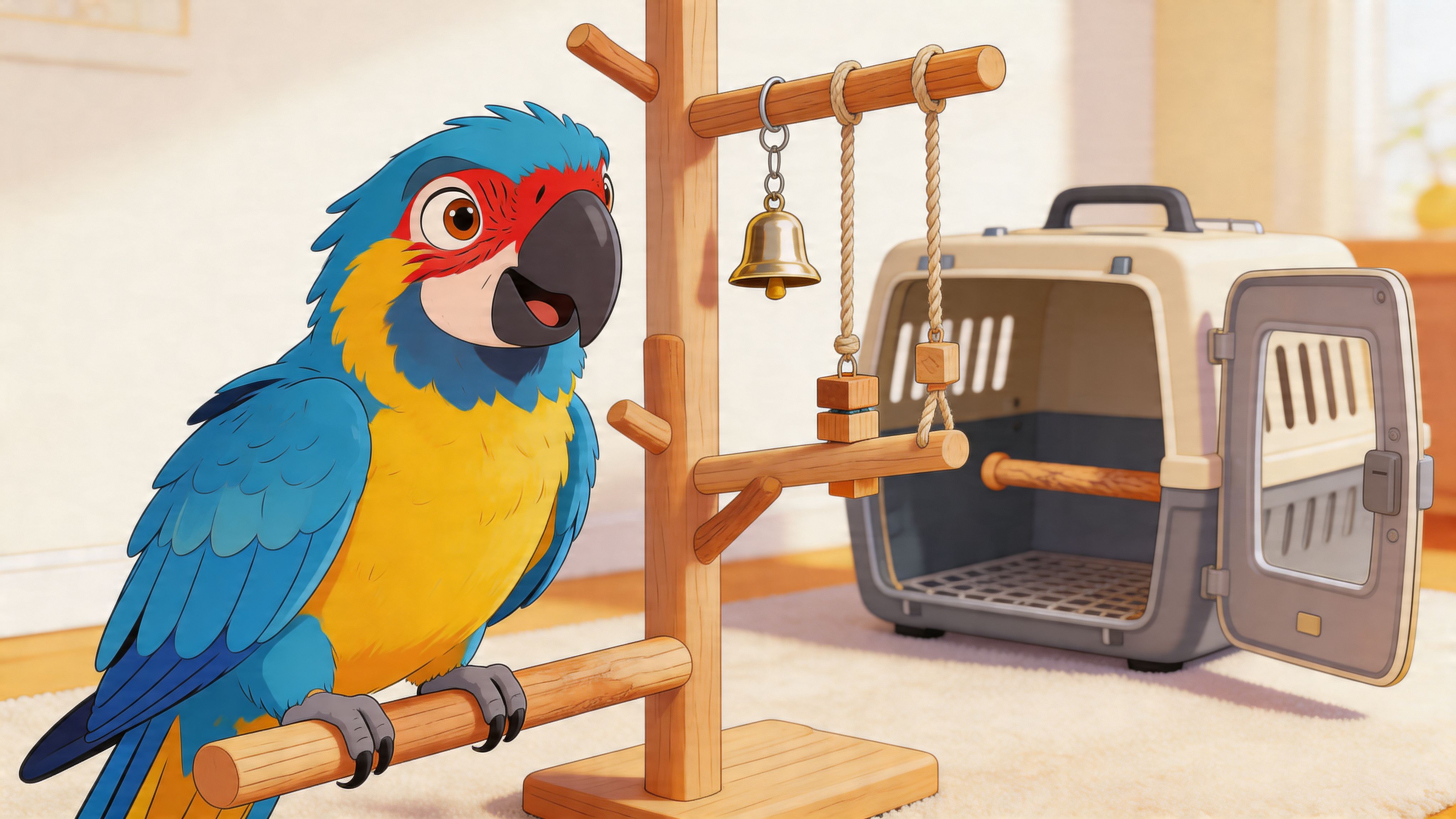
Playstands create a home base
A good playstand acts like your bird’s living room perch. It gives your parrot a clear place to hang out during family time, supervised play, training, and snack breaks.
Natural wood stands are especially nice because they encourage climbing and give the feet varied textures. You can make a playstand more useful by adding hanging toys, a foraging cup, and a nearby dish for water or treats.
One example is this rolling parrot play stand with ladder and toy hooks, which gives birds an out-of-cage perch area with built-in spots for accessories. That kind of setup can help channel busy energy away from curtain rods, lamps, and the top of the fridge.
A playstand works best when it’s used. Put it where your bird wants to be near family activity, not hidden in a quiet corner no one visits.
Travel gear should feel secure, not improvised
Bird travel is one of those topics that many owners don’t think about until they need it. Then it becomes urgent.
A carrier for a quick vet visit and a carrier for longer travel may not be identical, but both should provide solid footing, ventilation, and secure closures. Accessories for safe travel are an underserved but important need. An AVMA report noted a 25% increase in bird travel injuries from inadequate carriers, as described in this overview of bird travel accessory needs.
Look for features such as:
- Secure latches that resist chewing and accidental opening
- Good airflow without making the bird feel overly exposed
- Stable interior perching so the bird isn’t sliding around
- Room for food and water access when appropriate for the trip
- Easy cleaning because travel messes happen quickly
Make the carrier familiar before the trip
The best travel accessory is often time.
Leave the carrier out at home before you need it. Let your bird see it, sit near it, take treats around it, and eventually step into it without pressure. A familiar carrier feels far less scary than a mystery box that appears on appointment day.
Birds handle change better when the carrier already feels like part of the environment, not a signal that something stressful is about to happen.
Out-of-cage accessories for birds should support confidence, movement, and participation in home life. When chosen well, they help your parrot do more than sit in one place all day.
Creating Your Bird’s Weekly Enrichment Plan
The best accessory setup in the world won’t help much if everything stays the same for months.
Parrots notice novelty. They also get comfortable with routine. A weekly plan gives you both.
Keep rotation simple
Toy rotation sounds fancy, but it can be very manageable. You do not need to redesign the cage every other day. In fact, many birds prefer smaller changes.
Try rotating a few items each week while keeping some favorites in place.
A simple rhythm might look like this:
- Monday new shredding toy or fresh paper tucked into an old favorite
- Wednesday a foraging activity with treats hidden in cups, paper, or a puzzle
- Friday a perch or climbing change, such as moving a rope perch or adding a hanging element
- Weekend supervised out-of-cage playstand time with foot toys or training rewards
That kind of schedule keeps the environment lively without making your bird feel like the furniture moves every night.
Use foraging as a weekly anchor
If you only upgrade one enrichment habit, make it foraging.
Foraging is especially useful for birds that need more mental work or gentle rehabilitation. A 2025 study in the Avian Veterinary Journal found that foraging toys for rescue parrots can help reduce stress-related behaviors by lowering cortisol levels by as much as 40%, as cited in this overview of bird rehabilitation accessories.
That doesn’t mean every bird needs a hard puzzle right away. It means searching for food is highly meaningful to many parrots.
Start with easy successes:
- Visible treats in an open cup
- Paper-covered snacks that require one small action
- Stuffed toys or boxes that take a bit more effort
- Rotating puzzle feeders for birds that enjoy a challenge
Don’t forget cleaning and inspection
A weekly plan should include maintenance too.
Set one day to wipe perches, wash dishes thoroughly, inspect toy parts, trim away dangerous frays when appropriate, and remove accessories that are too worn. This helps the cage stay healthy and helps you notice what your bird uses.
A clean setup also makes it easier to see patterns. Maybe your Amazon loves foraging but ignores swings. Maybe your cockatiel uses platform perches for naps. Maybe your rescue Grey prefers one quiet corner and needs slower changes.
Go slower with rescue or nervous birds
Some birds greet novelty with excitement. Others greet it with dramatic suspicion from across the room.
That’s normal.
If your bird is fearful, place new accessories outside the cage first. Let your bird observe. Then move the item closer. Then introduce it inside the cage in a low-pressure spot. Trust grows faster when the bird feels in control.
Small shift, big payoff: Rotate with your bird’s confidence level in mind. The goal isn’t constant change. The goal is healthy engagement.
A weekly enrichment plan turns good intentions into a habit. That’s often the difference between a cage that looks nice and a habitat that works.
A Happy Bird Makes a Happy Home
When you choose accessories with purpose, the whole home feels different.
Your bird has things to do. Places to climb. Surfaces that support healthy feet. Toys that invite chewing and problem-solving. Safe spaces for travel and out-of-cage time. That daily activity matters. It helps turn restless energy into healthy behavior and curious minds into busy, satisfied parrots.
The kindest approach is usually the simplest one. Buy less randomly. Observe more closely. Choose items that fit your bird’s size, habits, confidence, and natural instincts.
That’s the heart of good enrichment. Not stuffing a cage full of objects, but building a space where your feathered friend can live, move, play, and rest well.
Happy birds don’t need perfection. They need thoughtful care, safe choices, and a little variety through the week.
If you’re updating your setup, look for bird-safe toys, practical perches, sturdy play areas, and accessories for birds that make daily life better for both you and your flock.
Your Top Questions About Bird Accessories
How often should I really rotate my parrot’s toys
A loose rhythm works better than a rigid rule. Try rotating 2-3 toys per week if your bird handles change well. If your parrot is cautious, go slower. Novelty and engagement are the goals, not constant rearranging.
Are mirrors or fuzzy huts safe
Many bird parents use them with good intentions, but they can be tricky. Mirrors may encourage unhealthy fixation in some birds. Fuzzy huts and similar fabric hideaways can pose problems if fibers fray and get chewed. Safer choices often include sturdy perches, shreddable toys, foraging options, and platform resting spots.
My bird is scared of new toys. What should I do
Start outside the cage. Let your bird see the toy from a safe distance first. You can also touch it, move it, and act interested so your bird sees it’s not dangerous. Reward calm curiosity with praise or a favorite treat. Slow introductions work much better than hanging a strange object beside your bird’s sleeping perch and hoping for the best.
If you’re ready to build a safer, more enriching setup, explore Squawk Shop for bird-safe toys, perches, playstands, travel gear, and practical parrot care resources designed to support happy birds and happy homes.